- Animals
- ›Chordates
- ›Vertebrates
- ›Reptiles
- ›Snakes and Lizards
- ›Lizards
- ›Iguanas and Allies
- ›Iguanas, Anoles, and Allies
- ›Phrynosomatid Lizards
- ›Phrynosomatine Lizards
- ›Phrynosoma
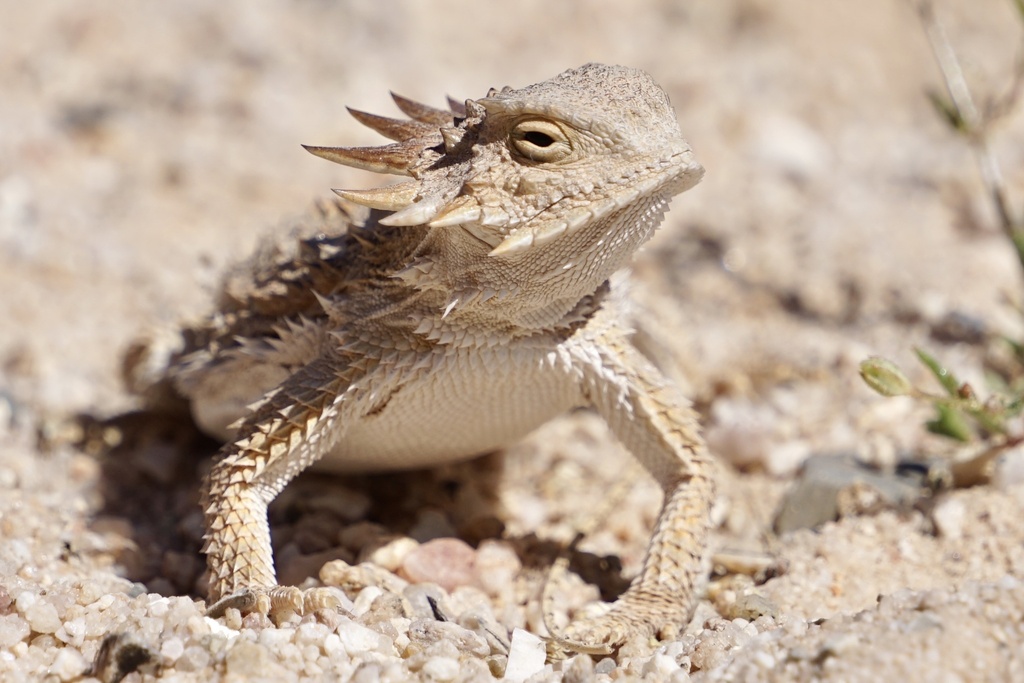
Regal Horned Lizard
Phrynosoma solare
The regal horned lizard (Phrynosoma solare) is a horned lizard species native to Mexico and the Southwest United States.
From the article Regal horned lizard on Wikipedia (CC BY-SA), quoted section by section
Description
The regal horned lizard is a small, flat lizard about the size of the palm of a human's hand. It has spikes all around the lateral surface of its body. It is 3–4 in (117 mm) in length from nose to tail as a full adult, and pale grey to yellow-brown or reddish in color, topped with dark blotches alongside the body and back. Its four legs each have five toes with a claw on each toe. The species is a slow runner that uses camouflage to escape predators.
Range & habitat
This lizard can be found across southeastern Arizona and along the transition of the southern zone of the central mountains region.
Wikipedia: “Distribution”
What it does
Their diet consists almost exclusively of harvester ants and can eat 2500 ants in one meal. They are slow eaters because they spend most of their time in the intense heat of the desert during meals. They have been observed consuming some other insects and spiders.
Wikipedia: “Diet”
Where it lives
Recorded sightings
—
geo-referenced records in GBIF, from museums, herbaria and field observers.
Drag the globe to turn it. Dots are where records exist, not a range map; darker means more records.
In the stacks
Searching the stacks…
Every page naming Phrynosoma solare in the Biodiversity Heritage Library →
This page is assembled live from iNaturalist, GBIF, Wikipedia, the Source Library and the Internet Archive. It is not yet part of the hand-edited codex. iNaturalist taxon 36301.