- Animals
- ›Arthropods
- ›Hexapods
- ›Insects
- ›Winged and Once-winged Insects
- ›Butterflies and Moths
- ›Hawk, Sphinx, Silk, Emperor, and Allied Moths
- ›Sphinx Moths
- ›Sphinginae
- ›Sphingini
- ›Sphingina
- ›Sphinx
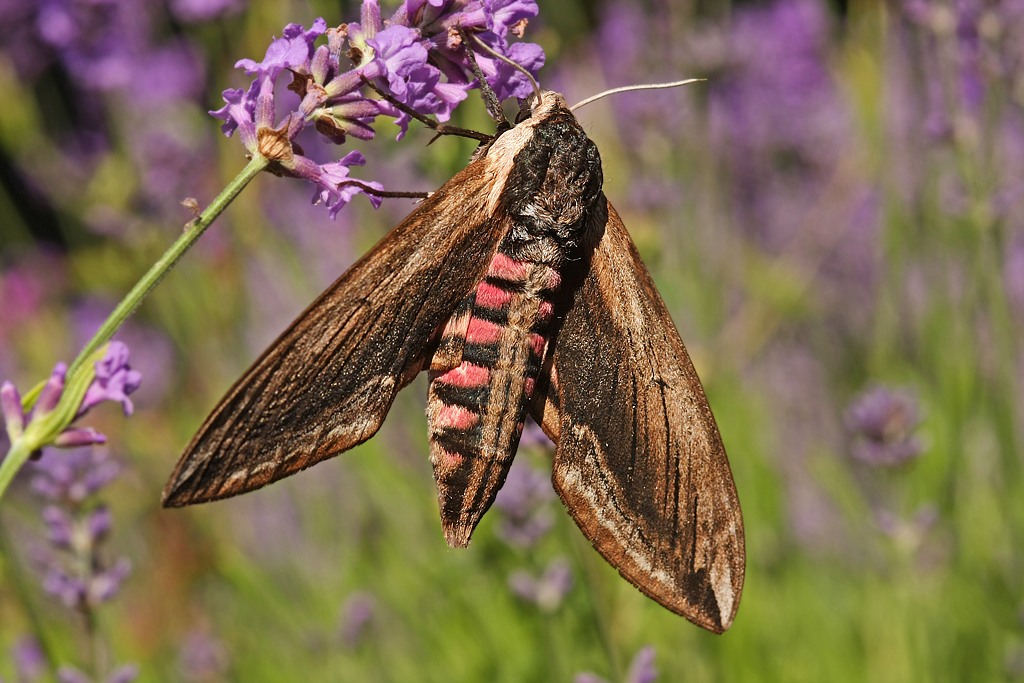
Privet Hawkmoth
Sphinx ligustri
Sphinx ligustri, the privet hawk moth, is a moth found in most of the Palearctic realm. The species was first described by Carl Linnaeus in his 1758 10th edition of Systema Naturae.
From the article Sphinx ligustri on Wikipedia (CC BY-SA), quoted section by section
Description
It has a 12 centimetres (4.7 in) wingspan (generally deflexed at rest), and is found in urban areas, forests and woodlands. The male privet hawk moth can make a hissing sound, if disturbed, by rubbing together a set of scales and spines at the end of its abdomen. The larvae are usually found between July and August: and bury themselves in the earth when preparing to become a pupa. They then fly in the following June.
What it does
As both its common name and specific name - ligustri being derived from the Latin ligustrum, 'privet' - describes, the caterpillars feed on privets, as well as ash trees, lilacs, jasmine, and a number of other plants.
Wikipedia: “Diet”
Listen
Looking for field recordings…
Where it lives
Recorded sightings
—
geo-referenced records in GBIF, from museums, herbaria and field observers.
Drag the globe to turn it. Dots are where records exist, not a range map; darker means more records.
In the stacks
Searching the stacks…
Every page naming Sphinx ligustri in the Biodiversity Heritage Library →
This page is assembled live from iNaturalist, GBIF, Wikipedia, the Source Library and the Internet Archive. It is not yet part of the hand-edited codex. iNaturalist taxon 362591.