- Animals
- ›Chordates
- ›Vertebrates
- ›Reptiles
- ›Snakes and Lizards
- ›Lizards
- ›Iguanas and Allies
- ›Iguanas, Anoles, and Allies
- ›Phrynosomatid Lizards
- ›Sceloporine Lizards
- ›Sceloporus
- ›Sceloporus undulatus
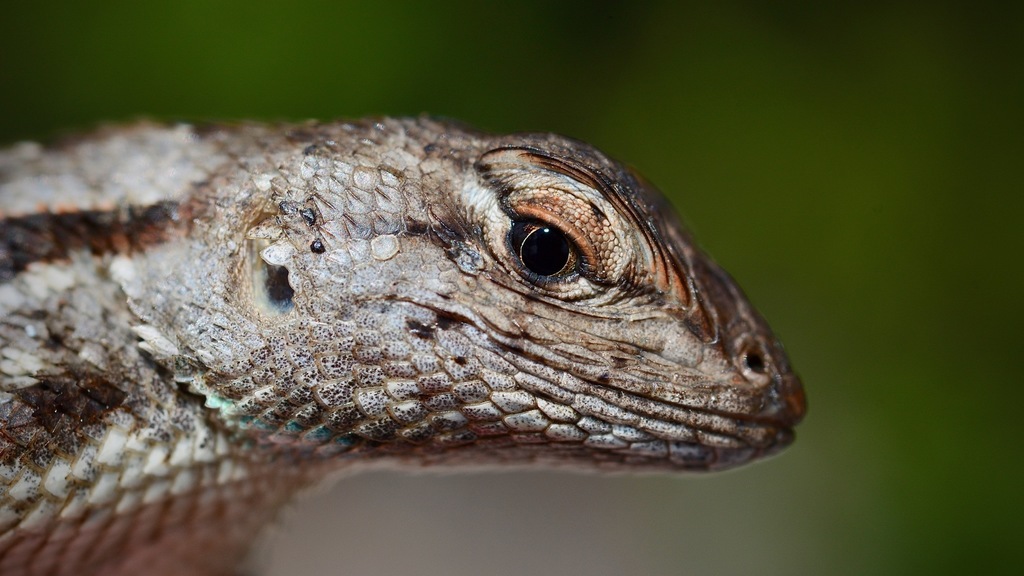
Florida Scrub Lizard
Sceloporus woodi
The Florida scrub lizard (Sceloporus woodi) is a species of lizard in the family Phrynosomatidae. The species is endemic to Florida, the United States.
From the article Florida scrub lizard on Wikipedia (CC BY-SA), quoted section by section
Description
The adult Florida scrub lizard is about 5 inches (13 cm) in total length (including tail). It is gray or brownish with a longitudinal brown stripe down each side of the body. The male has turquoise patches on the throat and belly. The female usually lacks the throat patches, but may have lighter patches on the abdomen.
Range & habitat
The preferred natural habitat of S. woodi is Florida scrub, including evergreen oak and sand pine scrub. It is found less often in the ecotone between scrub and sandhill habitat, flatwoods, and citrus groves. It is most common in dry habitats with open basking areas and nesting with nearby pines or oaks for shelter. A closed canopy makes the habitat unsuitable.
Wikipedia: “Habitat”
What it does
Courtship and mating of S. woodi occur in spring. The female buries up to 5 clutches of 2 to 8 eggs each. Eggs take about 75 days to hatch, probably depending on ambient temperature. The last hatchlings of the year emerge in November. The lizard becomes sexually mature in 10 to 11 months.
Wikipedia: “Reproduction”
In human culture
The specific name, woodi, is in honor of taxidermist Nelson R. Wood (died 1920) of the Smithsonian Institution who collected the holotype.
Wikipedia: “Etymology”
Where it lives
Recorded sightings
—
geo-referenced records in GBIF, from museums, herbaria and field observers.
Drag the globe to turn it. Dots are where records exist, not a range map; darker means more records.
In the stacks
Searching the stacks…
Every page naming Sceloporus woodi in the Biodiversity Heritage Library →
This page is assembled live from iNaturalist, GBIF, Wikipedia, the Source Library and the Internet Archive. It is not yet part of the hand-edited codex. iNaturalist taxon 36156.