- Animals
- ›Chordates
- ›Vertebrates
- ›Reptiles
- ›Snakes and Lizards
- ›Lizards
- ›Iguanas and Allies
- ›Iguanas, Anoles, and Allies
- ›Phrynosomatid Lizards
- ›Sceloporine Lizards
- ›Sceloporus
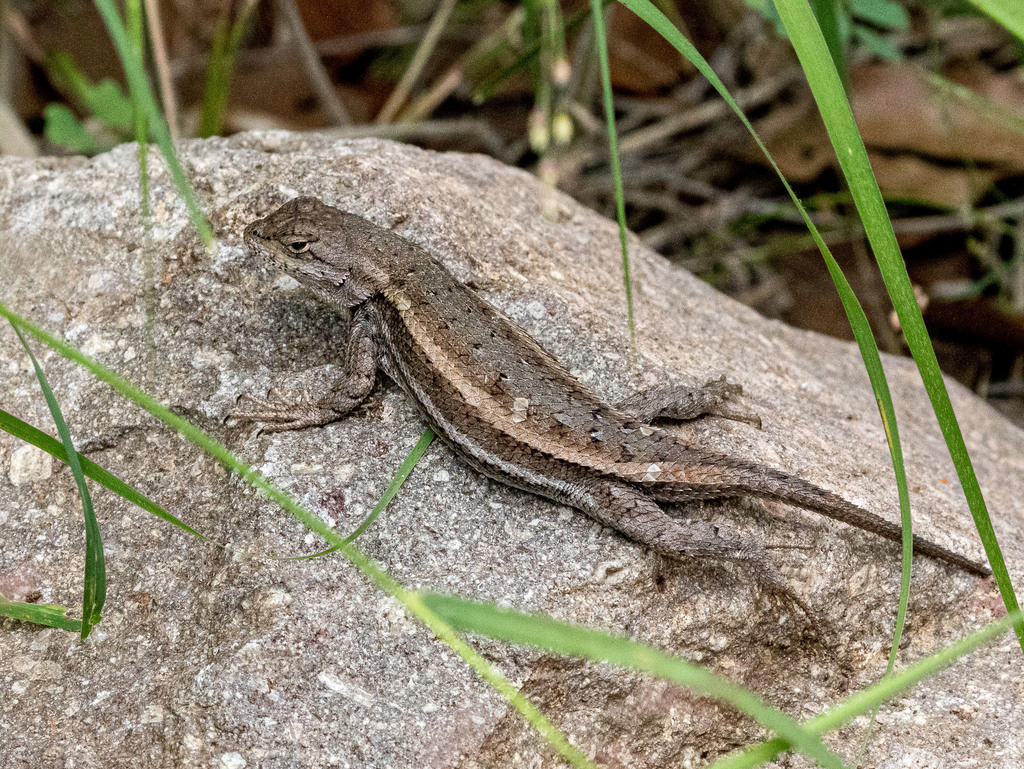
Striped Plateau Lizard
Sceloporus virgatus
Sceloporus virgatus, commonly known as the striped plateau lizard, is a species of lizard within the genus Sceloporus. This genus is known for the signaling modalities that it uses and exhibits, including visual motion and chemical signals that aid in identifying their territories as well as color that indicates aggression. The striped plateau lizard originates from the northern Sierra Madre Occidental and is relatively small in size, measuring less than 72 mm (2.8 in) in length.
From the article Sceloporus virgatus on Wikipedia (CC BY-SA), quoted section by section
Range & habitat
The striped plateau lizard is primarily a terrestrial and montane species since they reside on land, particularly in the temperate forest and in the moist savanna. S. virgatus is most abundantly found in mixed pine and oak woods or in wooded canyons and ravines. It ranges upward into pine forests and downward in oak woodlands located along streams. As the images to the right depict, the striped plateau lizard tends to favor hard and rough surfaces on the ground like rocks, leaf litter, logs, and scattered grasses. They can also be found near sandy, rocky intermittent streams. Sceloporus virgatus is widely found in Southwestern United States in the geographical range between extreme southeastern Arizona and extreme southwestern New Mexico, including Chiricahua, Peloncillo, Guadalupe, and Animas mountains. This geographical range also extends south to the Sierra Madre Occidental and to southern Chihuahua in Mexico. With the striped plateau lizard being a montane population, it is isolated geographically by the semi-desert grassland and by the desert-scrub valleys, which are now inhospitable for many other species. More than ten thousand years ago, the desert-scrub valleys were a lot cooler and the woodlands extended down into the valleys, forming a continuous, rather than segregated, habitat for S. virgatus. …
Wikipedia: “Habitat and distribution”
What it does
The striped plateau lizard sexually reproduces and are oviparous animals, indicating that the striped plateau lizard lays eggs and that their offspring hatch from the eggs after coming out of the mothers' bodies. The brood size is 0.291, and the striped plateau lizard produces around one litter per year. When females mature at around 50 mm (2.0 in) in body length, they typically lay a clutch consisting between three and eighteen eggs. This laying of eggs occurs at the beginning of the summer rainy season, which takes place from late June until late July. The size of the clutches are associated with the precipitation and temperature over the past year. Then, hatchlings appear in late August and September, being around 21 to 22 mm (0.83 to 0.87 in) in body length. The population of S. virgatus is currently stable at around 100,000 individuals, though it is severely fragmented as the number of mature individuals present is continuing to decline. This can lead to an over-abundance of younger striped plateau lizards in the population, which can contribute to slower population growth in the future and be detrimental to the presence of the species as a whole.
Wikipedia: “Reproduction”
In human culture
"Virgatus" is a Latin word, and it signifies "of twigs" and "rodlike". This term represents the distinct, light line with a dark band below it on the dorsal surface of the striped plateau lizard.
Wikipedia: “Etymology”
Where it lives
Recorded sightings
—
geo-referenced records in GBIF, from museums, herbaria and field observers.
Drag the globe to turn it. Dots are where records exist, not a range map; darker means more records.
In the stacks
Searching the stacks…
Every page naming Sceloporus virgatus in the Biodiversity Heritage Library →
This page is assembled live from iNaturalist, GBIF, Wikipedia, the Source Library and the Internet Archive. It is not yet part of the hand-edited codex. iNaturalist taxon 36155.