- Animals
- ›Arthropods
- ›Hexapods
- ›Insects
- ›Winged and Once-winged Insects
- ›Beetles
- ›Water, Rove, Scarab, Long-horned, Leaf, and Snout Beetles
- ›Scarabaeiform Beetles
- ›Scarabs, Stag Beetles, and Allies
- ›Scarabs
- ›June Beetles
- ›Rhizotrogini
- ›Amphimallon
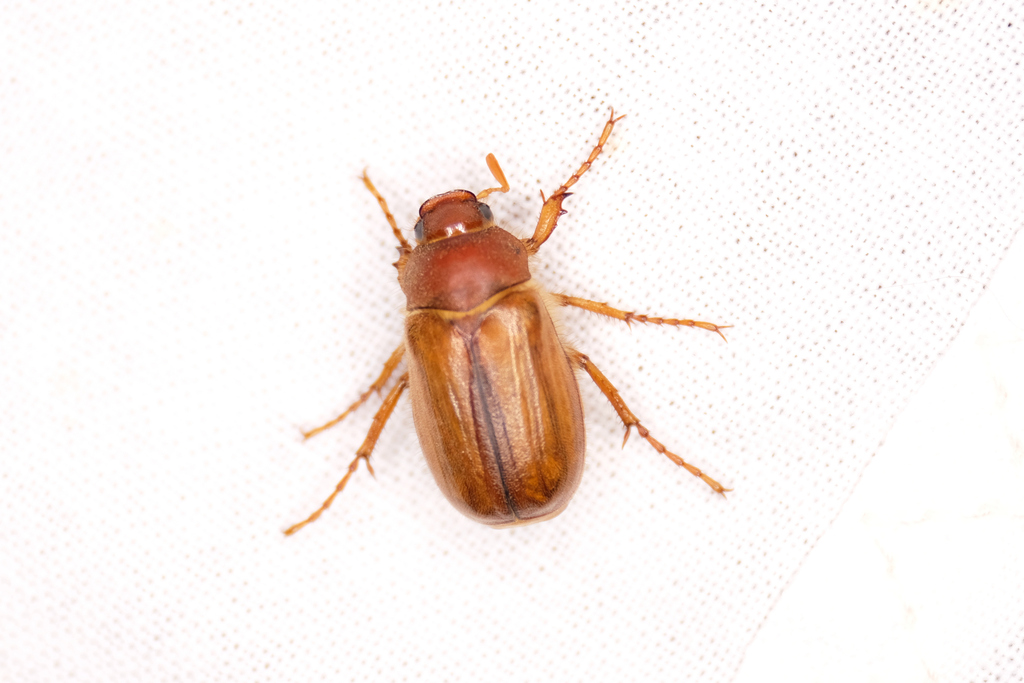
European Chafer
Amphimallon majale
The European chafer (Amphimallon majale classified as Rhizotrogus majalis prior to Montreuil 2000) is a beetle of the Scarabaeidae family. Formerly found only in continental Europe, this invasive species is now found at temperate latitudes in North America, where they are commonly called June bugs. The large, white grubs of A. majale feed on the roots of most cool-latitude grasses, both wild and cultivated. This has made the European chafer an enemy of North American lawns.
From the article European chafer on Wikipedia (CC BY-SA), quoted section by section
What it does
The European chafer has a 1-year life cycle. The imago, or adult beetle, stage is quite short, lasting 1–2 weeks. The adults come out of the ground in late spring and mate in large swarms, usually on low trees and shrubs. The beetles are most active on warm, clear nights when the temperature is above 19 °C (66 °F). They emerge at about 8:30 pm, mate through the night, and return to the soil by daybreak. Beetles may return to the trees to re-mate several times over the mating period. Late in the period, the adult carcasses may litter the ground beneath trees used for swarming. Female chafers lay 20-40 eggs over their lifespan. They are laid singly, 5–10 centimetres (2–4 in) deep in moist soil, and take 2 weeks to hatch. The grubs hatch by late July. The grub population consists mainly of first instars in early- to mid-August, second instars by early September, and third instars by mid-September to early October. In frost zones, the grubs feed until November, then move deeper into the soil. In frost-free areas, the larva will feed all winter. Vigorous feeding occurs from March through May. In early June, the grubs again move deeper, from 5–25 centimetres (2–10 in), to form earthen cells and pupate. The pre-pupal and pupal stages last 2–4 days and 2 weeks, respectively. By June, the new beetles begin emerging.
Wikipedia: “Life cycle”
Listen
Looking for field recordings…
Where it lives
Recorded sightings
—
geo-referenced records in GBIF, from museums, herbaria and field observers.
Drag the globe to turn it. Dots are where records exist, not a range map; darker means more records.
In the stacks
Searching the stacks…
Every page naming Amphimallon majale in the Biodiversity Heritage Library →
This page is assembled live from iNaturalist, GBIF, Wikipedia, the Source Library and the Internet Archive. It is not yet part of the hand-edited codex. iNaturalist taxon 360019.