- Animals
- ›Chordates
- ›Vertebrates
- ›Ray-finned Fishes
- ›Spiny-rayed fishes
- ›Cichlids and Allies
- ›Cichlids
- ›South and Central American Cichlids
- ›Amphilophus
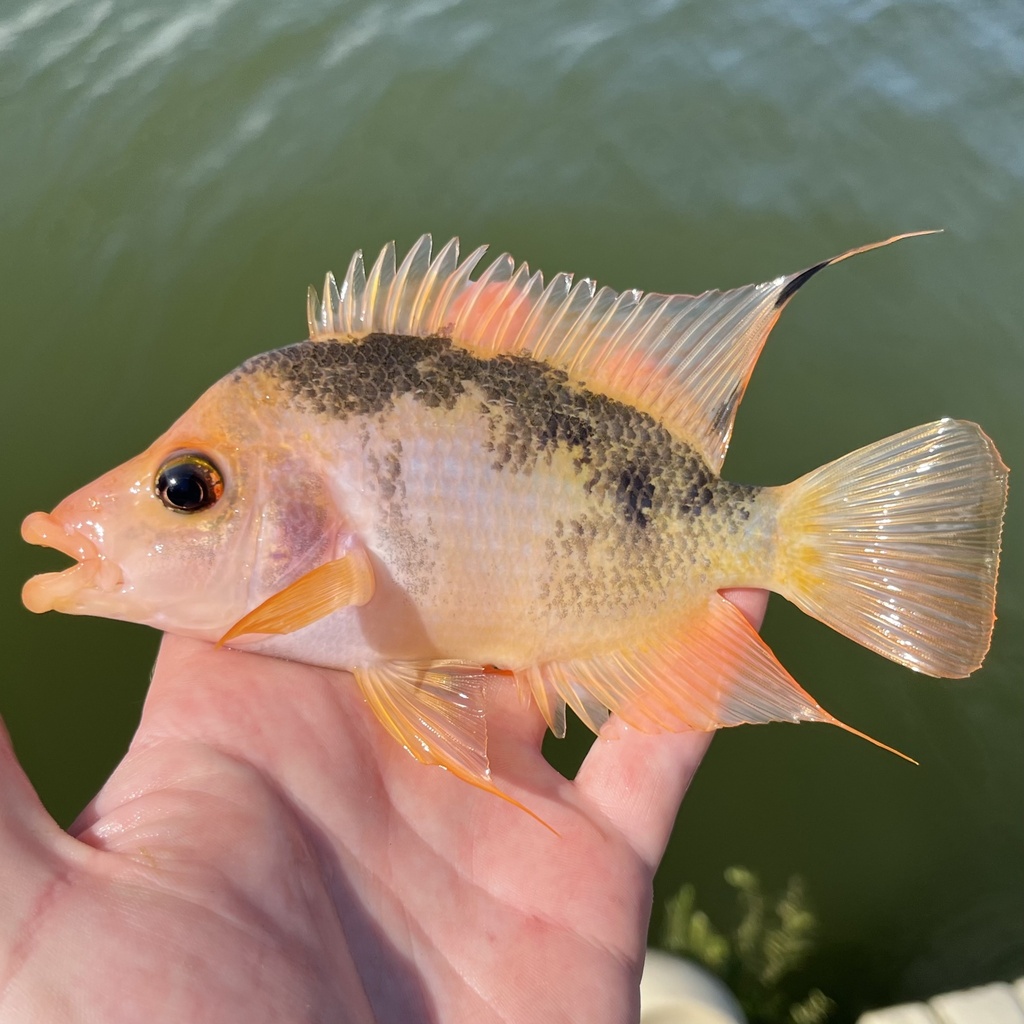
Red Devil Cichlid
Amphilophus labiatus
Amphilophus labiatus is a large cichlid fish endemic to Lake Managua and Lake Nicaragua in Central America. It is also known by the common name red devil cichlid, which it shares with another closely related cichlid, A. citrinellus.
From the article Amphilophus labiatus on Wikipedia (CC BY-SA), quoted section by section
Description
Colouration in wild specimens is variable and while most specimens are grey to greyish green some pink, red or white specimens do occur. Black pigmentation in spots or bands is also common. Some specimens have enlarged lips, though this condition is thought to be related to specific food choice preferences in their natural habitat as this trait disappears in captivity. Like most cichlids, A. labiatus has advanced brood care. The species form monogamous pairs which spawn on flattened rocks or logs.
What it does
Aquarists who keep cichlids regard red devils as aggressive fish. This aggressive behavior combined with their razor sharp teeth and powerful jaws means cohabitants should be chosen carefully and the fish should be kept in a large aquarium. Red devils may be so aggressive that they ram into the glass to get at invaders, break heaters and other aquarium equipment, and will sometimes bite their owners.
Wikipedia: “Behavior”
Where it lives
Recorded sightings
—
geo-referenced records in GBIF, from museums, herbaria and field observers.
Drag the globe to turn it. Dots are where records exist, not a range map; darker means more records.
In the stacks
Searching the stacks…
Every page naming Amphilophus labiatus in the Biodiversity Heritage Library →
This page is assembled live from iNaturalist, GBIF, Wikipedia, the Source Library and the Internet Archive. It is not yet part of the hand-edited codex. iNaturalist taxon 357665.