- Animals
- ›Chordates
- ›Vertebrates
- ›Reptiles
- ›Snakes and Lizards
- ›Lizards
- ›Geckos
- ›Typical Geckos
- ›Lygodactylus
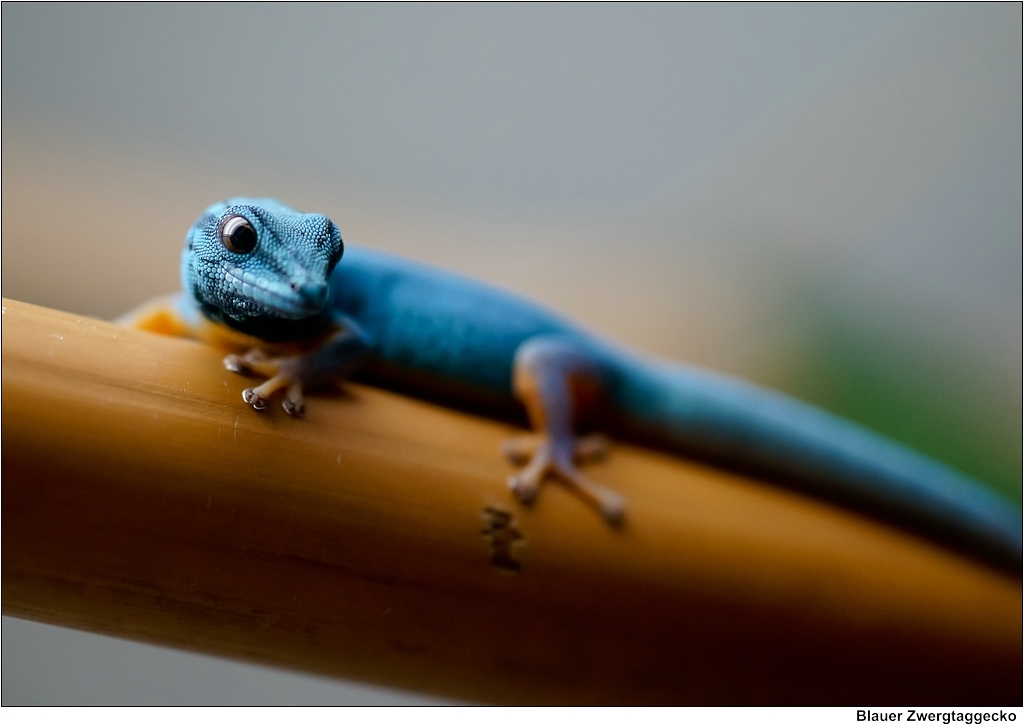
Williams' Dwarf Gecko
Lygodactylus williamsi
Lygodactylus williamsi is a critically endangered species of lizard in the family Gekkonidae. The species is endemic to a small area of Tanzania. Common names include turquoise dwarf gecko, William's dwarf gecko and, in the pet trade, electric blue gecko or electric blue day gecko.
Illegally wild-caught specimens are widely sold in the pet trade, often falsely promoted as captive-bred. Although L. williamsi breeds in captivity, the young require a lot of specific care, making large-scale breeding difficult. There is some specialist breeding, with one very large breeder claiming to have produced about a thousand individuals as of 2017, but no large-scale professional breeding. A captive breeding project and studbook was initiated by EAZA-registered zoos in 2013.
From the article Lygodactylus williamsi on Wikipedia (CC BY-SA), quoted section by section
Description
Adult snout-vent length (SVL) is 5 to 8 cm (2.0 to 3.1 in). Males of L. williamsi are bright blue with heavy black throat stripes, visible preanal pores, and hemipenile bulges. Females range from brown or bronze to bright green, and have little to no black on the throat. Females can easily be confused with juvenile or socially suppressed males that are also green, sometimes with a bluish cast. Juveniles have colouring similar to females, but more orange in tone. The underside of both sexes is orange to yellow, often with areas of both colours. Colours of individuals vary according to mood and temperature. Males may range from black or gray to brilliant electric blue. Females may range from dark brown to brilliant green with turquoise highlights. A well-illustrated Lygodactylus spp. identification guide has been published online by CITES, largely for the use of customs officers (illegal shipments of these geckos are often intentionally mislabelled).
Wikipedia: “Appearance”
Range & habitat
L. williamsi is only found in 8 km2 (3.1 mi2) of the Kimboza Forest, Ruvu Forest Reserve, Mbagalala and Muhalama at an altitude of 170–480 m (560–1,570 ft). These are located at the foothills of the Uluguru Mountains in eastern Tanzania. The subpopulation in Kimboza Forest Reserve was estimated at 150,000 adults in 2009. The size of the remaining subpopulations is unknown, but their size is not thought to contribute significantly to the total population. The two known sites outside protected areas are tiny: one consists of 14 Pandanus trees (the rest has been cleared for banana plantations) and the other is equally close to disappearing.
Wikipedia: “Geographic range”
What it does
Like all geckos of the genera Lygodactylus and Phelsuma, L. williamsi is diurnal. It is bold, active, and social. Males are territorial, and do not generally tolerate the presence of other males. Social gestures include lateral flattening, puffing out of the throat patch, head shaking and head bobbing, and tail-wagging.
Wikipedia: “Behavior”
In human culture
The specific name, williamsi, given to the gecko by British zoologist Arthur Loveridge, honours American herpetologist Ernest Edward Williams.
Wikipedia: “Etymology”
Where it lives
Recorded sightings
—
geo-referenced records in GBIF, from museums, herbaria and field observers.
Drag the globe to turn it. Dots are where records exist, not a range map; darker means more records.
In the stacks
Searching the stacks…
Every page naming Lygodactylus williamsi in the Biodiversity Heritage Library →
This page is assembled live from iNaturalist, GBIF, Wikipedia, the Source Library and the Internet Archive. It is not yet part of the hand-edited codex. iNaturalist taxon 34246.