- Animals
- ›Arthropods
- ›Hexapods
- ›Insects
- ›Winged and Once-winged Insects
- ›Beetles
- ›Ground and Water Beetles
- ›Dytiscoidea
- ›Predaceous Diving Beetles
- ›Colymbetinae
- ›Colymbetini
- ›Rhantus
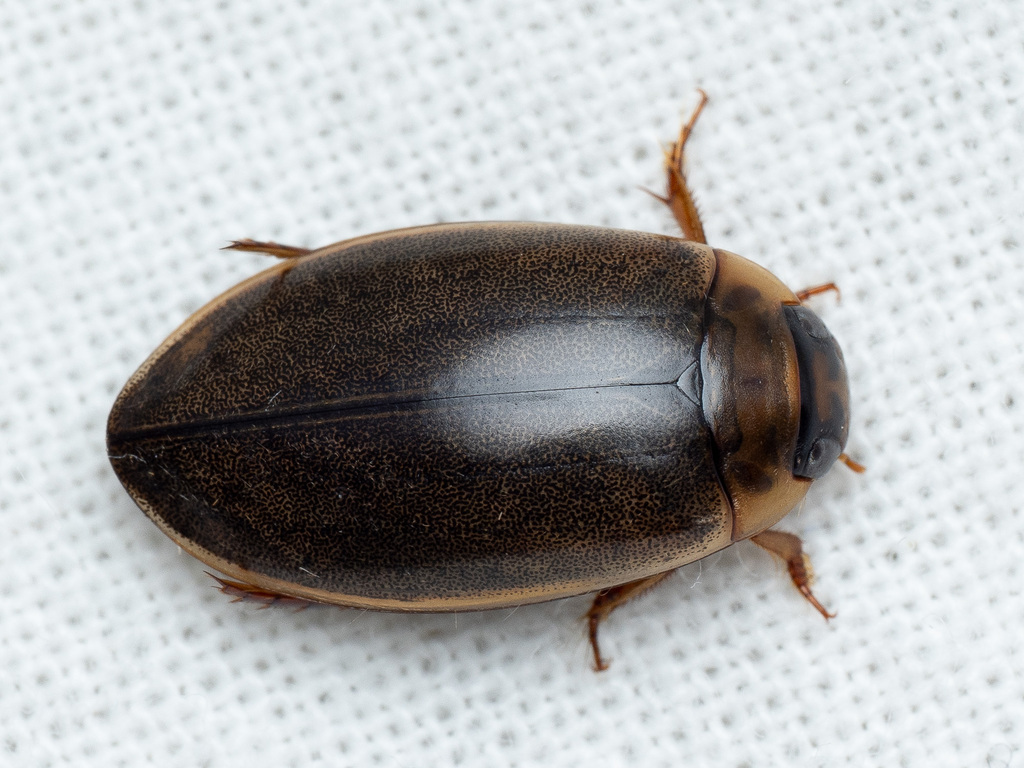
Cosmopolitan Diving Beetle
Rhantus suturalis
Rhantus suturalis, commonly known as the supertramp beetle or cosmopolitan diving beetle, is a species of diving beetle (Dytiscidae) with a cosmopolitan distribution.
From the article Rhantus suturalis on Wikipedia (CC BY-SA), quoted section by section
Description
Adult Rhantus suturalis range from 10.5 to 13.0 mm in length. The head is black with a pale anterior margin and a pale marking between the eyes, and the antennae and palps are also pale. The pronotum is pale with a usually well-defined dark mark in the middle. The elytra are pale brown and covered in fine punctures. The sternites of the abdomen are completely black. The legs are brown and often have the metatibiae and metatarsi darker. Males differ from females in the basal tarsomeres of the prolegs and midlegs being weakly dilated, and the protarsal claws being unequal and much shorter than the terminal tarsomere. In Europe, R. suturalis coexists with the also-common species R. exsoletus, but that species has a vague black posterior margin to the pronotum instead of a central dark mark, and its abdominal sternites are yellow instead of black. In Australia, the only other Rhantus species is R. simulans, which is larger (12.8-13.5 mm) and only found in the country's southwest, unlike the more widespread R. suturalis. Larvae are typical for larvae of Dytiscidae, with a flat head, crescent-shaped jaws and a segmented body. The legs are partially fringed with hairs, used in swimming. The end of the abdomen has a pair of cerci which are covered in setae. Fully grown larvae are about 15 mm long. Pupae are covered in stiff hairs. …
Range & habitat
These beetles typically occur in small water bodies with little or no vegetation. They may be found in garden ponds, temporary pools, flooded tyre ruts, water butts and brackish water ponds.
Wikipedia: “Habitat”
What it does
Breeding occurs in spring and early summer, with eggs being deposited among submerged debris. Larvae emerge a few days later. The larval stage lasts three weeks and involves three instars. Towards the end of the larval stage, larvae become temporarily inactive, then leave the water to dig a cell in which pupation occurs. The pupal stage may only last a few days, but adults remain inside the cell for a while longer to become pigmented and harden their exoskeletons. Finally, less than two weeks after the digging of the pupation cell, adults emerge. Adults are present throughout the year. They are believed to overwinter in the water. In milder climates, they may remain active throughout the winter.
Wikipedia: “Life cycle”
Listen
Looking for field recordings…
Where it lives
Recorded sightings
—
geo-referenced records in GBIF, from museums, herbaria and field observers.
Drag the globe to turn it. Dots are where records exist, not a range map; darker means more records.
In the stacks
Searching the stacks…
Every page naming Rhantus suturalis in the Biodiversity Heritage Library →
This page is assembled live from iNaturalist, GBIF, Wikipedia, the Source Library and the Internet Archive. It is not yet part of the hand-edited codex. iNaturalist taxon 342213.