On eBird ↗
Rinjani Scops-Owl
Live sightings near you, the range map, bar charts of when it is seen, and Macaulay Library photos and recordings.
Rinjani Scops-Owl
Otus jolandae
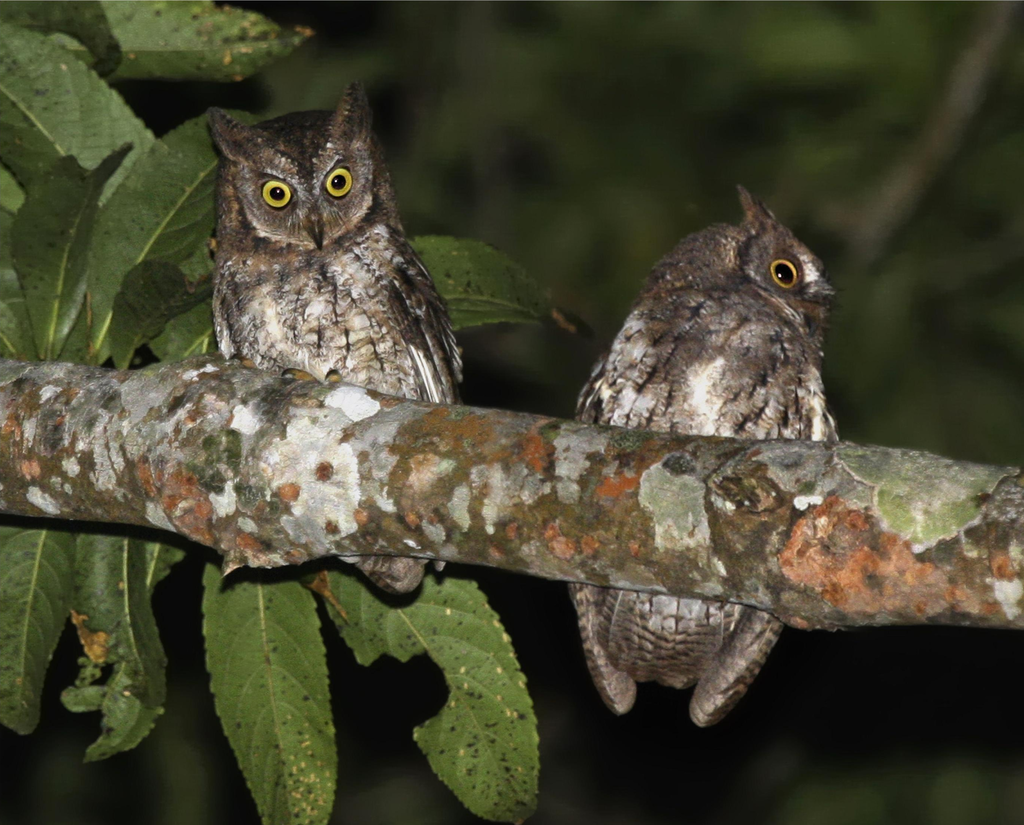
The Rinjani scops owl (Otus jolandae) is a species of scops owl found only on Lombok in the Lesser Sunda Islands of Indonesia and its neighbouring Gili Islands. The only bird species endemic to the island, it was first recognized as a separate species in September 2003 and was formally described in 2013.
From the article Rinjani scops owl on Wikipedia (CC BY-SA), quoted section by section
Description
As with most other Otus owls, the Rinjani scops owl is mainly brown in colour, barred and spotted in various shades with white. It is largely similar in appearance to the Moluccan scops owl, O. magicus, but has a different call, a clean whistling hoot rather than the raspy croak of O. magicus.
Wikipedia: “Description and identification”
Range & habitat
The Rinjani scops owl is restricted to the island of Lombok where it is the only resident scops owl species. It is locally common within remaining forest habitat on the island, much of which lies within the Gunung Rinjani National Park, at elevations of 25–1350 m.
Wikipedia: “Distribution and habitat”
In human culture
The specific epithet jolandae honours Dr Jolanda Luksenburg, a biologist who codiscovered the species in 2003. Both the English common name and proposed Indonesian name Celepuk Rinjani refer to Mount Rinjani, the 3700 m active volcano that dominates Lombok. The owls are also known locally as burung pok, referring onomatopoeically to the call.
Wikipedia: “Etymology”
Listen
Looking for field recordings…
Where it lives
Recorded sightings
—
geo-referenced records in GBIF, from museums, herbaria and field observers.
Drag the globe to turn it. Dots are where records exist, not a range map; darker means more records.
In the stacks
Searching the stacks…
Every page naming Otus jolandae in the Biodiversity Heritage Library →
This page is assembled live from iNaturalist, GBIF, Wikipedia, the Source Library and the Internet Archive. It is not yet part of the hand-edited codex. iNaturalist taxon 339604.