- Animals
- ›Arthropods
- ›Hexapods
- ›Insects
- ›Winged and Once-winged Insects
- ›Stick Insects
- ›Verophasmatodea
- ›Anareolatae
- ›Phasmatidae
- ›Tropidoderinae
- ›Tropidoderini
- ›Tropidoderus
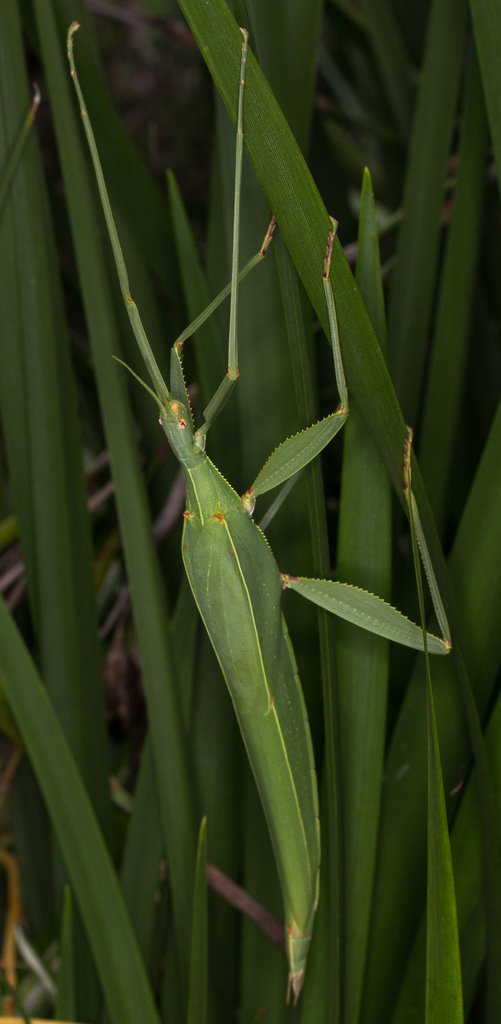
Children’s Stick Insect
Tropidoderus childrenii
Tropidoderus childrenii, the Children's stick insect, was first described in 1833 by Gray. The species is named after John George Children.
From the article Tropidoderus childrenii on Wikipedia (CC BY-SA), quoted section by section
Description
These relatively large stick insects generally measure about 110 millimetres (4.3 in) in length and are native to Eastern Australia. Generally, the female insect is a medium green color and closely resembles leaves, thus making it difficult to spot in the foliage. A large, dark blue spot can be found on each hindwing at the base of the remigium and anal lobe. This dark spot is usually hidden when the wings are folded down. The nymphs also have a long yellow strip that runs down the center of their bodies, which exactly matches the color of the leaf vein. The males can look very different, usually more slender and reddish-brown in color.
Range & habitat
They usually live in areas where eucalyptus trees are prominent, as their main source of food is the leaves of various gum or eucalyptus trees.
Wikipedia: “Habitat”
What it does
During adulthood the Children's stick insect mates more than once and females lays eggs its whole life as an adult. The males fly between trees in search for the females to mate with. The females are much larger and heavier than the males and tend to not fly very far or very often. Once they mate, the females will lay the small, oval, gray eggs that will drop to the leaf litter. Laying the eggs in winter, the eggs will hatch in autumn.
Wikipedia: “Life cycle”
Listen
Looking for field recordings…
Where it lives
Recorded sightings
—
geo-referenced records in GBIF, from museums, herbaria and field observers.
Drag the globe to turn it. Dots are where records exist, not a range map; darker means more records.
In the stacks
Searching the stacks…
Every page naming Tropidoderus childrenii in the Biodiversity Heritage Library →
This page is assembled live from iNaturalist, GBIF, Wikipedia, the Source Library and the Internet Archive. It is not yet part of the hand-edited codex. iNaturalist taxon 337431.