- Animals
- ›Chordates
- ›Vertebrates
- ›Mammals
- ›Therians
- ›Placental Mammals
- ›Ungulates, Carnivorans, and Allies
- ›Carnivorans
- ›Canids

South American Foxes
Lycalopex
The South American foxes (Lycalopex), commonly called raposa in Portuguese, or zorro in Spanish, are a genus inhabiting South America. Despite their name, they are not true foxes, but are a unique canid genus more closely related to wolves and jackals than to true foxes; some of them resemble foxes due to convergent evolution. The South American gray fox, Lycalopex griseus, is the most common species, and is known for its large ears and a highly marketable, russet-fringed pelt.
The second-oldest known fossils belonging to the genus were discovered in Chile, and date from 2.0 to 2.5 million years ago, in the mid- to late Pliocene. The Vorohué Formation of Argentina has provided older fossils, dating to the Uquian to Ensenadan (Late Pliocene).
6 branches of this genus, most-observed first · about 6 known species
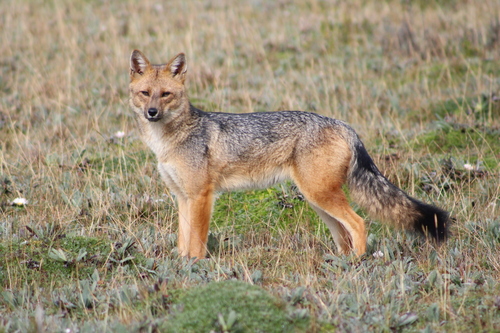
Culpeo
speciesLycalopex culpaeus

Chilla
speciesLycalopex grisea

Pampas Fox
speciesLycalopex gymnocerca

Sechuran Fox
speciesLycalopex sechurae
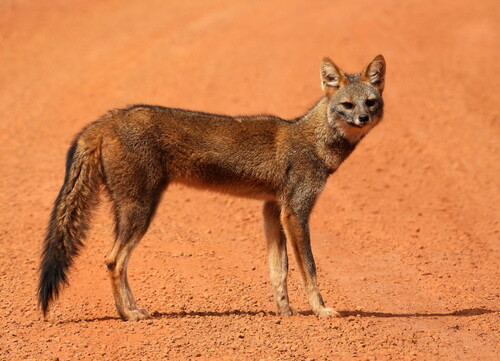
Hoary Fox
speciesLycalopex vetula

Darwin's Fox
speciesLycalopex fulvipes
Where it lives
Recorded sightings
—
geo-referenced records in GBIF, from museums, herbaria and field observers.
Drag the globe to turn it. Dots are where records exist, not a range map; darker means more records.
In the stacks
Searching the stacks…
Every page naming Lycalopex in the Biodiversity Heritage Library →
This page is assembled live from iNaturalist, GBIF, Wikipedia, the Source Library and the Internet Archive. It is not yet part of the hand-edited codex. iNaturalist taxon 325471.