- Animals
- ›Arthropods
- ›Hexapods
- ›Insects
- ›Winged and Once-winged Insects
- ›Dragonflies and Damselflies
- ›Damselflies
- ›Coenagrionoid Damselflies
- ›Narrow-winged Damselflies
- ›Agriocnemis
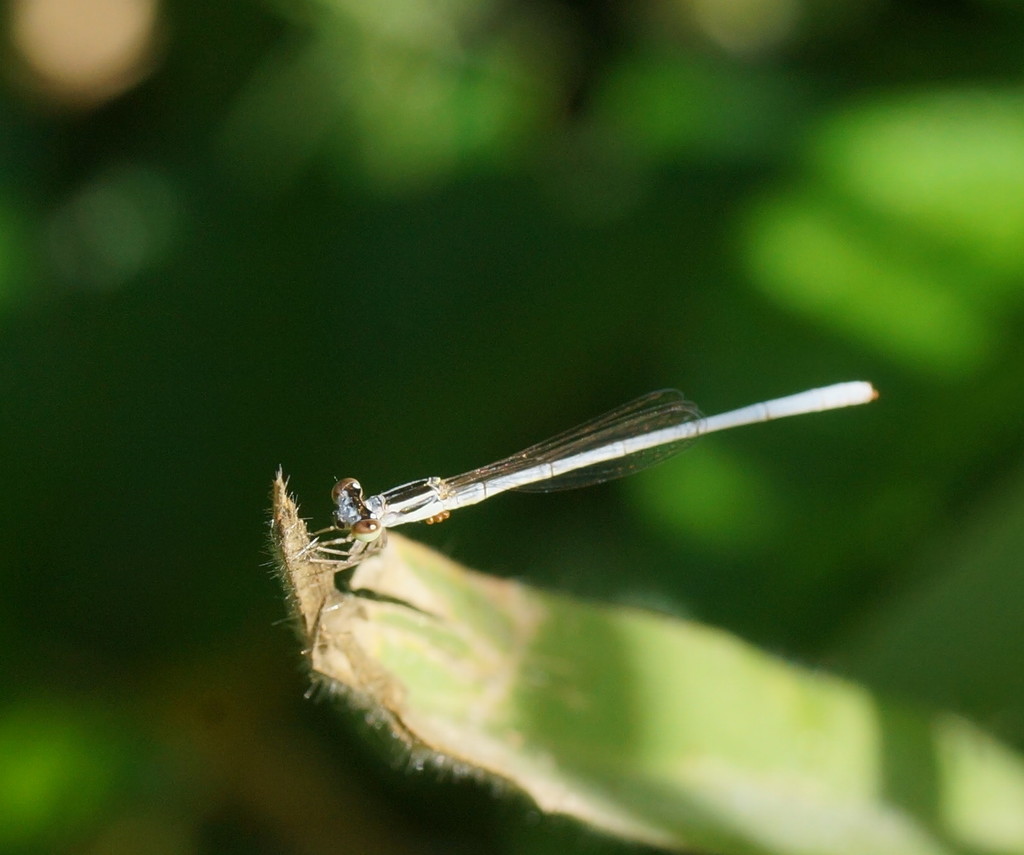
Silver Wisp
Agriocnemis argentea
Agriocnemis argentea is a species of damselfly in the family Coenagrionidae, commonly known as a silver wisp. It is a small damselfly; the male, when mature, is covered in a white pruinescence. It is endemic to northern Australia where it inhabits both still and flowing waters.
From the article Agriocnemis argentea on Wikipedia (CC BY-SA), quoted section by section
In human culture
The genus name Agriocnemis is derived from two Greek words: agrion or ἄγριος, meaning wild, and cnemis or κνημίς, meaning legging. Agrion was the name given in 1775 by Johan Fabricius for all damselflies. cnemis is commonly used for many damselflies in the family Coenagrionidae. The species name argentea is a Latin word meaning the colour of silver. In 1906 Robin Tillyard named this species of damselfly after the beautiful silvery white bloom covering of mature adults, which when flying ... appears as a bright silver streak, darting in and out of the grass.
Wikipedia: “Etymology”
Listen
Looking for field recordings…
Where it lives
Recorded sightings
—
geo-referenced records in GBIF, from museums, herbaria and field observers.
Drag the globe to turn it. Dots are where records exist, not a range map; darker means more records.
In the stacks
Searching the stacks…
Every page naming Agriocnemis argentea in the Biodiversity Heritage Library →
This page is assembled live from iNaturalist, GBIF, Wikipedia, the Source Library and the Internet Archive. It is not yet part of the hand-edited codex. iNaturalist taxon 323607.