- Plants
- ›Vascular Plants
- ›flowering plants
- ›Dicots
- ›geraniums, bridal wreaths, and allies
- ›Geranium family
- ›Pelargonium
- ›Pelargonium
- ›Pelargonium
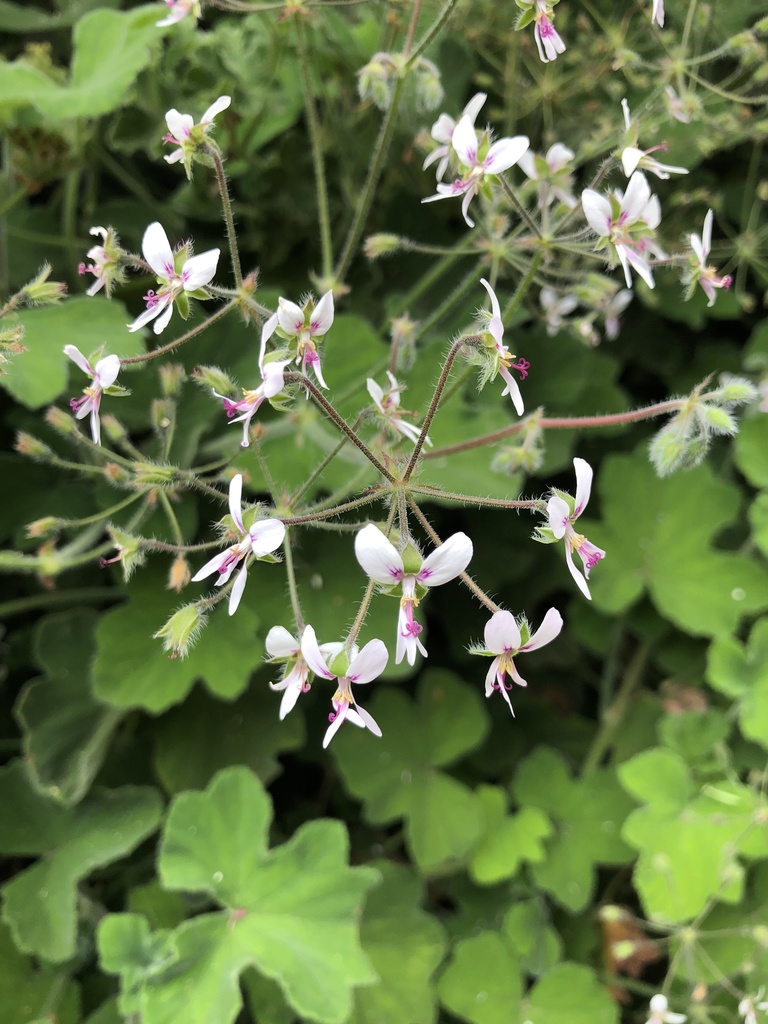
Peppermint-scented geranium
Pelargonium tomentosum
Pelargonium tomentosum, the peppermint-scented geranium, is a pelargonium species native to South Africa. It is in the subgenus Pelargonium along with Pelargonium graveolens and Pelargonium crispum and Pelargonium capitatum.
From the article Pelargonium tomentosum on Wikipedia (CC BY-SA), quoted section by section
Description
Pelargonium tomentosum is a tall, spreading species which grows up to a metre wide and a metre high. It is a very soft, hairy plant with a strong mint scent (due to the menthone in the leaves) and small white flowers. The leaves are green-grey in colour with a wide, three-lobed shape.
At the table
As well as being a houseplant or outdoor perennial depending on climate, Pelargonium tomentosum has a few other uses. Firstly, the leaves are edible and are great as a flavouring for cakes or tea. The leaves are not usually eaten due to the hairiness of the leaves being somewhat repulsive. Secondly, due to the astringent characteristics of the oils in its leaves, a poultice can be made to treat sprains or bruises. It is also works like mint for treating sore throats if the menthol is obtained correctly. Thirdly the leaves are very aromatic and can be used in potpourri.
== References ==
Wikipedia: “Uses”
In human culture
Pelargonium comes from the Greek; Pelargos which means stork. Another name for pelargoniums is storksbills due to the shape of their fruit. Tomentosum refers to the soft, furry, tomentose leaves.
Wikipedia: “Etymology”
Where it lives
Recorded sightings
—
geo-referenced records in GBIF, from museums, herbaria and field observers.
Drag the globe to turn it. Dots are where records exist, not a range map; darker means more records.
In the stacks
Searching the stacks…
Every page naming Pelargonium tomentosum in the Biodiversity Heritage Library →
This page is assembled live from iNaturalist, GBIF, Wikipedia, the Source Library and the Internet Archive. It is not yet part of the hand-edited codex. iNaturalist taxon 322765.