- Animals
- ›Chordates
- ›Vertebrates
- ›Reptiles
- ›Snakes and Lizards
- ›Lizards
- ›Iguanas and Allies
- ›Dragons and Chameleons
- ›Dragons
- ›Bearded Dragons, Water Dragons, and Allies
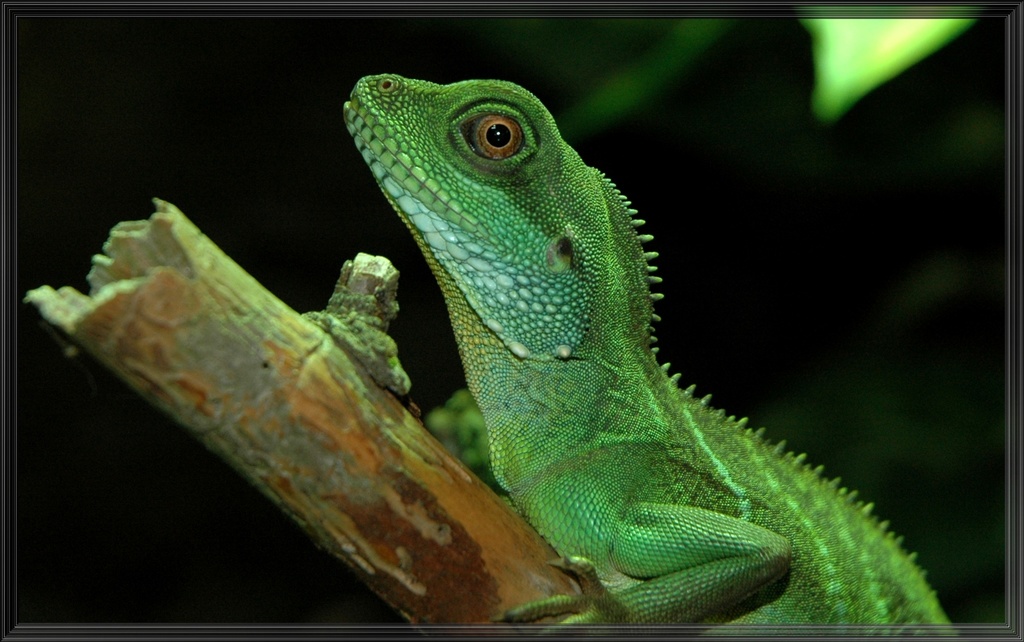
Physignathus
Physignathus cocincinus is a species of agamid lizard native to southern China and mainland Southeast Asia. It is commonly known as the Chinese water dragon, Indochinese water dragon, Asian water dragon, Thai water dragon, or green water dragon.
Chinese water dragons are large diurnal lizards adapted for dense subtropical forests replete with unpolluted streams. They are semi-arboreal, roosting at night on branches overlooking streams, which offer an escape route when the lizards are disturbed. Arthropods are their main source of food, though worms, snails, vertebrates, and plants make up a notable portion of the diet as well. Males are territorial towards each other and bear display features such as crests and jowls. Females are oviparous and reproduce sexually in the wild, though at least one captive Chinese water dragon is known to have reproduced via parthenogenesis. Physignathus cocincinus is related to Australasian lizards in the subfamily Amphibolurinae. One amphibolurine, the Australian water dragon (Intellagama lesuerii) is so anatomically and ecologically similar to Physignathus cocincinus that it was once (erroneously) placed in the same genus.
1 branches of this genus, most-observed first · about 1 known species
See this branch on the Wheel of Life →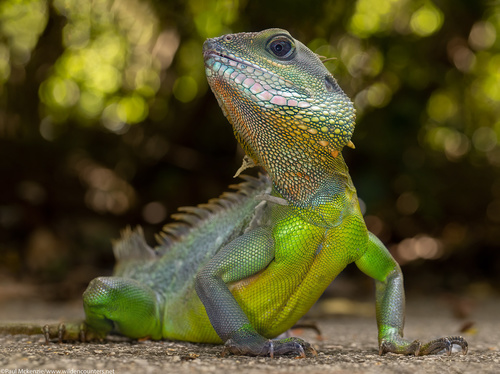
Where it lives
Recorded sightings
—
geo-referenced records in GBIF, from museums, herbaria and field observers.
Drag the globe to turn it. Dots are where records exist, not a range map; darker means more records.
In the stacks
Searching the stacks…
Every page naming Physignathus in the Biodiversity Heritage Library →
This page is assembled live from iNaturalist, GBIF, Wikipedia, the Source Library and the Internet Archive. It is not yet part of the hand-edited codex. iNaturalist taxon 31420.