- Animals
- ›Arthropods
- ›Hexapods
- ›Insects
- ›Winged and Once-winged Insects
- ›Beetles
- ›Water, Rove, Scarab, Long-horned, Leaf, and Snout Beetles
- ›Cucujiform Beetles
- ›Snout and Bark Beetles
- ›True Weevils
- ›Bark and Ambrosia Beetles
- ›Corthylini
- ›Pityophthorina
- ›Pityophthorus
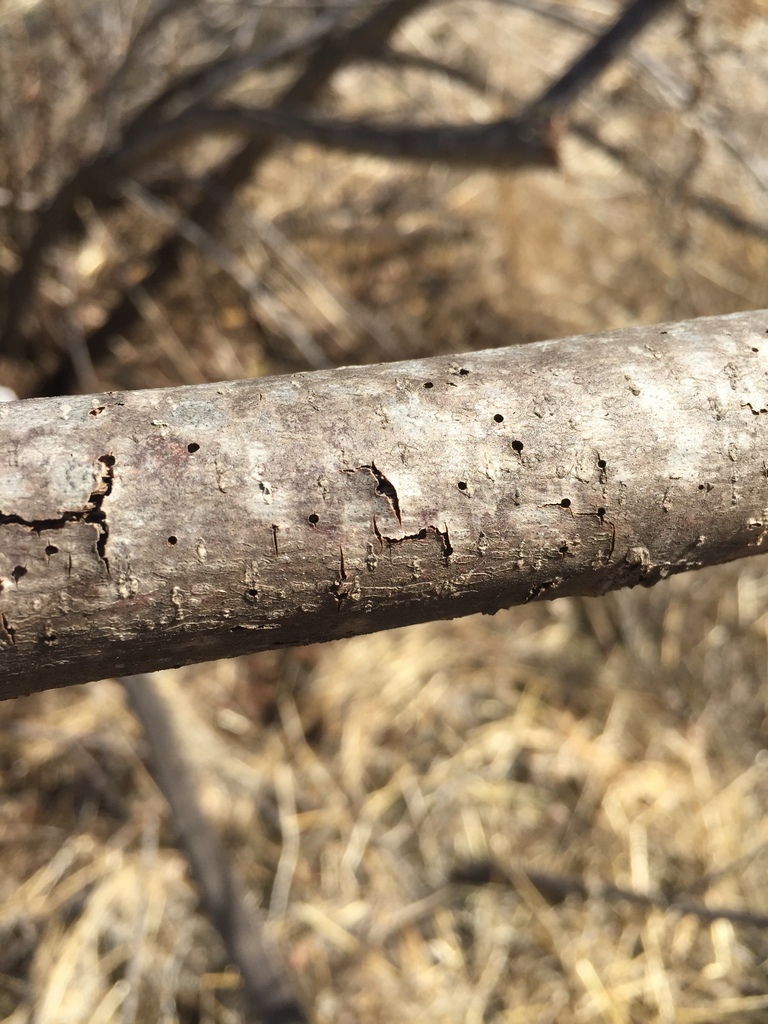
Walnut Twig Beetle
Pityophthorus juglandis
Pityophthorus juglandis, also known as the walnut twig beetle, is a Scolytinae that feeds on several different species of walnut trees (Juglans). It is one of only a few species in the genus Pityophthorus that is associated with hardwoods and the only one associated with walnut trees.
From the article Walnut twig beetle on Wikipedia (CC BY-SA), quoted section by section
Description
Pityophthorus juglandis can easily be distinguished from other members of its genus. Curtis Utley, a researcher at Colorado State University, elaborates on these differences stating, "Among these differences there are the 4 to 6 concentric rows of asperities on the prothorax, usually broken and overlapping at the median line. The declivity at the end of the wing covers is steep, very shallowly bisulcate, and at the apex it is generally flattened with small granules." The walnut twig beetles' small size is common for its genus. Adult beetles average between 1.5 and 1.9 millimeters in length. Although little is known about the life-cycle of the walnut twig beetle, during experimentation with the beetle in a controlled environment, the lifespan of one generation of walnut twig beetles was seven weeks after logs of black walnut, Juglans nigra, were harvested from the wild in May, marking what scientists think is the beginning of the feeding season of the walnut twig beetle. Gatherings of the beetle in sections of the walnut tree are known as galleries. The outward appearance of the walnut above these galleries seemed normal except for small beetle entrance holes. …
Listen
Looking for field recordings…
Where it lives
Recorded sightings
—
geo-referenced records in GBIF, from museums, herbaria and field observers.
Drag the globe to turn it. Dots are where records exist, not a range map; darker means more records.
In the stacks
Searching the stacks…
Every page naming Pityophthorus juglandis in the Biodiversity Heritage Library →
This page is assembled live from iNaturalist, GBIF, Wikipedia, the Source Library and the Internet Archive. It is not yet part of the hand-edited codex. iNaturalist taxon 305405.