- Animals
- ›Arthropods
- ›Hexapods
- ›Insects
- ›Winged and Once-winged Insects
- ›Ants, Bees, Wasps, and Sawflies
- ›Narrow-waisted Wasps, Ants, and Bees
- ›Ants, Bees, and Stinging Wasps
- ›Vespoid Wasps
- ›Hornets, Paper Wasps, Potter Wasps, and Allies
- ›Hornets and Yellowjackets
- ›Vespula
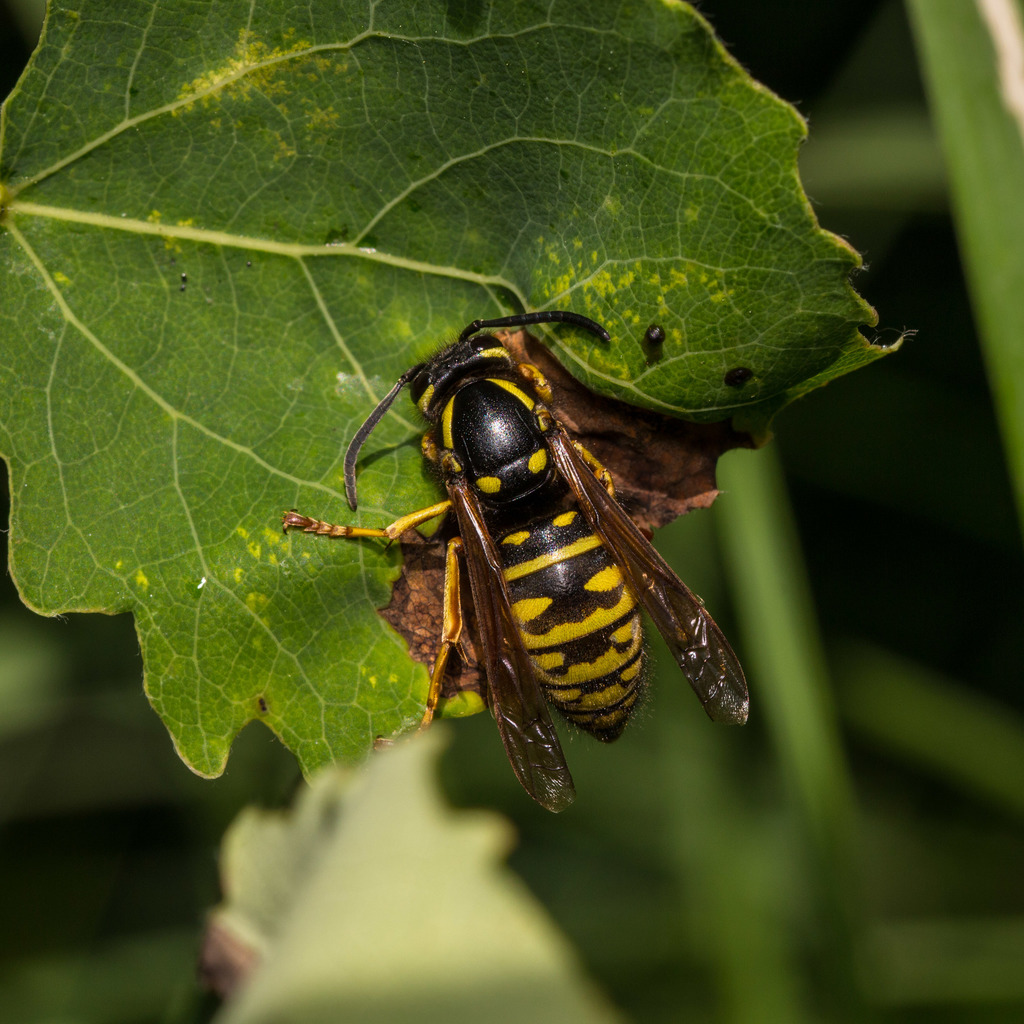
Boreal Yellowjacket
Vespula austriaca
Vespula austriaca is an obligate parasitic wasp, parasitizing the nests of other species in the genus Vespula. Its common host species include V. acadica in the United States and V. rufa in Europe, Japan, and East Siberia. It is sometimes called the cuckoo yellowjacket wasp due to its inquiline lifestyle. V. austriaca wasps pollinate orchids. They differ from other parasitic wasps in their intensely aggressive behavior during invasion and occupation of the host colony. Several morphological...
From the article Vespula austriaca on Wikipedia (CC BY-SA), quoted section by section
Description
Vespula austriaca is an obligate social parasite, and is quite similar in appearance to other Vespula species. The male abdomen is longer with thick lateral black bands while the female abdomen is wider with fewer lateral black bands and black dots.
Wikipedia: “Description and identification”
Range & habitat
Vespula austriaca is found in the Palearctic region, from Europe to Kamchatka, Japan, northwest China, Turkey, northern Pakistan, and northern India. In Europe, V. austriaca is most common in Ireland and Scotland. As an obligate parasite, these wasps do not build their nests. As a result, the queens hibernate longer than their host queens. This ensures that the nests will be ready when they leave their hibernation spots.
Wikipedia: “Distribution and habitat”
What it does
Vespula austriaca takes advantage of hosts such as Vespula rufa from East Siberia, Europe, and Honshû Japan.
Wikipedia: “Parasitic behaviour”
Listen
Looking for field recordings…
Where it lives
Recorded sightings
—
geo-referenced records in GBIF, from museums, herbaria and field observers.
Drag the globe to turn it. Dots are where records exist, not a range map; darker means more records.
In the stacks
Searching the stacks…
Every page naming Vespula austriaca in the Biodiversity Heritage Library →
This page is assembled live from iNaturalist, GBIF, Wikipedia, the Source Library and the Internet Archive. It is not yet part of the hand-edited codex. iNaturalist taxon 233557.