- Animals
- ›Chordates
- ›Vertebrates
- ›Ray-finned Fishes
- ›Spiny-rayed fishes
- ›Cods and Hakes
- ›Gadoidei
- ›Phycid Hakes
- ›Urophycis
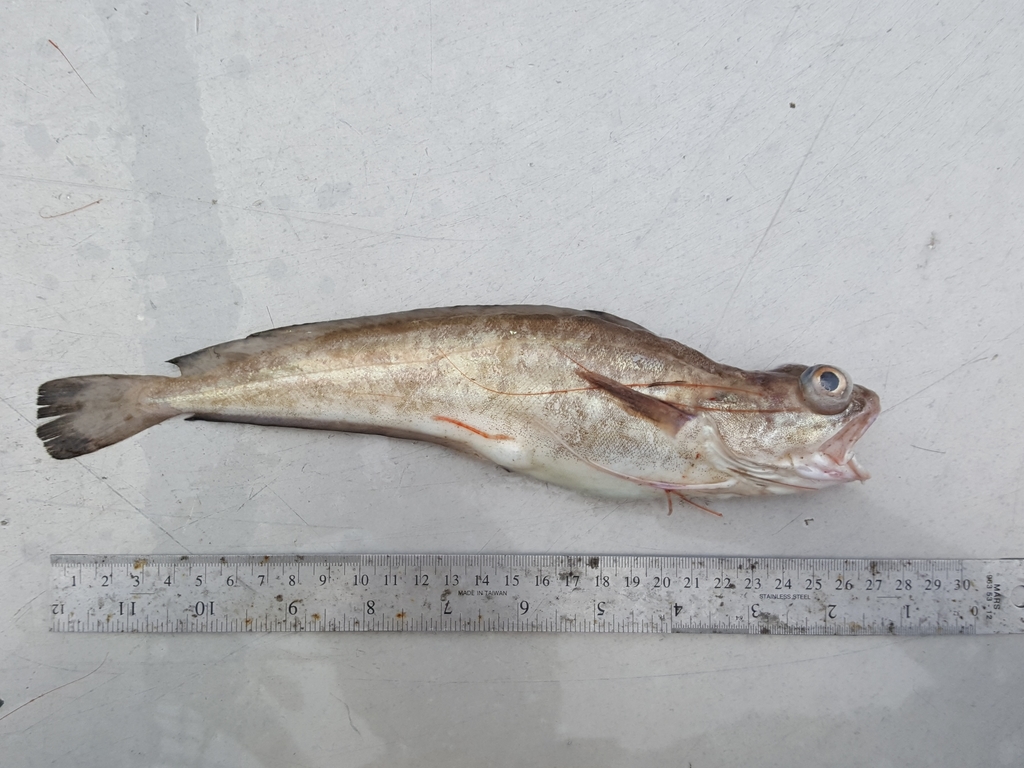
White Hake
Urophycis tenuis
The white hake or mud hake (Urophycis tenuis) is a phycid hake of the genus Urophycis, found in the deeper waters in the northwest Atlantic Ocean.
From the article White hake on Wikipedia (CC BY-SA), quoted section by section
Description
The species can grow to be up to 30 cm by the end of the first year, and 400 mm if male and 480 mm if female by the first reproduction. It grows to a maximum length of 1.35 m (4.4 ft).
Range & habitat
The white hake is found in the northwest Atlantic from North Carolina to Newfoundland, at depths of about 180–1,000 m (590–3,280 ft).
Wikipedia: “Distribution and habitat”
What it does
Spawning season for the white hake starts in late winter or early spring. It has been difficult to study the breeding habits of the white hake due to researchers’ issue with finding ripe females. Studies have found that larvae for the species occur in warm Slope Sea waters, but further along in development, the species can be found in continental shelf waters.
== References ==
Wikipedia: “Reproduction and development”
Where it lives
Recorded sightings
—
geo-referenced records in GBIF, from museums, herbaria and field observers.
Drag the globe to turn it. Dots are where records exist, not a range map; darker means more records.
In the stacks
Searching the stacks…
Every page naming Urophycis tenuis in the Biodiversity Heritage Library →
This page is assembled live from iNaturalist, GBIF, Wikipedia, the Source Library and the Internet Archive. It is not yet part of the hand-edited codex. iNaturalist taxon 233277.