- Animals
- ›Arthropods
- ›Hexapods
- ›Insects
- ›Winged and Once-winged Insects
- ›Butterflies and Moths
- ›Owlet Moths and Allies
- ›Cutworm Moths and Allies
- ›Forester Moths
- ›Alypia
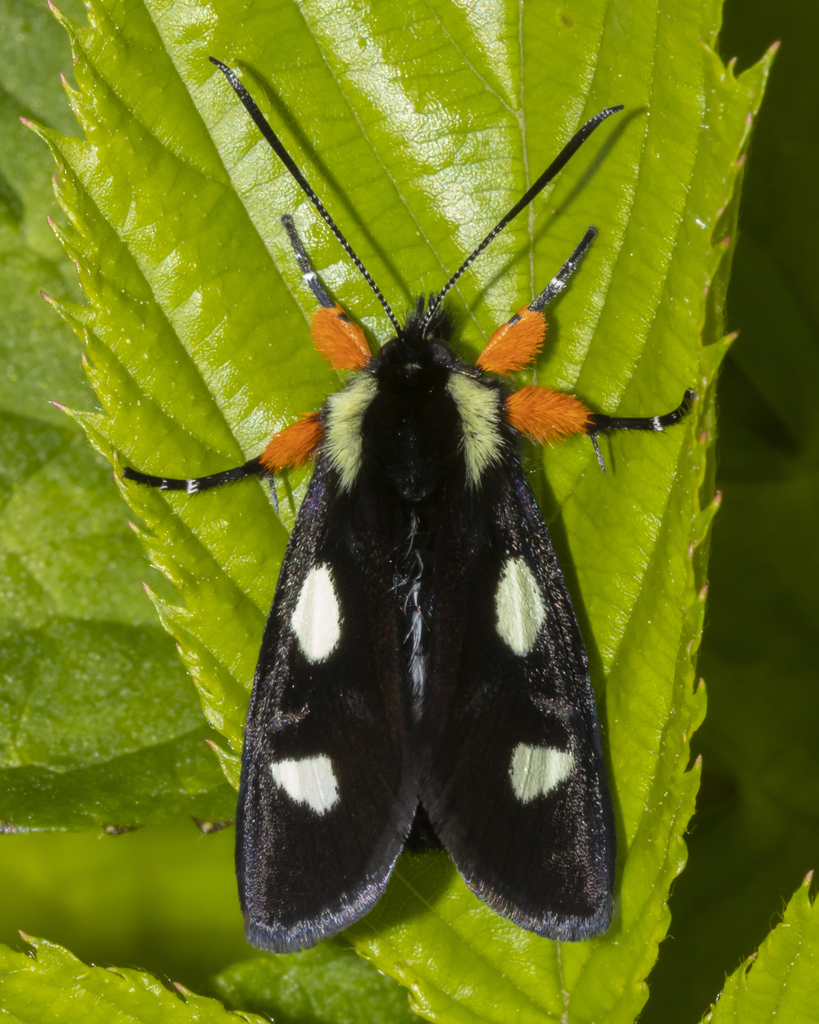
Langton's Forester
Alypia langtoni
Alypia langtoni, the six-spotted forester or Langton's forester, is a moth of the family Noctuidae. The species was first described by William Couper in 1865. It is found in North America from Newfoundland to Alaska, south to Maine and Wisconsin in the east, south in the west to Colorado and California.
From the article Alypia langtoni on Wikipedia (CC BY-SA), quoted section by section
Description
The moth exhibits sexual dimorphism. Males have eight spots in total while females have six. Their bodies are black with white spots on each wing. Their antennae are banded with white rings. The wingspan is about 30 mm. Adults are on wing from May to July in one generation depending on the location. The larvae feed on Chamaenerion species such as the fireweed.
Listen
Looking for field recordings…
Where it lives
Recorded sightings
—
geo-referenced records in GBIF, from museums, herbaria and field observers.
Drag the globe to turn it. Dots are where records exist, not a range map; darker means more records.
In the stacks
Searching the stacks…
Every page naming Alypia langtoni in the Biodiversity Heritage Library →
This page is assembled live from iNaturalist, GBIF, Wikipedia, the Source Library and the Internet Archive. It is not yet part of the hand-edited codex. iNaturalist taxon 213110.