- Animals
- ›Arthropods
- ›Hexapods
- ›Insects
- ›Winged and Once-winged Insects
- ›Butterflies and Moths
- ›Pyralid and Crambid Snout Moths
- ›Pyralid Snout Moths
- ›Pyralinae
- ›Pyralini
- ›Aglossa
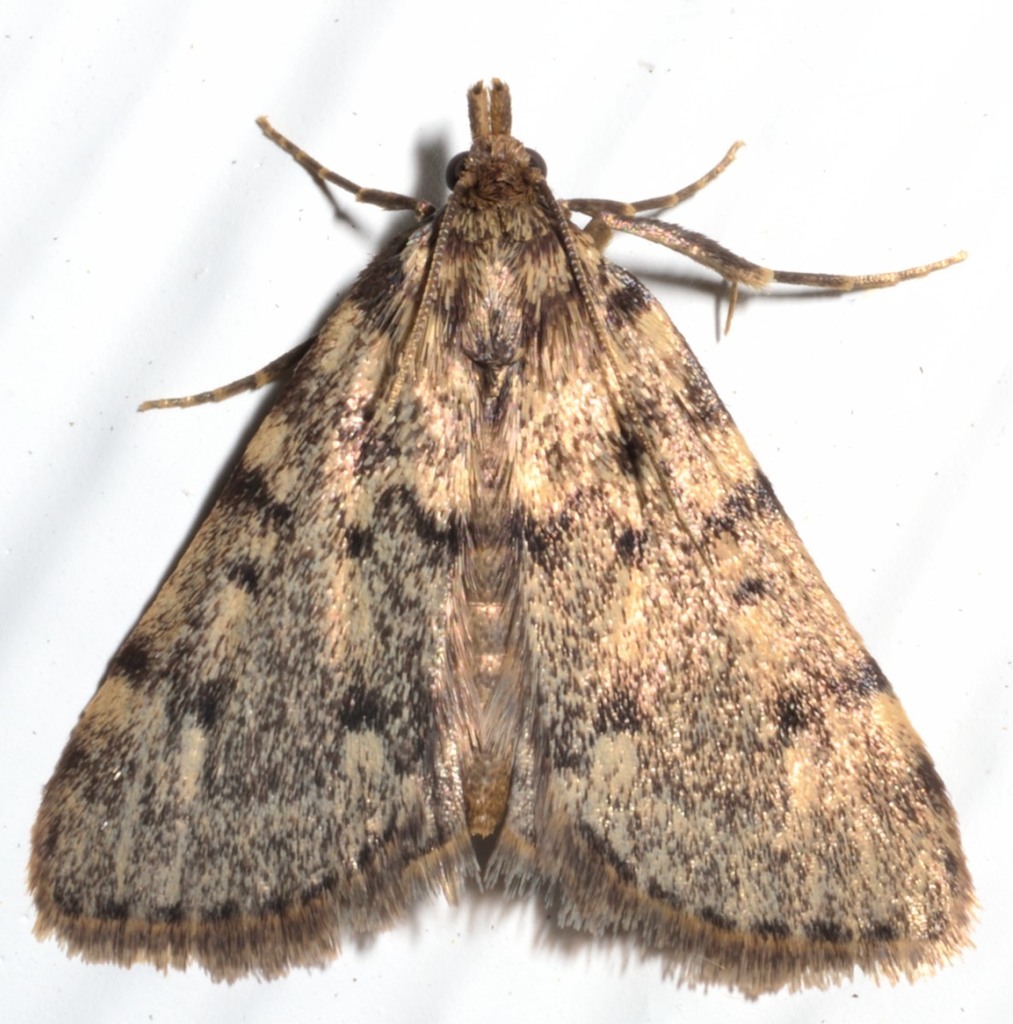
Large Tabby
Aglossa pinguinalis
Aglossa pinguinalis, the large tabby or grease moth, is a moth in the subfamily Pyralinae. The species was first described by Carl Linnaeus in his 1758 10th edition of Systema Naturae. The dark-hued larvae feed on animal fats.
From the article Aglossa pinguinalis on Wikipedia (CC BY-SA), quoted section by section
Description
The wingspan is 27 mm (males) and 37 mm (females) (or a forewing length of 14 to 18 mm). The forewings are greyish-ochreous or brownish, densely sprinkled with dark fuscous; a blackish subbasal line; first and second lines obscurely paler, rather broad, waved, cloudily edged with dark fuscous on both sides, second curved outwards in dise; a dark fuscous discal spot. Hindwings fuscous-grey; a paler postmedian line very obscurely indicated. The larva is blackish or dark brown; head blackish: in silken galleries amongst chaff and hay refuse.
Range & habitat
Native to the Palearctic. it has been introduced in North America. It has also been introduced to New Zealand.
== References ==
Wikipedia: “Distribution”
Listen
Looking for field recordings…
Where it lives
Recorded sightings
—
geo-referenced records in GBIF, from museums, herbaria and field observers.
Drag the globe to turn it. Dots are where records exist, not a range map; darker means more records.
In the stacks
Searching the stacks…
Every page naming Aglossa pinguinalis in the Biodiversity Heritage Library →
This page is assembled live from iNaturalist, GBIF, Wikipedia, the Source Library and the Internet Archive. It is not yet part of the hand-edited codex. iNaturalist taxon 212729.