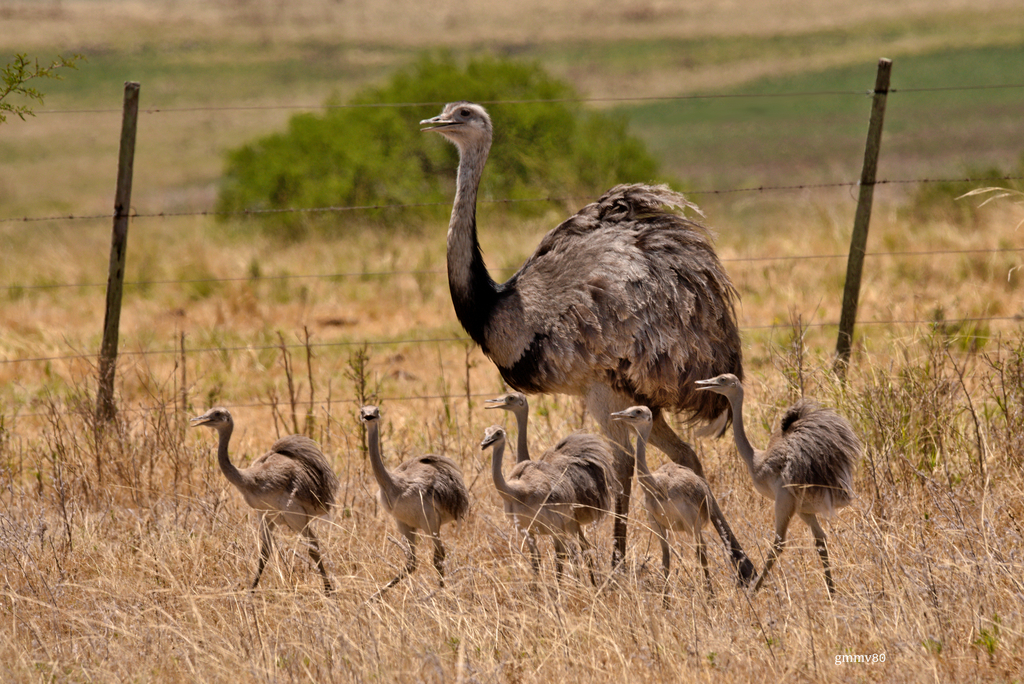
Rheas
Rhea
The rhea ( REE-ə), also known as the ñandú ( nyan-DOO) is a South American ratite (flightless bird without a keel on the sternum bone) of the order Rheiformes. Rheas are distantly related to the two African ostriches and Australia's emu (the largest, second-largest and third-largest living ratites, respectively), with rheas placing just behind the emu in height and overall size.
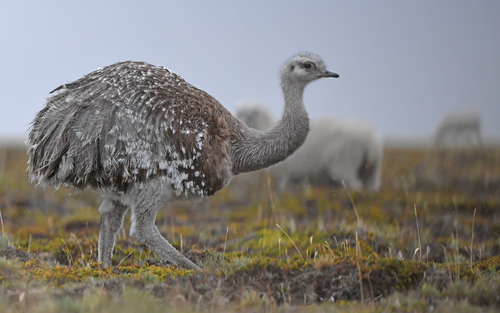
Most taxonomic authorities recognize two extant species: the greater, or American, rhea (Rhea americana); and the lesser, or Darwin's, rhea (Rhea pennata). The International Union for Conservation of Nature (IUCN) classifies the puna rhea as another species instead of a subspecies of the lesser rhea. The IUCN currently rates the greater and puna rheas as near-threatened in their native ranges, while Darwin's rhea is of least concern, having recovered from past threats to its survival. In addition, the feral population of the greater rhea in Germany appears to be growing. However, control efforts are underway and seem to succeed in controlling the birds' population growth. Similarly to ostriches and emus, rheas are fairly popular livestock and pets, regularly kept and bred on farms, ranches, private parks, and by aviculturists, mainly in North and South America and Europe.
2 branches of this genus, most-observed first · about 2 known species
See this branch on the Wheel of Life →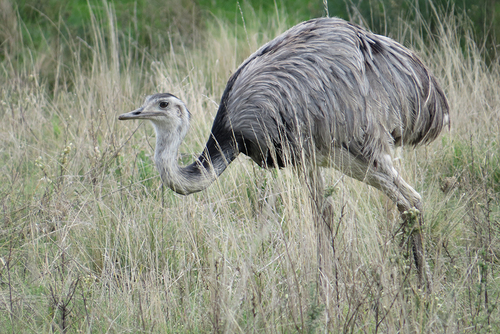
Where it lives
Recorded sightings
—
geo-referenced records in GBIF, from museums, herbaria and field observers.
Drag the globe to turn it. Dots are where records exist, not a range map; darker means more records.
In the old herbals & bestiaries

Recherche curieuse d'antiquités, venuës d'Italie, de la Grece, d'Egypte, & trouvées à Nimegue, a Sant...
Chevalier, Nicolas · 1714 · p.54

Garden of Health
Jacob Meydenbach · 1491 · p.686

Books on Marine Fishes
Guillaume Rondelet · 1554 · p.410

A voyage to the islands Madera Barbados Jamaica Vol. 1
Hans Sloane · 1707 · p.623

History of Animals, Book II: On Oviparous Quadrupeds
Conrad Gessner · 1586 · p.518

History of Animals, Book II: On Oviparous Quadrupeds
Conrad Gessner · 1586 · p.518
In the stacks
Searching the stacks…
Every page naming Rhea in the Biodiversity Heritage Library →
This page is assembled live from iNaturalist, GBIF, Wikipedia, the Source Library and the Internet Archive. It is not yet part of the hand-edited codex. iNaturalist taxon 20511.