On eBird ↗
Western Olivaceous Warbler
Live sightings near you, the range map, bar charts of when it is seen, and Macaulay Library photos and recordings.
Western Olivaceous Warbler
Iduna opaca
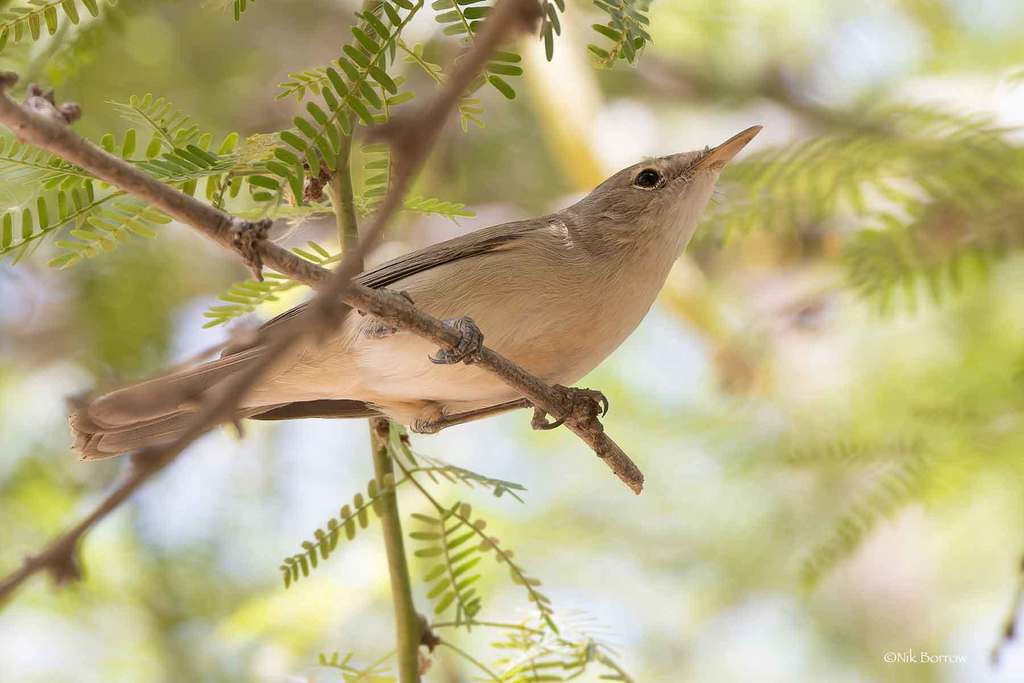
The western olivaceous warbler (Iduna opaca), also known as the isabelline warbler, is a "warbler", formerly placed in the Old World warblers when these were a paraphyletic wastebin taxon. It is now considered a member of the acrocephaline warblers, Acrocephalidae, in the tree warbler genus Iduna. It was formerly regarded as part of a wider "olivaceous warbler" species, but as a result of modern taxonomic developments, this species is now usually considered distinct from the eastern olivaceous warbler, Iduna pallida.
From the article Western olivaceous warbler on Wikipedia (CC BY-SA), quoted section by section
Description
It is a small passerine bird, found in dry open country, including cultivation, with bushes or some trees. Two or three eggs are laid in a nest in low undergrowth or a bush. Like most warblers, the western olivaceous warbler is insectivorous. It is a medium-sized warbler, more like a very pale reed warbler than its relative the melodious warbler. The adults have a plain pale brown back and whitish underparts. Its body length is about 13–14 centimetres (5.1–5.5 in), wingspan 18–21 centimetres (7.1–8.3 in) and weight 8–13 grams (0.28–0.46 oz). The bill is strong and pointed and the legs grey. The sexes are identical, as with most warblers, but young birds are more buff on the belly. This species doesn't wiggle its tail or does it uncommonly. Western olivaceous warbler searches for food at different heights. It breeds in Iberia and north Africa. It is migratory, wintering in sub-Saharan Africa. It is a rare vagrant to northern Europe. The western olivaceous warbler is larger and has a browner tinge to the upperparts than the eastern olivaceous warbler. It also has a larger bill. The song is a fast nasal babbling.
Wikipedia: “Characteristics”
Listen
Looking for field recordings…
Where it lives
Recorded sightings
—
geo-referenced records in GBIF, from museums, herbaria and field observers.
Drag the globe to turn it. Dots are where records exist, not a range map; darker means more records.
In the stacks
Searching the stacks…
Every page naming Iduna opaca in the Biodiversity Heritage Library →
This page is assembled live from iNaturalist, GBIF, Wikipedia, the Source Library and the Internet Archive. It is not yet part of the hand-edited codex. iNaturalist taxon 201181.