- Plants
- ›Vascular Plants
- ›flowering plants
- ›Dicots
- ›Mints, Plantains, Olives, and Allies
- ›Mint Family
- ›Callicarpoideae
- ›Callicarpa
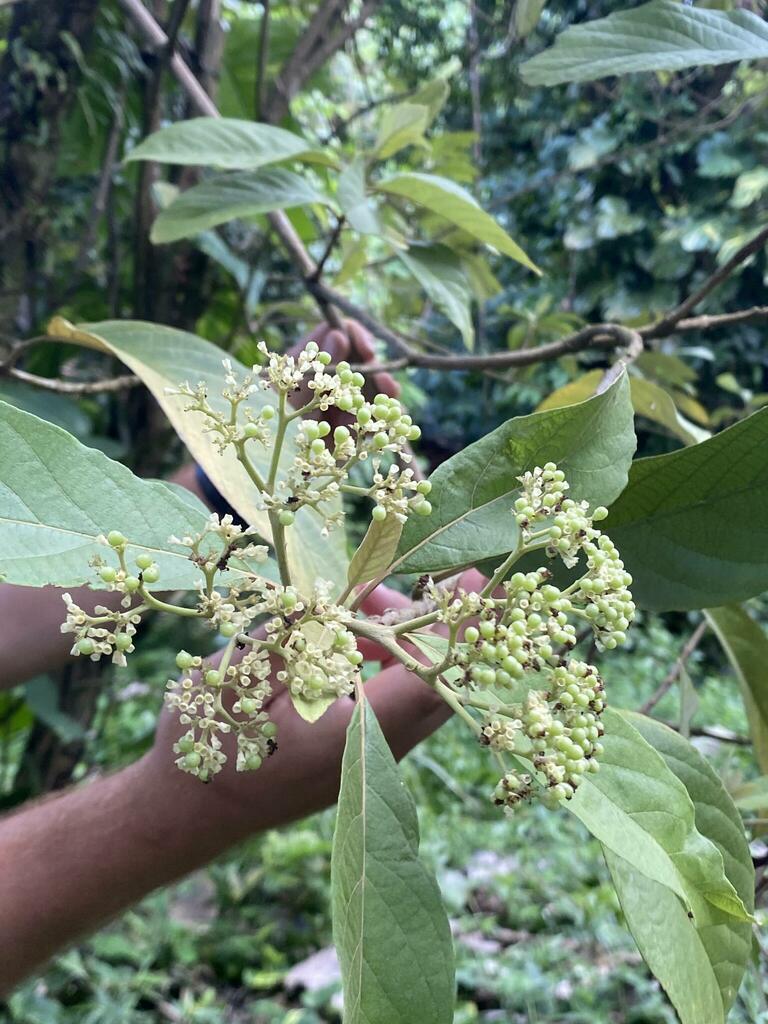
Capa Rosa
Callicarpa ampla
Callicarpa ampla, also called the capa rose, is a species of plant in the Lamiaceae family. It is found in Puerto Rico in the Caribbean region. It is threatened by habitat loss and is a critically endangered plant species.
From the article Callicarpa ampla on Wikipedia (CC BY-SA), quoted section by section
Range & habitat
Presently, the capa rose only exists in Puerto Rico, specifically within the Caribbean National Forest. That forest is divided into several regions of plants, and the capa rose is located in the Palo Colorado region. There were two sites reported in the Rio Blanco district of the Nauguabo municipality. Only one site was discovered in the Mameyes II district, and two sites were in the Jimenez district, both of the Rio Grande municipality.
Wikipedia: “Distribution”
At the table
Not only is the species extremely localized, found in only one section of one country, it is also on an island. This isolation alone causes the species to be at high risk for extinction. However, the capa rose is also facing habitat loss. Its habitat is being lost to deforestation and agriculture. Because Puerto Rico is considered United States territory, the forest habitat for the rose is managed by the USDA Forest Service. Forest management such as trails, cutting, agriculture and shelter construction all endanger the plant further. There are other factors affecting the rapid decline of the plant. There is a very low number of plants in Puerto Rico. The loss of just one plant greatly endangers its survival. The risk of the plant being collected due to its rarity and ornamental value is yet another threat, and for this reason the Forest Service did not list its habitat as critical. This would publish detailed information about the location of the plants, and possibly increase the instances of collection. The location of the capa rosa also suffers a lot of damage due to hurricanes. These hurricanes wipe out existing plants and damage locations for future seedlings to develop. They are also poor reproducers and dispersers, so the protection of the individuals and habitat are all the more crucial.
Wikipedia: “Causes and factors”
In human culture
The capa rosa was first collected in Puerto Rico by Heinrich Wydler in 1827. However, it was not until Schaur in 1847 that this plant was identified as the capa rose. Since that time, there have been only seven individuals collected, all but one from Puerto Rico. The exception was collected from St. Thomas in the Virgin Islands by Riedle, but none have been discovered there since. It is questionable whether the species is extirpated from the area, or whether it existed there at all. Once spread through Puerto Rico, it is now only located in the Luquillo Mountains, specifically the palo Colorado forest region.
Wikipedia: “History”
Where it lives
Recorded sightings
—
geo-referenced records in GBIF, from museums, herbaria and field observers.
Drag the globe to turn it. Dots are where records exist, not a range map; darker means more records.
In the stacks
Searching the stacks…
Every page naming Callicarpa ampla in the Biodiversity Heritage Library →
This page is assembled live from iNaturalist, GBIF, Wikipedia, the Source Library and the Internet Archive. It is not yet part of the hand-edited codex. iNaturalist taxon 190098.