On eBird ↗
Red-lored Amazon
Live sightings near you, the range map, bar charts of when it is seen, and Macaulay Library photos and recordings.
Red-lored Amazon
Amazona autumnalis
The red-lored amazon or red-lored parrot (Amazona autumnalis) is a species of amazon parrot, native to tropical regions of the Americas, from eastern Mexico south to Ecuador where it occurs in humid evergreen to semi-deciduous forests up to 1,100 m altitude. It is absent from the Pacific side of Central America north of Costa Rica. Not originally known from El Salvador, a pair - perhaps escaped from captivity - nested successfully in 1995 and 1996 in the outskirts of San Salvador and the species might expand its range permanently into that country in the future. This species has also established feral populations in several California cities.
From the article Red-lored amazon on Wikipedia (CC BY-SA), quoted section by section
Description
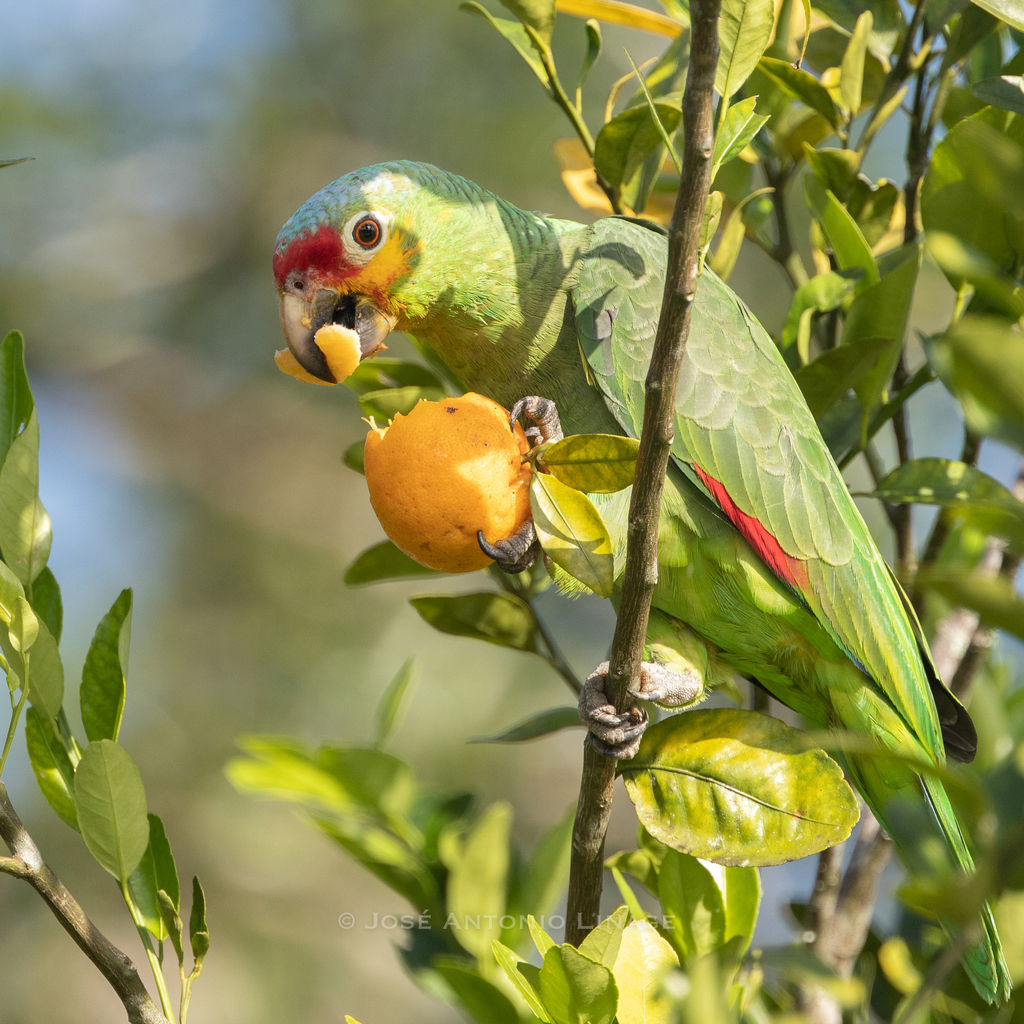
The red-lored amazon is 32–35 centimetres (13–14 in) in length, with a weight of 310–480 g. The plumage is primarily green, with a red forehead and, in some subspecies, yellow cheeks (sometimes with red spots). The crown is blue. Adult males and females do not differ in plumage. Juveniles have less yellow on the cheeks, less red on the forehead, and dark irises.
What it does
Their food includes fruits, nuts and seeds. Like all parrots, red-lored amazons need a varied diet consisting of high quality pellets, a quality seed mix, and daily servings of fresh, bird-safe fruits and vegetables.
Wikipedia: “Food and feeding”
In human culture
Red-lored amazons are fairly common pet parrots in the Americas. They can be devoted pets and some make fairly good talkers. Like most amazon parrots they often have a tendency to vocalize loudly, and sometimes to bite. Their behavior ranges from being quiet and curious to being aggressive, this can all be changed by basic training when the bird is of a young age. Red-lored amazons can grow up to 13 inches in length. While they largely feast on seeds, fruits and nuts, avocados and eggplants are poisonous to them and can kill them. Their average life span is up to 80 years.
Wikipedia: “Aviculture”
Listen
Looking for field recordings…
Where it lives
Recorded sightings
—
geo-referenced records in GBIF, from museums, herbaria and field observers.
Drag the globe to turn it. Dots are where records exist, not a range map; darker means more records.
In the stacks
Searching the stacks…
Every page naming Amazona autumnalis in the Biodiversity Heritage Library →
This page is assembled live from iNaturalist, GBIF, Wikipedia, the Source Library and the Internet Archive. It is not yet part of the hand-edited codex. iNaturalist taxon 18990.