- Animals
- ›Arthropods
- ›Hexapods
- ›Insects
- ›Winged and Once-winged Insects
- ›Butterflies and Moths
- ›Geometrid and Swallowtail Moths
- ›Geometer Moths
- ›Carpet Moths
- ›Operophterini
- ›Epirrita
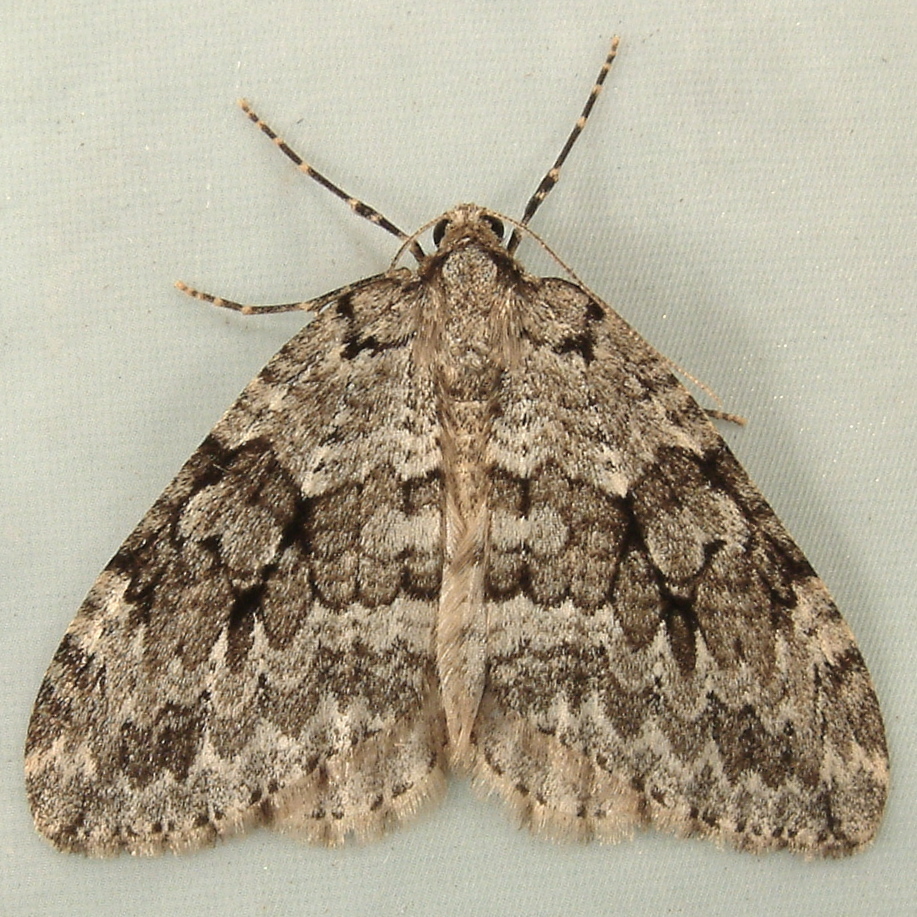
Autumnal Moth
Epirrita autumnata
The autumnal moth (Epirrita autumnata) is a moth of the family Geometridae. The species was first described by Moritz Balthasar Borkhausen in 1794. It is found throughout the Palearctic region and the Near East and has a much wider distribution than its two close relatives (see below). In Sápmi (Lapland), in some years, the numerous autumnal moth larvae defoliate square miles of birch forests on mountains.
From the article Autumnal moth on Wikipedia (CC BY-SA), quoted section by section
Description
This species is very similar to the November moth, the small Autumnal moth, and the pale November moth, and identification is usually only possible by examining the genitalia. In general, this is the least variable of the four, with melanic forms occurring less often. It is also usually on the wing earlier in the year, flying in September and October,[1] although the flight seasons of all three species overlap. The caterpillar feeds on a wide variety of trees and shrubs. The species overwinters as an egg.
Listen
Looking for field recordings…
Where it lives
Recorded sightings
—
geo-referenced records in GBIF, from museums, herbaria and field observers.
Drag the globe to turn it. Dots are where records exist, not a range map; darker means more records.
In the stacks
Searching the stacks…
Every page naming Epirrita autumnata in the Biodiversity Heritage Library →
This page is assembled live from iNaturalist, GBIF, Wikipedia, the Source Library and the Internet Archive. It is not yet part of the hand-edited codex. iNaturalist taxon 173571.