- Plants
- ›Vascular Plants
- ›flowering plants
- ›Dicots
- ›Sunflowers, Bellflowers, Fanflowers, and Allies
- ›Sunflowers, Daisies, Asters, and Allies
- ›Asteroideae
- ›asters and allies
- ›Symphyotrichinae
- ›Symphyotrichum
- ›Symphyotrichum
- ›Symphyotrichum
- ›Symphyotrichum
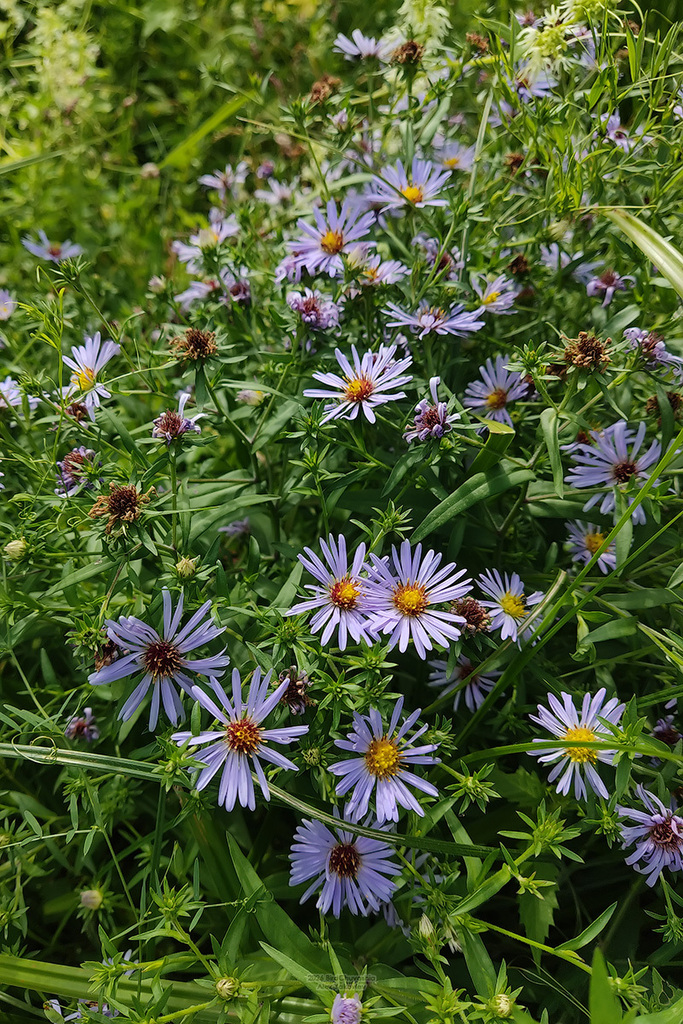
New York aster
Symphyotrichum novi-belgii
Symphyotrichum novi-belgii (formerly Aster novi-belgii), commonly called New York aster, is a species of flowering plant. It is the type species for Symphyotrichum, a genus in the family Asteraceae, whose species were once considered to be part of the genus Aster. Plants in both these genera are popularly known as Michaelmas daisy because they bloom around September 29, St. Michael’s Day.
The Latin specific epithet novi-belgii (literally "New Belgium") refers not to modern Belgium, but the 17th century Dutch colony New Netherland which was established on land currently occupied by New York state (as Belgica Foederata was the Latin term for the United Netherlands at the time).
From the article Symphyotrichum novi-belgii on Wikipedia (CC BY-SA), quoted section by section
How it is grown
This is the largest group of Michaelmas daisies, with over 1,000 named cultivars. They are valued for their late summer color in shades of blue, pink and white. They are best planted in an open, sunny position, and they are susceptible to fungal infections, especially if conditions are not ideal. The cultivars 'Coombe Fishacre' and 'Fellowship' have gained the Royal Horticultural Society's Award of Garden Merit.
Wikipedia: “Cultivation”
In human culture
The Latin-derived specific epithet novi-belgii means "from New York", which was formerly named Novum Belgium ("New Netherland").
Wikipedia: “Etymology”
Where it lives
Recorded sightings
—
geo-referenced records in GBIF, from museums, herbaria and field observers.
Drag the globe to turn it. Dots are where records exist, not a range map; darker means more records.
In the stacks
Searching the stacks…
Every page naming Symphyotrichum novi-belgii in the Biodiversity Heritage Library →
This page is assembled live from iNaturalist, GBIF, Wikipedia, the Source Library and the Internet Archive. It is not yet part of the hand-edited codex. iNaturalist taxon 169474.