- Plants
- ›Vascular Plants
- ›flowering plants
- ›Dicots
- ›Sunflowers, Bellflowers, Fanflowers, and Allies
- ›Sunflowers, Daisies, Asters, and Allies
- ›Asteroideae
- ›stinkworts and allies
- ›Plucheinae
- ›Pterocaulon
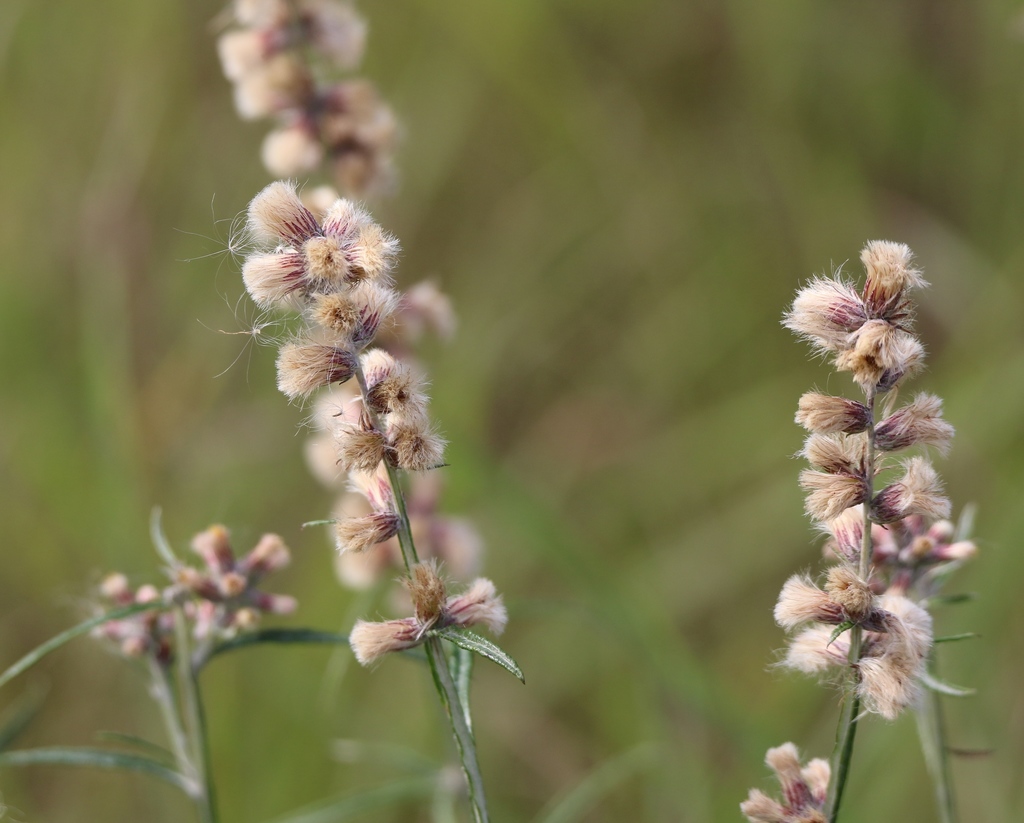
wand blackroot
Pterocaulon virgatum
Pterocaulon virgatum, common name wand blackroot, is a plant species widespread in Latin America and in the West Indies. In the contiguous United States, it has been reported only from Texas and Louisiana. It grows in marshy areas, ditches, sandy loam, etc.
Pterocaulon virgatum is a perennial herb up to 150 cm (60 inches) tall. Leaves are alternate, narrowly linear, green above, white with dense woolly hairs below. Flower heads are arranged in spikes at the ends of branches. There are no ray flowers, only 25-50 yellow disc flowers per head.
From the article Pterocaulon virgatum on Wikipedia (CC BY-SA), quoted section by section
At the table
According to James Mooney, the Cherokee Indians made use of the plant in their sweat baths for various diseases and it was considered one of their most valuable medicinal plants.
== References ==
Wikipedia: “Historical uses”
Where it lives
Recorded sightings
—
geo-referenced records in GBIF, from museums, herbaria and field observers.
Drag the globe to turn it. Dots are where records exist, not a range map; darker means more records.
In the stacks
Searching the stacks…
Every page naming Pterocaulon virgatum in the Biodiversity Heritage Library →
This page is assembled live from iNaturalist, GBIF, Wikipedia, the Source Library and the Internet Archive. It is not yet part of the hand-edited codex. iNaturalist taxon 167547.