- Plants
- ›Vascular Plants
- ›flowering plants
- ›Dicots
- ›Sunflowers, Bellflowers, Fanflowers, and Allies
- ›Sunflowers, Daisies, Asters, and Allies
- ›Asteroideae
- ›Bahieae
- ›Palafoxia
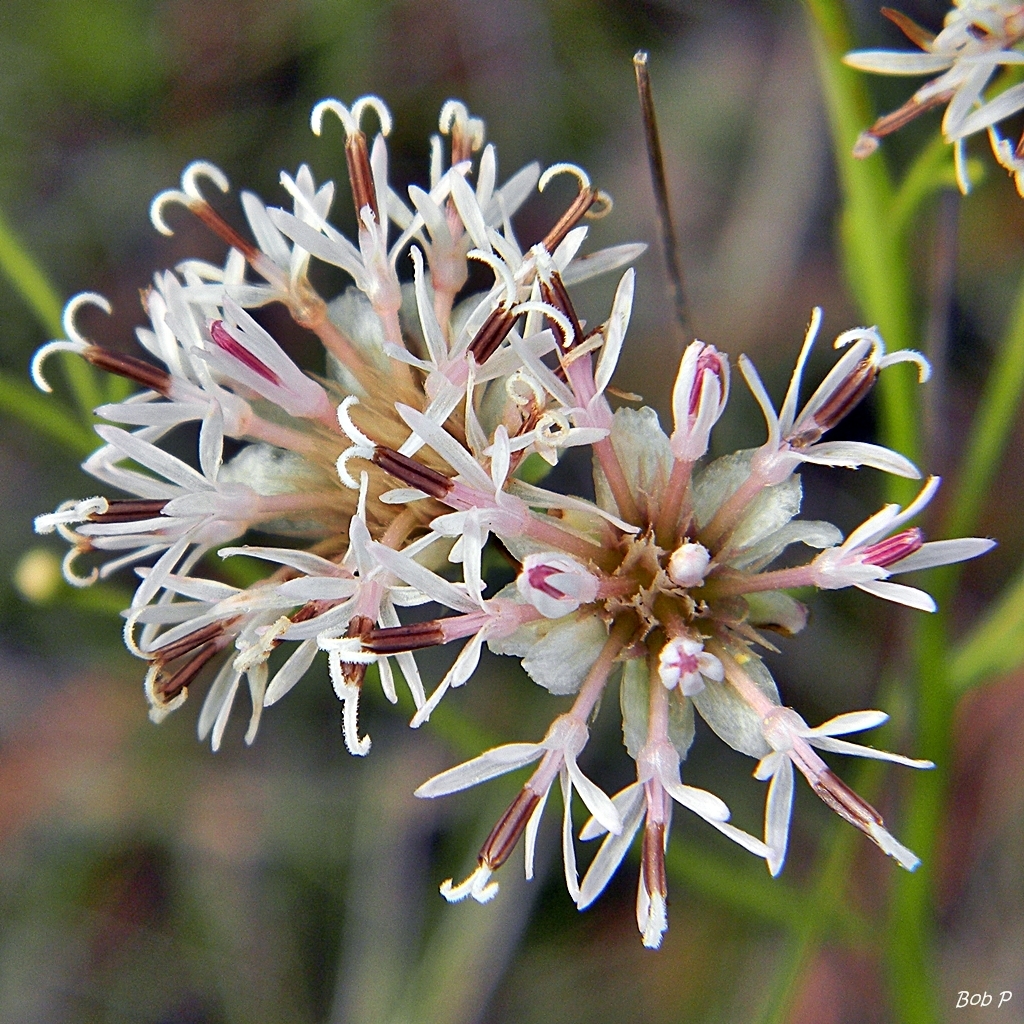
Coastalplain Palafox
Palafoxia integrifolia
Palafoxia integrifolia, commonly known as the coastalplain palafox and coastal plain palafox, is a species of palafox native to the southeastern United States.
From the article Palafoxia integrifolia on Wikipedia (CC BY-SA), quoted section by section
Description
Palafoxia integrifolia is a herbaceous annual plant with pinkish-white disc flowers arranged in inflorescences. It has glossy, alternating leaves which elongate on the lower portion of the stems and more linear at the top. The stems of P. integrifolia are less woody than other species of palafox, making it prone to drooping.
Range & habitat
Palafoxia integrifolia is found in the states of Georgia and Florida, where it grows in sandy uplands.
Wikipedia: “Distribution and habitat”
What it does
Like other Palafoxia species, P. integrifolia is attractive to birds and insects, which aid in pollination.
Wikipedia: “Ecology”
In human culture
Palafoxia integrifolia was described in 1842 by Thomas Nuttall. The generic name refers to José de Palafox y Melci, while the species name is derived from the Latin word integrifolius, meaning "having entire leaves". Polypteris integrifolia is a valid synonym.
Wikipedia: “Taxonomy and etymology”
Where it lives
Recorded sightings
—
geo-referenced records in GBIF, from museums, herbaria and field observers.
Drag the globe to turn it. Dots are where records exist, not a range map; darker means more records.
In the stacks
Searching the stacks…
Every page naming Palafoxia integrifolia in the Biodiversity Heritage Library →
This page is assembled live from iNaturalist, GBIF, Wikipedia, the Source Library and the Internet Archive. It is not yet part of the hand-edited codex. iNaturalist taxon 166057.