- Animals
- ›Arthropods
- ›Hexapods
- ›Insects
- ›Winged and Once-winged Insects
- ›Butterflies and Moths
- ›Owlet Moths and Allies
- ›Underwing, Tiger, Tussock, and Allied Moths
- ›Litter Moths
- ›Lascoria
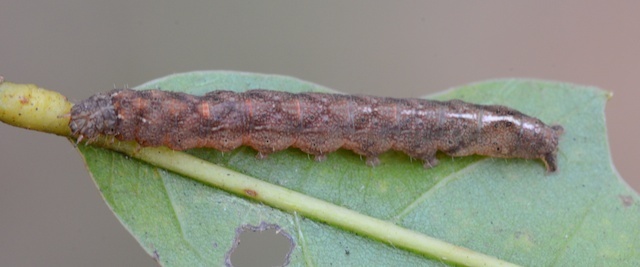
Ambiguous Moth
Lascoria ambigualis
Lascoria ambigualis, the ambiguous moth, is a litter moth of the family Erebidae. The species was first described by Francis Walker in 1866. Adults are on wing from April to September. There are two generations in Connecticut and multiple broods in Missouri.
From the article Lascoria ambigualis on Wikipedia (CC BY-SA), quoted section by section
Description
The ambiguous moth has a wingspan of 21–25 mm and rests with its hindwings tucked behind its forewings, giving the moth a triangular shape. Individuals vary slightly in coloration, with the forewings being brown, slightly purple, or shades of gray, though they share a dark, straight band across their wings. This band is a clear divider between the light-colored head and thoracic area and the darker, lower portion of the wings. This species displays sexual dimorphism, with the males having a notch in distal edge of the wing and a black spot at the head of the notch, both of which are absent in females
Range & habitat
L. ambigualis is found in the US from Wisconsin to Maine, south to Florida and Texas. They can be found in a wide variety of habitats, but are most commonly observed in shrubby fields, woodlands, and forests.
Wikipedia: “Range and Habitat”
What it does
The larvae feed on Chrysanthemum species, as well as Aster, blackberry and Verbesina. Larvae have also been reared on dead leaves.
Wikipedia: “Ecology”
Listen
Looking for field recordings…
Where it lives
Recorded sightings
—
geo-referenced records in GBIF, from museums, herbaria and field observers.
Drag the globe to turn it. Dots are where records exist, not a range map; darker means more records.
In the stacks
Searching the stacks…
Every page naming Lascoria ambigualis in the Biodiversity Heritage Library →
This page is assembled live from iNaturalist, GBIF, Wikipedia, the Source Library and the Internet Archive. It is not yet part of the hand-edited codex. iNaturalist taxon 146750.