- Animals
- ›Chordates
- ›Vertebrates
- ›Reptiles
- ›Snakes and Lizards
- ›Lizards
- ›Skinks and allies
- ›Skinks
- ›Mabuyas
- ›Trachylepis
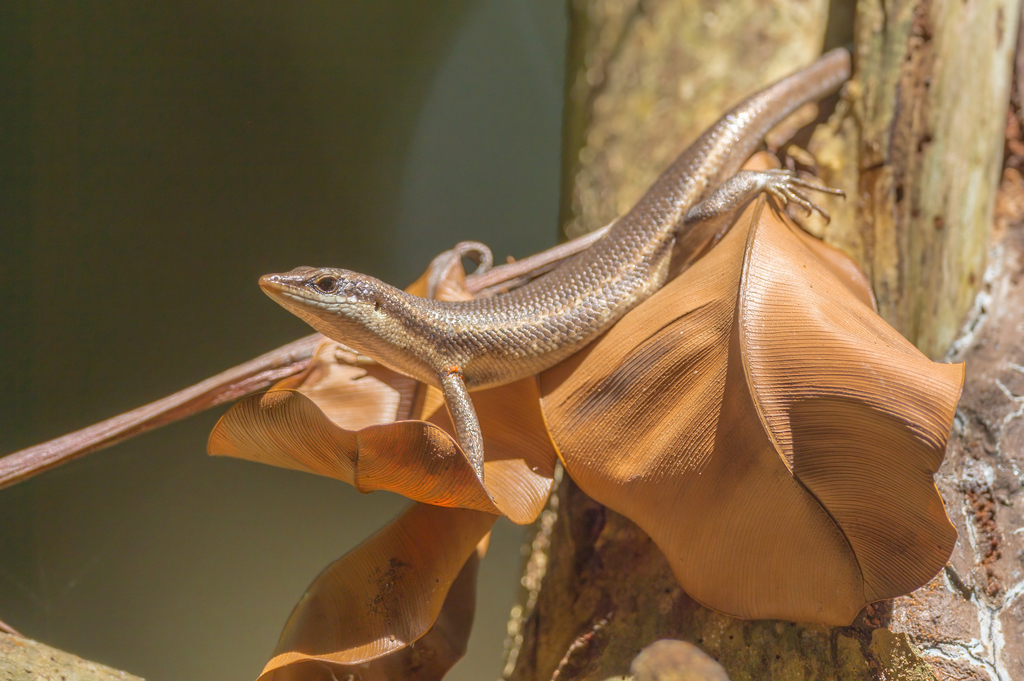
Seychelles Skink
Trachylepis sechellensis
The Seychelles skink (Trachylepis seychellensis) also known as the Mangouya, is a species of skink in the family Scincidae. It is endemic to the Seychelles.
From the article Seychelles skink on Wikipedia (CC BY-SA), quoted section by section
Range & habitat
The Seychelles skink is endemic to the Seychelles where it is found on islands of Mahé (and nearby islets), Silhouette, Praslin, North, Aride, Cousin, Cousine, Curieuse, La Digue, Grande Soeur, Petite Soeur, Félicité, Frégate and some other islands. It has been introduced into the Amirantes Islands in the southern Seychelles. It occurs from sea level to elevations of up to 550 m (1,800 ft). It is common in woodland, shrubby areas, plantations, parks, gardens, mangroves and urban locations.
Wikipedia: “Distribution and habitat”
What it does
Skinks are similar in appearance to other lizards but lack necks and have long tails that are easily shed. The Seychelles skink feeds on such insects as flies, crickets, grasshoppers, beetles and caterpillars. This species reproduces by producing clutches of eggs.
Wikipedia: “Ecology”
Where it lives
Recorded sightings
—
geo-referenced records in GBIF, from museums, herbaria and field observers.
Drag the globe to turn it. Dots are where records exist, not a range map; darker means more records.
In the stacks
Searching the stacks…
Every page naming Trachylepis sechellensis in the Biodiversity Heritage Library →
This page is assembled live from iNaturalist, GBIF, Wikipedia, the Source Library and the Internet Archive. It is not yet part of the hand-edited codex. iNaturalist taxon 146482.