- Animals
- ›Chordates
- ›Vertebrates
- ›Reptiles
- ›Snakes and Lizards
- ›Lizards
- ›Geckos
- ›Phyllodactylid Geckos
- ›Thecadactylus
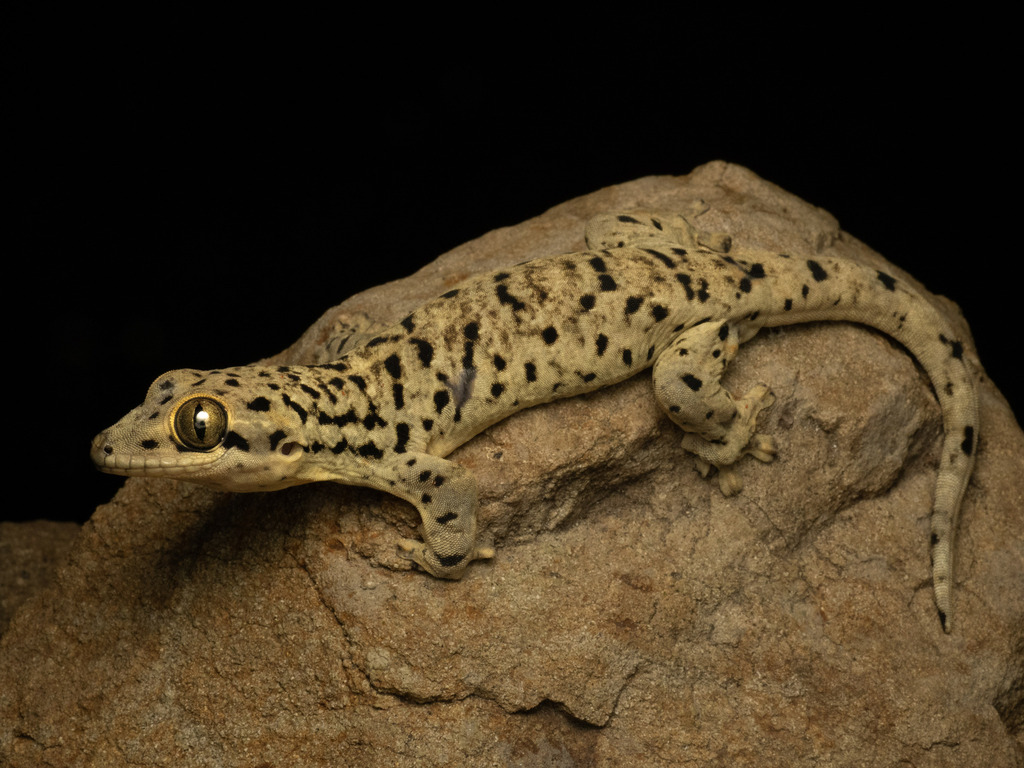
Saint Martin Thick-tailed Gecko
Thecadactylus oskrobapreinorum
Thecadactylus oskrobapreinorum is a species of gecko. It was first described in 2011 from Sint Maarten in the Lesser Antilles. Previous to this it was thought that the only species of turnip-tailed gecko present in the Lesser Antilles was Thecadactylus rapicauda, but the new species is readily distinguishable by its boldly spotted appearance. The specific name honours the two German herpetologists Maciej Oskroba and Stephan Prein who first studied this gecko.
From the article Thecadactylus oskrobapreinorum on Wikipedia (CC BY-SA), quoted section by section
Description
The holotype of the species has a snout-to-vent length of 95.5 millimetres (3.76 in) and a tail length of 75 mm (3.0 in). The largest specimen examined by Köhler and Vesely had a snout-to-vent length of 99 mm (3.9 in). It is distinguished from other members of the genus by fact that the black markings on its back are irregular yet sharply delineated from the nearly patternless surrounding skin, which is of a pale greyish-yellow or greyish-olive colouration. It has adhesive toe-pads on its feet. A 2018 study examined the osteological characters of a Thecadactylus oskrobapreinorum specimen and found them to be the same as those of Thecadactylus rapicauda.
Range & habitat
Thecadactylus oskrobapreinorum is known only from the Caribbean island of Saint Martin. The holotype came from Sint Maarten, part of the Kingdom of the Netherlands, but the gecko is also known from the French overseas Collectivity of Saint Martin. The gecko is found on the lower parts of the trunks of trees in forests and near forest edges. It is active at night.
== References ==
Wikipedia: “Distribution and habitat”
Where it lives
Recorded sightings
—
geo-referenced records in GBIF, from museums, herbaria and field observers.
Drag the globe to turn it. Dots are where records exist, not a range map; darker means more records.
In the stacks
This page is assembled live from iNaturalist, GBIF, Wikipedia, the Source Library and the Internet Archive. It is not yet part of the hand-edited codex. iNaturalist taxon 146476.