On eBird ↗
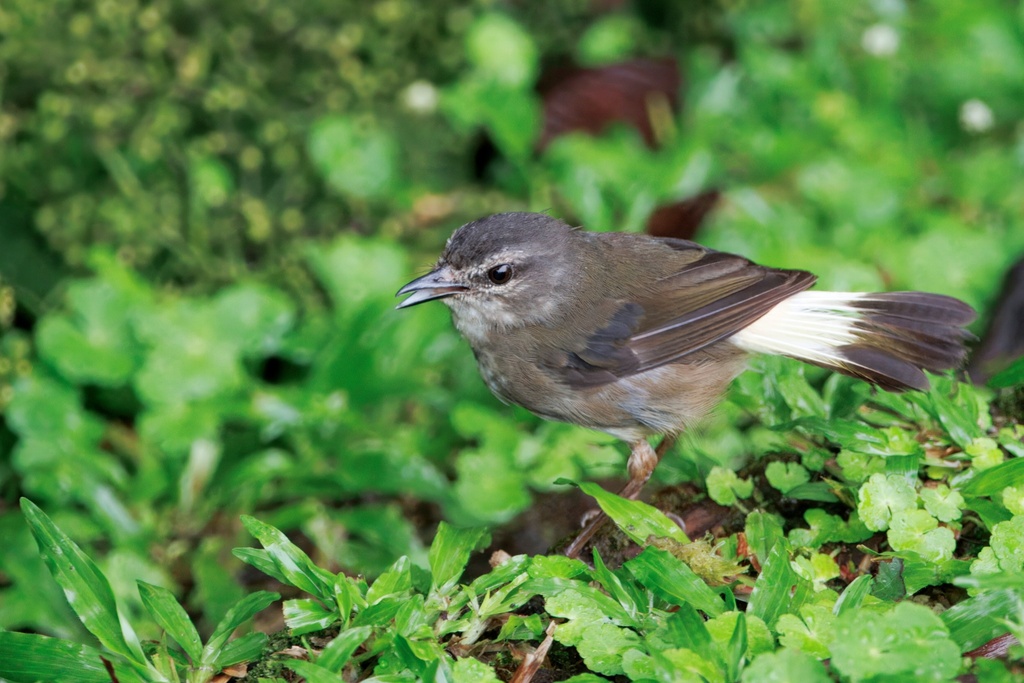
Buff-rumped Warbler
Live sightings near you, the range map, bar charts of when it is seen, and Macaulay Library photos and recordings.
Buff-rumped Warbler
Myiothlypis fulvicauda
The buff-rumped warbler (Myiothlypis fulvicauda) is a New World warbler that is resident from Honduras south to northwestern Peru and disjunctly in the western Amazon. It is found in forests at up to 1500 m altitude, always near water.
From the article Buff-rumped warbler on Wikipedia (CC BY-SA), quoted section by section
Description
The buff-rumped warbler is 13.5 cm (5.3 in) long and weighs about 15 g (0.53 oz). The sexes have the same plumage. Adults of the nominate subspecies M. f. fulvicauda have a slate-gray crown, a buff supercilium, a blackish stripe through the eye, olive-gray ear coverts, and buffy cheeks. Their nape is olive-gray, their back and wings grayish olive, and their lower rump, uppertail coverts, and basal half of the tail feathers are tawny-buff. The other half of their tail is dark olive-brown. Their throat and underparts are whitish with a buff wash on the breast and flanks and richer buff undertail coverts. Adults of all subspecies have a dark iris, a blackish bill, and pale yellowish pink legs and feet. Juveniles have a dark brown head, back, rump, and breast. Their tail is like the adult's. Their belly and undertail coverts are pale buff and they have a mostly pale dusky pink bill. The other subspecies of the buff-rumped warbler differ from the nominate and each other thus:
M. f. leucopygia: darker cheeks, browner crown and upperparts, and paler straw-buff rump and upper tail than nominate; olive spots on the breast M. f. veraguensis: similar to leucopygia with darker rump and upper 2/3 of tail and less distinct breast spots M. f. semicervina: richer buff rump and basal 3/4 of tail and buffier underparts than nominate M. f. …
Range & habitat
The buff-rumped warbler has a disjunct distribution. The ranges of M. f. fulvicauda and M. f. significans are contiguous but are separate from the contiguous ranges of the other four subspecies. The subspecies are found thus:
M. f. leucopygia: slightly in northern Honduras, then from eastern Honduras south on the Caribbean slope through Nicaragua and Costa Rica into western Panama M. f. veraguensis: Pacific slope from central Puntarenas Province in Costa Rica to central Panama M. f. semicervina: from eastern Panama into northern Colombia and south between the Pacific and the Andes through western Colombia and the northern half of Ecuador; from there in the Andean foothills south into far northwestern Peru M. f. motacilla: upper Magdalena River Valley in central Colombia M. f. fulvicauda: the western Amazon Basin from southeastern Colombia south through eastern Ecuador to central Peru and from those countries east into Brazil to the Madeira and Teles Pires rivers and into northern Bolivia M. f. significans: southeastern Peru The buff-rumped warbler inhabits forest landscapes along large and small watercourses in the foothills and in swamps in the lowlands. …
Wikipedia: “Distribution and habitat”
What it does
The buff-rumped warbler feeds primarily on insects and other invertebrates. Single birds and pairs hop along the forest floor and along fallen logs while continuously pumping and wagging their tails. The species mostly gleans its prey but takes some in mid-air with a sally from the ground. It forages along watercourses, around wet areas of forest floor, and by temporary puddles along forest paths. At least in Costa Rica it often attends swarms of army ants.
Wikipedia: “Feeding”
Listen
Looking for field recordings…
Where it lives
Recorded sightings
—
geo-referenced records in GBIF, from museums, herbaria and field observers.
Drag the globe to turn it. Dots are where records exist, not a range map; darker means more records.
In the stacks
Searching the stacks…
Every page naming Myiothlypis fulvicauda in the Biodiversity Heritage Library →
This page is assembled live from iNaturalist, GBIF, Wikipedia, the Source Library and the Internet Archive. It is not yet part of the hand-edited codex. iNaturalist taxon 145266.