On eBird ↗
Fairy Pitta
Live sightings near you, the range map, bar charts of when it is seen, and Macaulay Library photos and recordings.
Fairy Pitta
Pitta nympha
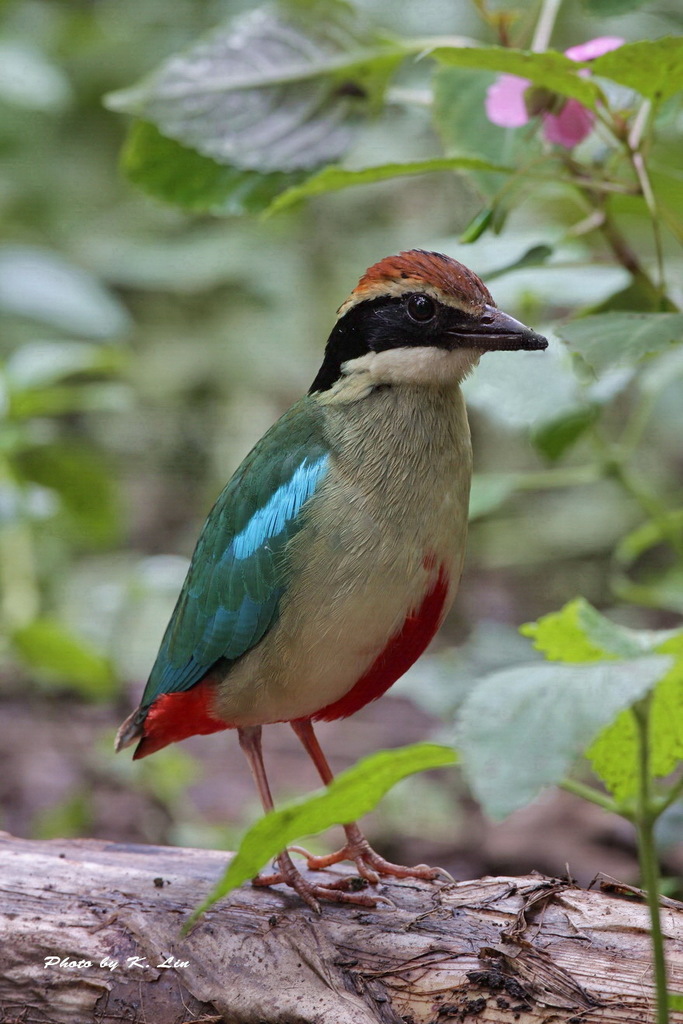
The fairy pitta (Pitta nympha) is a small and brightly colored species of passerine bird in the family Pittidae. Its diet mainly consists of earthworms, spiders, insects, slugs, and snails. The fairy pitta breeds in East Asia and migrates south to winter in Southeast Asia. Due to various habitat and anthropogenic disruptions, such as deforestation, wildfire, hunting, trapping, and cage-bird trade, the fairy pitta is rare and the population is declining in most places. Listed on the Convention on International Trade in Endangered Species of Wild Fauna and Flora (CITES) Appendix II, this bird is classified as vulnerable on the IUCN Red List of Threatened Species.
From the article Fairy pitta on Wikipedia (CC BY-SA), quoted section by section
Description
The fairy pitta has a body length of 16–19.5 cm (6.3–7.7 in) and is easily discernible for its plumage of seven different colors reminiscent of a rainbow. Its back and wing bows are green, scapulars and upper tail coverts are green and cobalt. There is a blue rump on upper tail coverts. The tail is dark green with a cobalt tip, and the tarsi are yellowish brown. The fairy pitta has different colors of wing coverts as well. Its primary coverts are dark blue, secondary coverts are greenish blue, greater and middle coverts are dark green, and lesser coverts are cobalt or bright blue. The bird's white patch on each of their brownish-black primaries are noticeable when it flies. Its lower body, including nape, chest, and side, is cream-colored, except for the lower belly and undertail coverts, which are red. The bird has a chestnut crown. From its forehead to the back of its head is mantled with brown plumage, whereas its median is striped with black from lores to nape. The off-white supercilia extend across the nape. The fairy pitta has a white throat and a black beak. A species with a similar appearance is the blue-winged pitta, which is larger than the fairy pitta. …
Range & habitat
The fairy pitta is a migratory species and travels from Northeast Asia, where it breeds in summer (April–September) to South and Southeast Asia to spend the winter (October–March). Sightings have been reported from India and Indochina, including both the Bruneian and Kalimantan sides of the island of Borneo, and New Guinea, as well as in China, North Korea, South Korea, and Taiwan. Recorded stopovers are in North Korea, Vietnam, Hong Kong, the Philippines, and Thailand. Following the same migratory routes in both spring and autumn every year, the majority of passages occur in April and September to October. Even though the bird is fairly widespread throughout the eastern part of Asia, the fact that it is highly localized in subtropical forests suggests that the fairy pitta is faithful to wintering sites and requires specific habitat conditions. The fairy pitta leaving from Borneo in spring arrives in the Korean Peninsula in early or mid-May and departs back to south in October. However, migrations occur throughout the country in spring and winter. The fairy pitta breeds on the coasts, islands, or in dense and moist deciduous forests, such as camellia forest, in Hwanghae Province, Gyeonggi Province, South Gyeongsang Province, and South Jeolla Province. Among those habitats, the fairy pitta mostly prefers islands off the southern part of Korea. …
Wikipedia: “Distribution and habitat”
What it does
The fairy pitta is a territorial bird, and the male defends its territory through calls. Its general habit is however secretive. From mid-May to early June, sometimes to late July, it likes to perch on a high tree branch in a posture resembling that of a kingfisher. However, the fairy pitta tends to repeatedly shake its tail up and down while singing on a branch.
Diet and feeding. The fairy pitta mostly feeds on the ground, wandering solitarily. Its diet largely consists of earthworms of several species, beetles, and other hard-shelled insects. A variety of other small animals such as lepidoptera larvae and adults, spiders, snails, lizards, frogs, small snakes, and shrews, occasionally form part of its diet. Earthworms make up 73%–82% of the diet fed to the nestlings, followed by homoptera larvae (4%–8.6%). Although not entirely identifiable, lepidopteran adults and pupae likely make up 11% of the nestling diet. The fairy pitta's preference for earthworms with their high energy content makes the abundance of this food item critical for nesting success.
Reproduction. The fairy pitta makes a relatively large nest in the dark place, such as in the crevice between rocks in thick broadleaf forest or foliage on a slope, 1–5 m above the ground. The entrance is lined with cattle dung and the nest itself is lined with lichen. …
Wikipedia: “Behavior”
Listen
Looking for field recordings…
Where it lives
Recorded sightings
—
geo-referenced records in GBIF, from museums, herbaria and field observers.
Drag the globe to turn it. Dots are where records exist, not a range map; darker means more records.
In the stacks
Searching the stacks…
Every page naming Pitta nympha in the Biodiversity Heritage Library →
This page is assembled live from iNaturalist, GBIF, Wikipedia, the Source Library and the Internet Archive. It is not yet part of the hand-edited codex. iNaturalist taxon 14458.