- Animals
- ›Chordates
- ›Vertebrates
- ›Birds
- ›Pelicans, Herons, Ibises, and Allies
- ›Herons, Egrets, and Bitterns
- ›Typical Herons and Egrets
- ›Egretta
On eBird ↗
Pied Heron
Live sightings near you, the range map, bar charts of when it is seen, and Macaulay Library photos and recordings.
Pied Heron
Egretta picata
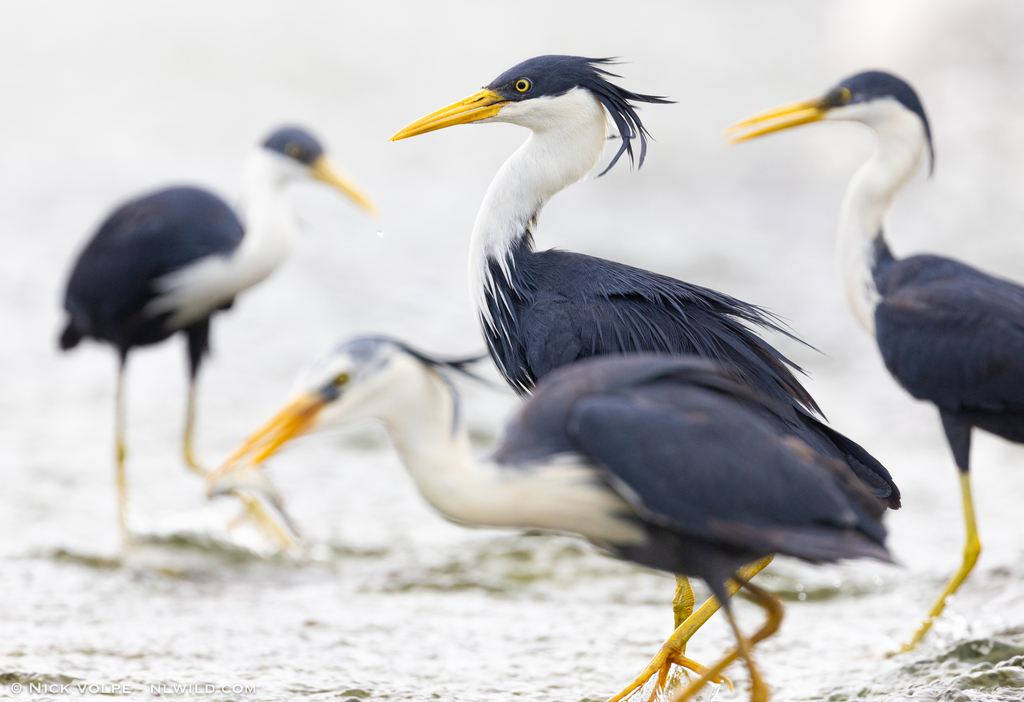
The pied heron (Egretta picata), also known as the pied egret is a bird found in coastal and subcoastal areas of monsoonal northern Australia as well as some parts of Wallacea and New Guinea.
From the article Pied heron on Wikipedia (CC BY-SA), quoted section by section
Description
It is a small heron, 43–55 cm (17–22 in) long, with dark slaty wings, body, and crested head, with a white throat and neck. The appearance is similar to the white-necked heron. Males (247–280 g (8.7–9.9 oz)) are heavier than females (225–242 g (7.9–8.5 oz)), but the two are similar in appearance. Immature birds lack the crest as well as the dark colouring on the head and may look like small versions of the white-necked heron. The juveniles were once classified as a separate species.
What it does
It feeds on insects, frogs, crabs, fish and other small aquatic animals. Insects are the most important source of food. It may feed alone or in groups of up to a thousand individuals.
Wikipedia: “Feeding”
Listen
Looking for field recordings…
Where it lives
Recorded sightings
—
geo-referenced records in GBIF, from museums, herbaria and field observers.
Drag the globe to turn it. Dots are where records exist, not a range map; darker means more records.
In the stacks
Searching the stacks…
Every page naming Egretta picata in the Biodiversity Heritage Library →
This page is assembled live from iNaturalist, GBIF, Wikipedia, the Source Library and the Internet Archive. It is not yet part of the hand-edited codex. iNaturalist taxon 144456.