- Animals
- ›Arthropods
- ›Hexapods
- ›Insects
- ›Winged and Once-winged Insects
- ›Grasshoppers, Crickets, and Katydids
- ›Katydids, Crickets, and Allies
- ›Crickets
- ›True Crickets and Allies
- ›Trigs, Sword-tailed Crickets, and Ground Crickets
- ›Ground Crickets
- ›Pteronemobiini
- ›Allonemobius
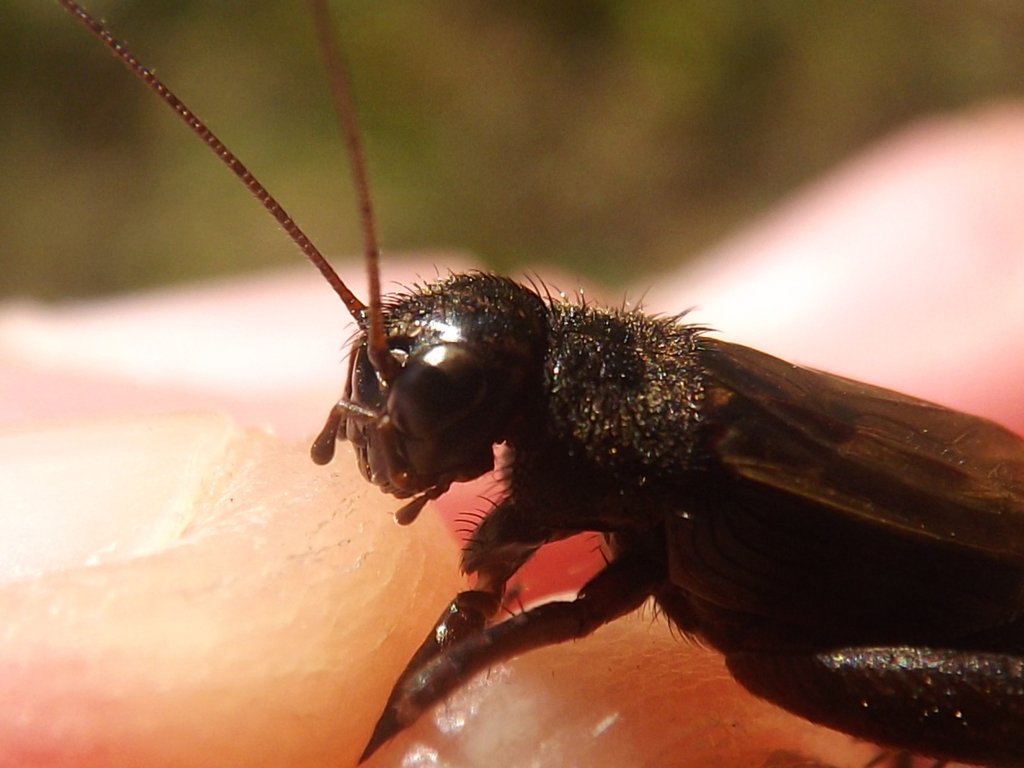
Striped Ground Cricket
Allonemobius fasciatus
Allonemobius fasciatus, commonly known as the striped ground cricket, is an omnivorous species of cricket that belongs to the subfamily Nemobiinae. A. fasciatus is studied in depth in evolutionary biology because of the species's ability to hybridize with another Allonemobius species, A. socius.
From the article Allonemobius fasciatus on Wikipedia (CC BY-SA), quoted section by section
Range & habitat
A. fasciatus is widely distributed in North America, covering eastern and western portions. A. fasciatus typically prefers short grassland habitats. Depending where A. fasciatus resides, traits such a body size can differ. Within North America, there are various hybrid zones, such as in New Jersey, where A. fasciatus has the ability to hybridize with a close relative, A. socius. A. fasciatus is considered to inhabit northern regions of North America, whereas A. socius inhabits southern regions. In areas where topography can vary, like in mountain regions, A. fasciatus is believed to be found at higher elevations, whereas A. socius is believed to be found in lower elevations. This can be referred to as a mosaic hybrid zone. A mosaic hybrid zone occurs because the habitat ranges for A. fasciatus and A. socius overlap. While it is known that for the most part A. fasciatus remains separated from A. socius when breeding, the potential for interbreeding can occur.
Wikipedia: “Distribution”
What it does
A. fasciatus is a univoltine species. It can take a nymph up to two months to hatch. This species is photosensitive and development will increase in speed as daylight decreases. This phenomenon is indicative of seasonal synchrony.
Wikipedia: “Life cycle”
Listen
Looking for field recordings…
Where it lives
Recorded sightings
—
geo-referenced records in GBIF, from museums, herbaria and field observers.
Drag the globe to turn it. Dots are where records exist, not a range map; darker means more records.
In the stacks
Searching the stacks…
Every page naming Allonemobius fasciatus in the Biodiversity Heritage Library →
This page is assembled live from iNaturalist, GBIF, Wikipedia, the Source Library and the Internet Archive. It is not yet part of the hand-edited codex. iNaturalist taxon 143387.