- Animals
- ›Chordates
- ›Vertebrates
- ›Birds
- ›Hawks, Eagles, Kites, and Allies
- ›Hawks, Eagles, and Kites
- ›Honey-buzzards, Pernine Kites, and Allies
- ›Chondrohierax
On eBird ↗
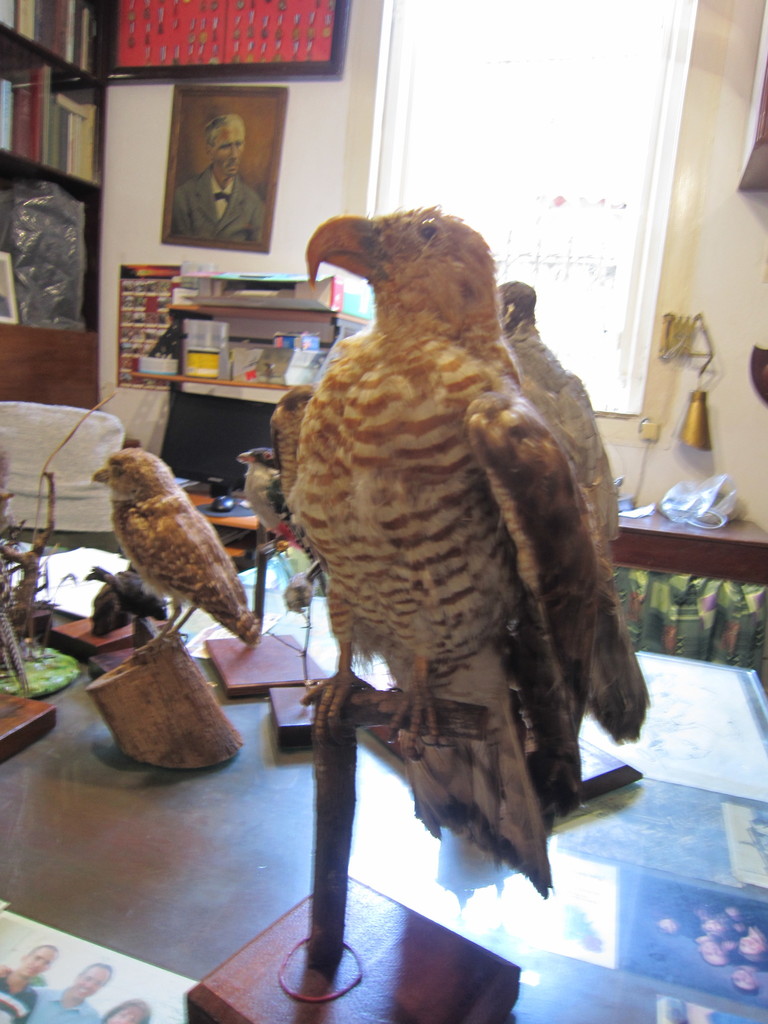
Cuban Kite
Live sightings near you, the range map, bar charts of when it is seen, and Macaulay Library photos and recordings.
Cuban Kite
Chondrohierax wilsonii
The Cuban kite (Chondrohierax wilsonii) is a bird of prey in the family Accipitridae which also includes many other diurnal raptors such as kites, eagles and harriers. The species was originally described in 1847 by John Cassin from material at The Academy of Natural Sciences of Philadelphia. It is endemic to Cuba.
The Clements Checklist considered it as subspecies of the hook-billed kite until its 2022 revision. A molecular phylogenetics analysis using mitochondrial DNA suggests that it warrants species status having diverged from the mainland lineage approximately 400,000 to 1.5 million years ago.
From the article Cuban kite on Wikipedia (CC BY-SA), quoted section by section
Description
The Cuban kite is a little smaller than the hook-billed kite. Males have gray upperparts, black bars on the tail, and the underparts evenly barred grayish and white. Females resemble the Grenada form of hook-billed kite, but the brown barring on the underparts is less rufescent. The bill of Cuban kite is yellowish, in contrast to hook-billed kite's mostly dark bill. The genus name Chondrohierax comes from the Greek meaning cartilage hawk.
Range & habitat
In the 20th century the Cuban kite was only reported in the Sagua-Baracoa mountain range in the provinces of Holguín, from which the species was originally described, Santiago de Cuba, and Guantánamo. Recent studies indicate that the species is now restricted to small areas in the east of Cuba, near Moa and Baracoa, and possibly some other parts of Holguín and Guantánamo. Lives in tall trees of forests bordering rivers below 500 m (1640 ft).
Wikipedia: “Distribution”
What it does
Cuban kites feed on colored tree snails (possibly of the genera: Zachrysia,Coryda, and Polymita) and slugs (possibly of the genus Veronicella), which they find in the forest undergrowth, for which the deeply hooked bill is thought to be adapted. Their perches are often found by looking for piles of snail shells and feces.
Wikipedia: “Behavior”
Listen
Looking for field recordings…
Where it lives
Recorded sightings
—
geo-referenced records in GBIF, from museums, herbaria and field observers.
Drag the globe to turn it. Dots are where records exist, not a range map; darker means more records.
In the stacks
Searching the stacks…
Every page naming Chondrohierax wilsonii in the Biodiversity Heritage Library →
This page is assembled live from iNaturalist, GBIF, Wikipedia, the Source Library and the Internet Archive. It is not yet part of the hand-edited codex. iNaturalist taxon 1423404.