 NL·0638
Herbarium of the Nature Library
- Name
- Quelea quelea
- Family
- Ploceidae
- Native to
- Sub-Saharan Africa outside rainforest and true desert
- Habitat
- Savanna, Grassland, Farmland
On eBird ↗
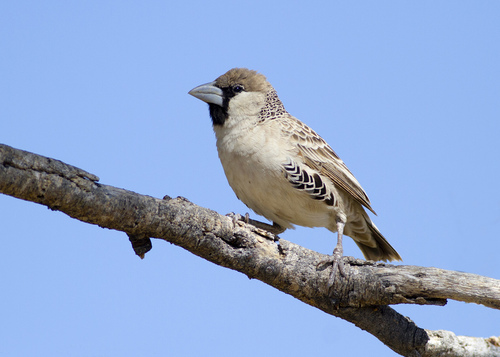
Red-billed Quelea
Live sightings near you, the range map, bar charts of when it is seen, and Macaulay Library photos and recordings.
Red-billed quelea
Quelea quelea
Also calledRooibekkwelea (Afrikaans) · Travailleur à bec rouge (French)
Probably the most abundant wild bird on Earth, with a post-breeding population estimated at around 1.5 billion. Its vast flocks, darkening the sky, can strip a grain field in hours, earning it the name 'feathered locust'.
The red-billed quelea, also known as the red-billed weaver or red-billed dioch, is a small, seasonally nomadic, sparrow-like bird of the weaver family, Ploceidae, native to sub-Saharan Africa. It is approximately 12 cm (4.7 in) long and weighs 15 to 26 g. Wikipedia
What it can do
- iForms flocks of millions that move with seasonal rains to follow ripening grass seed
- iiBreeding colonies can contain millions of nests across many hectares
- iiiChicks can leave the nest about two weeks after hatching
In the field
Field marks
- aThick, conical red bill (yellowish in breeding females)
- bBreeding males: black (or pale) face mask framed by pink or buff
- cStreaky brown sparrow-like body
- dRed eye-ring
- Voice
- Constant chattering twitter from flocks; male song a jumbled, harsh warble.
- Not to be confused with
- Red-headed and cardinal queleas are smaller-billed, with red heads in breeding males. Non-breeding bishops and widowbirds look similar but have dark or horn-coloured bills, not red.
- Where to see it
- Large flocks across Kalahari, Etosha, Serengeti, the Sahel, especially near water in the dry season
- When
- Present year-round, moving nomadically with rains; breeds in the wet season
Listen
Looking for field recordings…
Life & habits
- Diet
- Grass seeds, cultivated grains and insects
- Habitat
- Dry savanna, grassland and cultivated land
- Size
- About 12 cm; 15–26 g
Feeding flocks 'roll' across the ground as birds at the back leapfrog over those in front.
Where it lives
Recorded sightings
—
geo-referenced records in GBIF, from museums, herbaria and field observers.
Native range
Sub-Saharan Africa outside rainforest and true desert
Drag the globe to turn it. Dots are where records exist, not a range map; darker means more records.
In the stacks
Searching the stacks…
Every page naming Quelea quelea in the Biodiversity Heritage Library →
Marginalia
Quelea control, using aerial spraying and explosives at roosts, has been a major agricultural programme across Africa since the mid-20th century.
Curiosity
Despite control operations killing many millions of birds each year, the quelea's overall population has not noticeably declined.
Kinship





Photographs: iNaturalist contributors under the licences shown. Records: GBIF.org. Historical plates: Source Library (CC BY-SA 4.0; originals public domain). Summary text: Nature Library editors and Wikipedia (CC BY-SA). Medicinal and edibility notes are historical and educational, not advice. iNaturalist taxon 14005.