On eBird ↗
Seychelles Fody
Live sightings near you, the range map, bar charts of when it is seen, and Macaulay Library photos and recordings.
Seychelles Fody
Foudia sechellarum
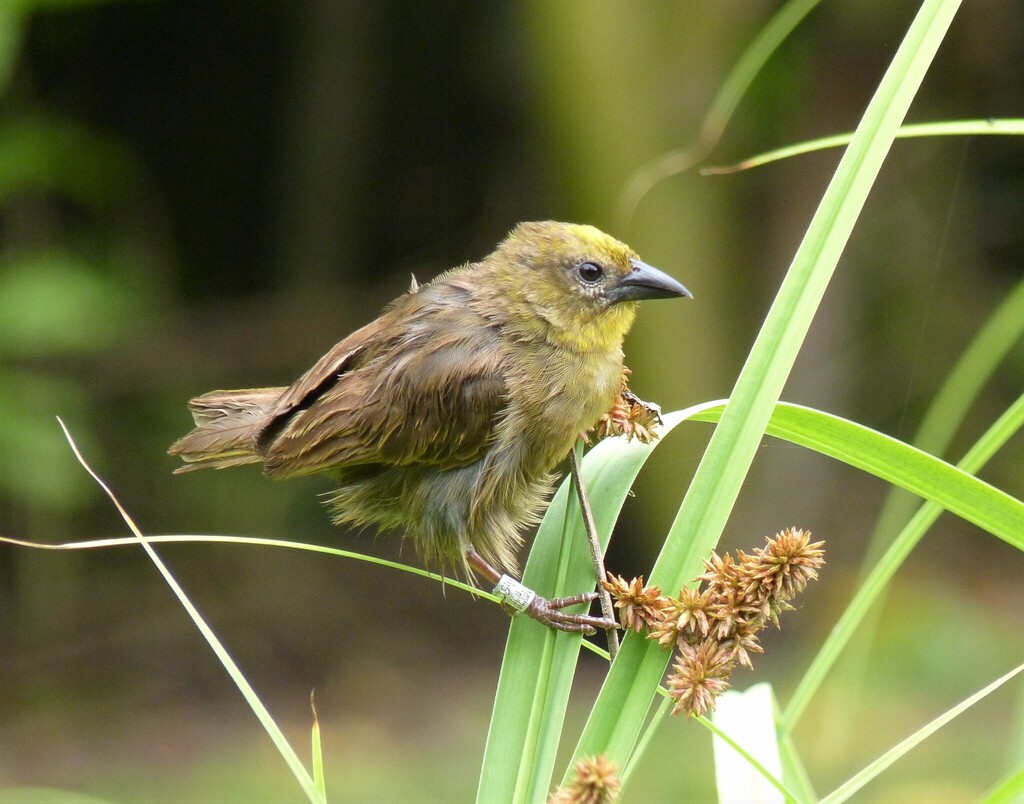
The Seychelles fody (Foudia sechellarum) is a small yellowish songbird that are native to the Seychelles islands of Cousin Island, Cousine Island, Frégate Island, and have been introduced to Aride Island, D'Arros Island and as of 2004 Denis Island. Their natural habitat is woodland, but they have adapted to living in such habitats as coconut plantations and gardens.
From the article Seychelles fody on Wikipedia (CC BY-SA), quoted section by section
Description
The male Seychelles fody has a yellow face in breeding plumage which the female lacks. The plumage is in general a drab olive and the beak is black. This bird grows to a length of about 12.5 cm (5 in). The female and juvenile resembles the female and juvenile red fody (Foudia madagascariensis), but can be distinguished by having upper parts with less streaking.
What it does
The Seychelles fody feeds mainly on insects and other small arthropods, as well as eating fruit, nectar and seeds. It has been known to feed on the eggs of seabirds such as the White tern. The diet includes bugs, beetles, ants and spiders. On Cousin, this bird has a clearly defined breeding season, between May and September, after which period it moults. On some other islands it seems to breed throughout the year. It shares the same habitat in the Seychelles with a related introduced species, the red fody.
Wikipedia: “Ecology”
Listen
Looking for field recordings…
Where it lives
Recorded sightings
—
geo-referenced records in GBIF, from museums, herbaria and field observers.
Drag the globe to turn it. Dots are where records exist, not a range map; darker means more records.
In the stacks
Searching the stacks…
Every page naming Foudia sechellarum in the Biodiversity Heritage Library →
This page is assembled live from iNaturalist, GBIF, Wikipedia, the Source Library and the Internet Archive. It is not yet part of the hand-edited codex. iNaturalist taxon 13878.