- Animals
- ›Arthropods
- ›Hexapods
- ›Insects
- ›Winged and Once-winged Insects
- ›Butterflies and Moths
- ›Owlet Moths and Allies
- ›Underwing, Tiger, Tussock, and Allied Moths
- ›Tiger Moths and Allies
- ›Tiger Moths
- ›Arctiina
- ›Apantesis
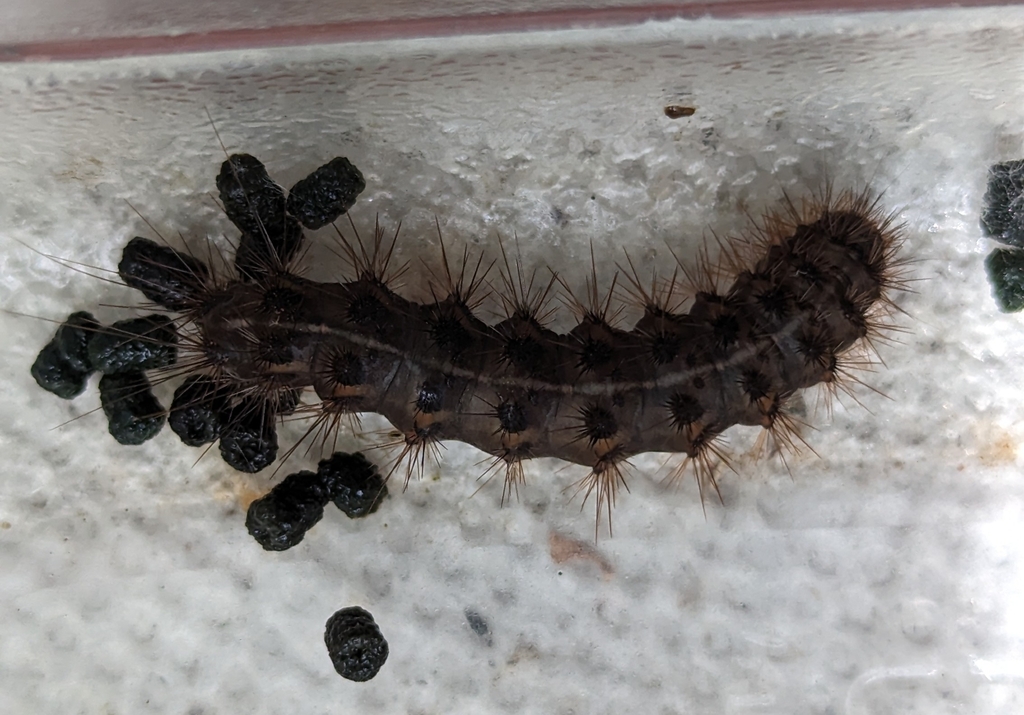
Harnessed Tiger Moth
Apantesis phalerata
Apantesis phalerata (harnessed tiger moth) is a species of moth of the family Erebidae. It is found from Ontario, Quebec and Maine to Florida, west to Texas, north to South Dakota.
From the article Apantesis phalerata on Wikipedia (CC BY-SA), quoted section by section
Description
Harnessed tiger moths are part of the subfamily Arctiinae, which comprises about 11,000 species of tiger moths divided across three tribes globally. Similar to cicadas, tiger moths possess tymbals on their metathorax, which they use to produce high frequency clicks. These clicks serve as a defensive mechanism against predation and as a means of communication during mating.
Range & habitat
Harnessed tiger moths are indigenous to North America, with a geographical distribution that spans from Ontario, Quebec, and Maine in the north, stretching down to Florida, Texas, and South Dakota. The activity period for A. phalerata varies regionally, from April to September in the southern parts of its range, and from May to August in the northern areas.
Wikipedia: “Distribution”
What it does
Throughout its life cycle, which includes the stages of egg, larva (caterpillar), pupa, and adult, A. phalerata undergoes complete metamorphosis. As caterpillars, they feed on a variety of vegetation including grasses, garden crops, and low-growing plants such as Trifolium (clover), Spartina (cordgrass), Taraxacum (dandelion), and Plantago (plantain). The cocoon of a harnessed tiger moth is primarily made from larval hairs. Adult A. phalerata moths have a wingspan ranging from 30 to 42 mm (1.2 to 1.7 inches) and are known for their distinctive black and orange wing patterns, which has earned them the name "tiger" moth. This coloration is a form of aposematism, a strategy used to warn predators of their unpalatability. Despite their warning colors, harnessed tiger moths are preyed upon by bats, which rely on echolocation to hunt. The moths' vibrant colors serve as a visual deterrent, signaling to potential predators that they are distasteful. Following mating, the lifespan of a harnessed tiger moth ranges from 5 to 10 days. The lifespan and mortality are influenced by various factors, including the act of mating itself and dietary conditions.
Wikipedia: “Life cycle and behavior”
Listen
Looking for field recordings…
Where it lives
Recorded sightings
—
geo-referenced records in GBIF, from museums, herbaria and field observers.
Drag the globe to turn it. Dots are where records exist, not a range map; darker means more records.
In the stacks
Searching the stacks…
Every page naming Apantesis phalerata in the Biodiversity Heritage Library →
This page is assembled live from iNaturalist, GBIF, Wikipedia, the Source Library and the Internet Archive. It is not yet part of the hand-edited codex. iNaturalist taxon 135318.