- Animals
- ›Arthropods
- ›Hexapods
- ›Insects
- ›Winged and Once-winged Insects
- ›Dragonflies and Damselflies
- ›Damselflies
- ›Coenagrionoid Damselflies
- ›Narrow-winged Damselflies
- ›Coenagrion
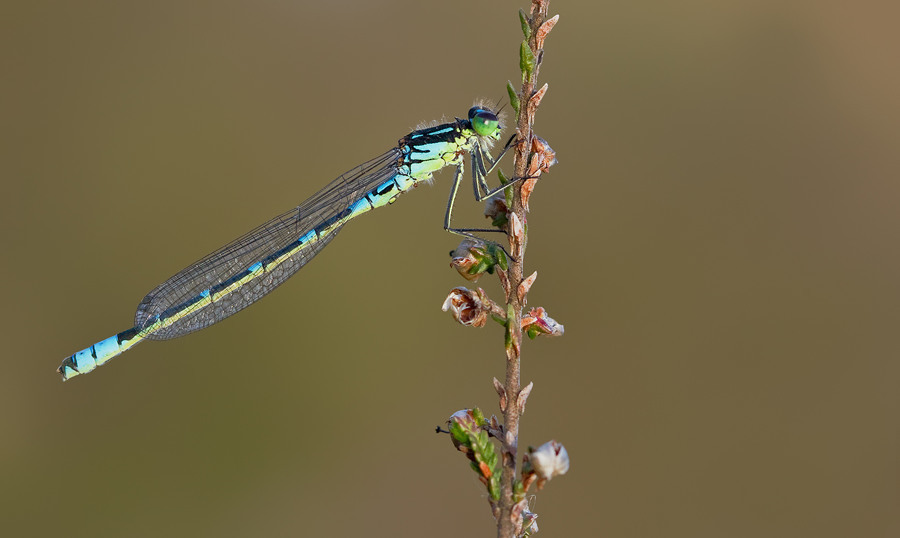
Irish Damselfly
Coenagrion lunulatum
The Irish damselfly or crescent bluet (Coenagrion lunulatum) is a damselfly found in northern Europe and Asia to north-eastern China;. It is common and widespread in northern Finland, scarce and local in the Netherlands and Ireland and rare elsewhere. The Irish damselfly name comes from the fact that it is found in Ireland but not in Great Britain. The alternative name, crescent bluet, refers to the shape of the markings on segment two of the male and its scientific name.
From the article Irish damselfly on Wikipedia (CC BY-SA), quoted section by section
Description
This species is similar to the azure damselfly (C. puella), the variable damselfly (C. pulchellum) and the common blue damselfly (Enallagma cyathigerum) with which it coexists. However, both the female and male are darker and shorter-bodied in comparison with other blue damselflies. The species can be identified using the following features:
In males the back of the abdomen is mostly black, whilst segments 8 and 9 are all blue. In males the underside is bright green especially on the head and thorax (see side view) The blue is of a darker shade than similar species Females are dull green with black markings In females the hind margin of the pronotum has a prominent raised point
Wikipedia: “Appearance”
Listen
Looking for field recordings…
Where it lives
Recorded sightings
—
geo-referenced records in GBIF, from museums, herbaria and field observers.
Drag the globe to turn it. Dots are where records exist, not a range map; darker means more records.
In the stacks
Searching the stacks…
Every page naming Coenagrion lunulatum in the Biodiversity Heritage Library →
This page is assembled live from iNaturalist, GBIF, Wikipedia, the Source Library and the Internet Archive. It is not yet part of the hand-edited codex. iNaturalist taxon 134100.