- Animals
- ›Chordates
- ›Vertebrates
- ›Birds
- ›Perching Birds
- ›Old World Flycatchers, Robins, and Chats
- ›Humblotia
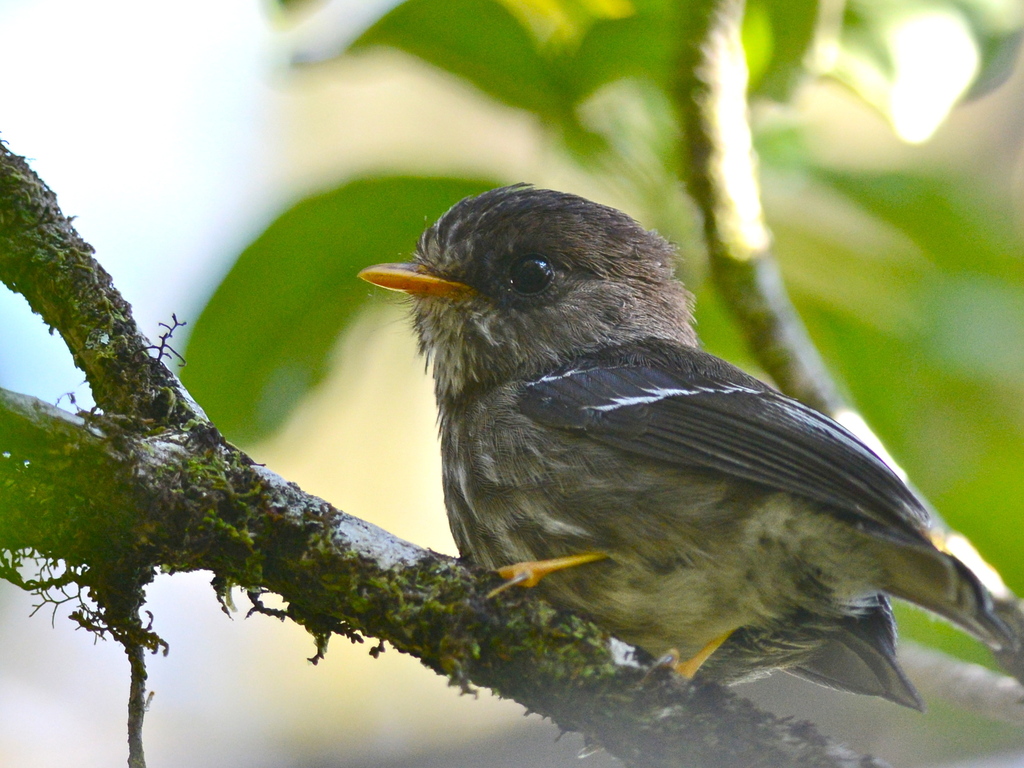
On eBird ↗
Grande Comore Flycatcher
Live sightings near you, the range map, bar charts of when it is seen, and Macaulay Library photos and recordings.
Grande Comore Flycatcher
Humblotia flavirostris
Humblot's flycatcher or the Grand Comoro flycatcher (Humblotia flavirostris) is a small passerine bird belonging to the Old World flycatcher family. It is the only member of the its genus. Humblot's flycatcher is endemic to the island of Grand Comoro in the Comoros where it inhabits forest on the slopes of Mount Karthala. The scientific name commemorates the French naturalist Léon Humblot.
From the article Humblot's flycatcher on Wikipedia (CC BY-SA), quoted section by section
Description
The upperparts are grey-brown while the underparts are pale with dark streaks. It has a dark crown with pale streaks and the bill and feet are yellow-orange. The bird is 14 centimetres (5.5 in) long. It is often silent but has a soft trilling call. It differs from Muscicapa and other flycatchers in having plumage with a very soft and fluffy texture, and by having distinctive feathers on the crown that are a modification that represents the beginnings of the formation of a crest.
What it does
Humblot's flycatcher feeds on insects which it catches by making short flights from a perch low in a tree or bush. Often, it will feed in groups of two or three. Little is known about its breeding habits; the only known nest was a cup built high in a tree which contained at least two young.
Wikipedia: “Ecology”
Listen
Looking for field recordings…
Where it lives
Recorded sightings
—
geo-referenced records in GBIF, from museums, herbaria and field observers.
Drag the globe to turn it. Dots are where records exist, not a range map; darker means more records.
In the stacks
Searching the stacks…
Every page naming Humblotia flavirostris in the Biodiversity Heritage Library →
This page is assembled live from iNaturalist, GBIF, Wikipedia, the Source Library and the Internet Archive. It is not yet part of the hand-edited codex. iNaturalist taxon 13266.