Sypheotides
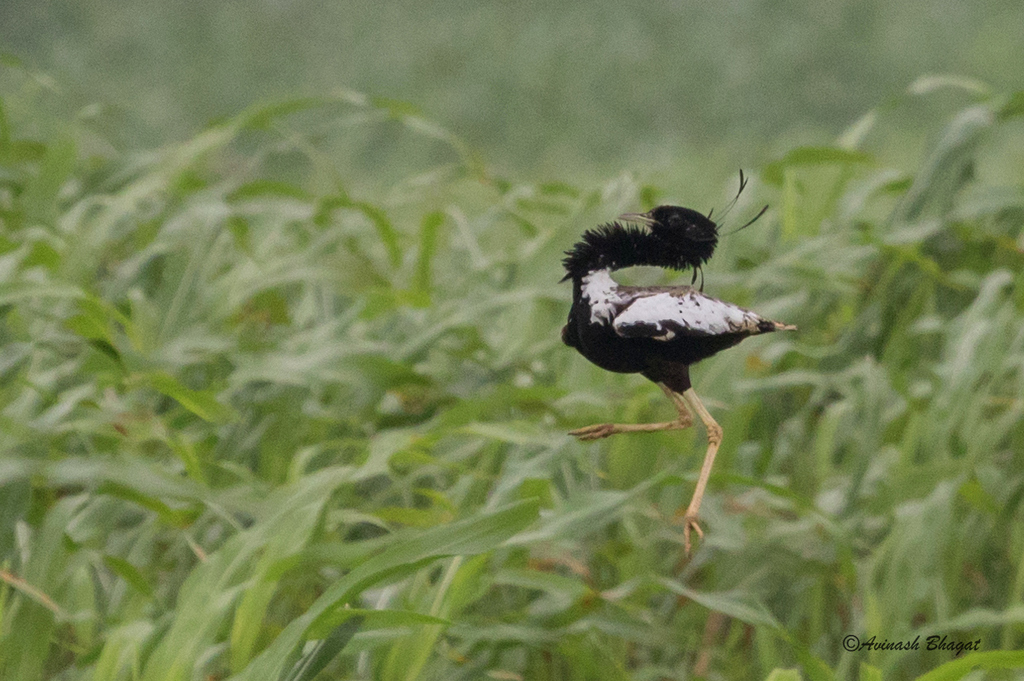
The lesser florican (Sypheotides indicus), also known as the likh or kharmore, is the smallest in the bustard family and the only member of the genus Sypheotides. It is endemic to the Indian Subcontinent where it is found in tall grasslands and is best known for the leaping breeding displays made by the males during the monsoon season. The male has a contrasting black and white breeding plumage and distinctive elongated head feathers that extend behind the neck. These bustards are found mainly in northwestern and central India during the summer but are found more widely distributed across India in winter. The species is highly endangered and has been extirpated in some parts of its range such as Pakistan. It is threatened both by hunting and habitat degradation. The only similar species is the Bengal florican (Houbarobsis bengalensis) which is larger and lacks the white throat, collar and elongated plumes.
1 branches of this genus, most-observed first · about 1 known species
See this branch on the Wheel of Life →
Where it lives
Recorded sightings
—
geo-referenced records in GBIF, from museums, herbaria and field observers.
Drag the globe to turn it. Dots are where records exist, not a range map; darker means more records.
In the stacks
Searching the stacks…
Every page naming Sypheotides in the Biodiversity Heritage Library →
This page is assembled live from iNaturalist, GBIF, Wikipedia, the Source Library and the Internet Archive. It is not yet part of the hand-edited codex. iNaturalist taxon 129.