- Plants
- ›Vascular Plants
- ›flowering plants
- ›Dicots
- ›saxifrages, stonecrops, and allies
- ›peony family
- ›Paeonia
- ›Paeonia
- ›Albiflorae
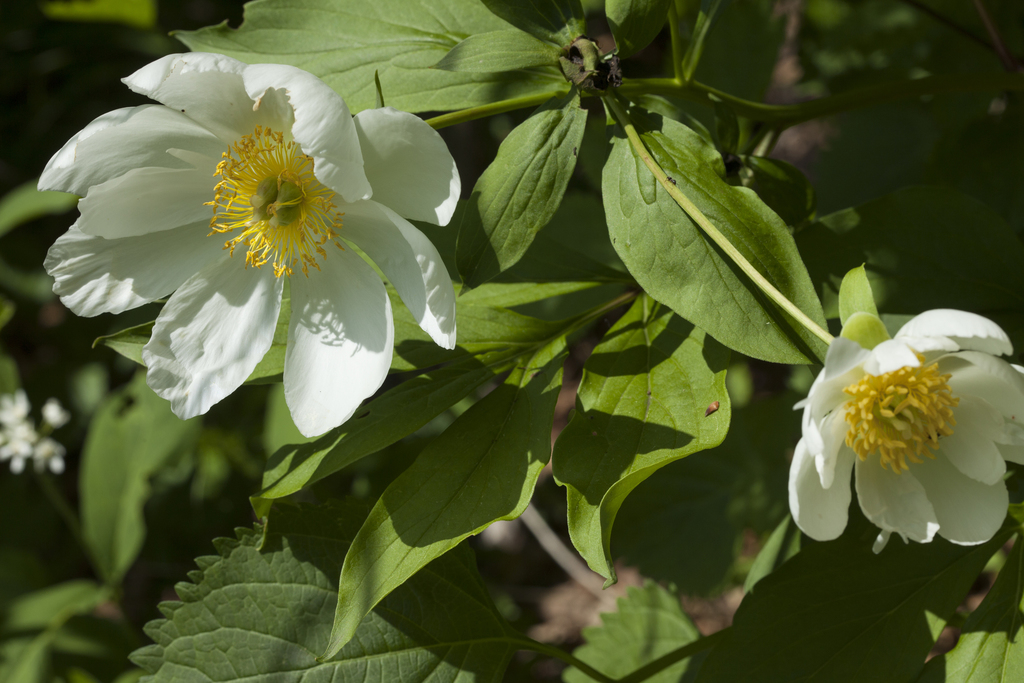
Chinese peony
Paeonia lactiflora
Paeonia lactiflora (Chinese peony, Chinese herbaceous peony, or common garden peony) is a species of herbaceous perennial flowering plant in the family Paeoniaceae, native to central and eastern Asia from eastern Tibet across northern China to eastern Siberia.
From the article Paeonia lactiflora on Wikipedia (CC BY-SA), quoted section by section
Description
It is 50–70 cm (20–28 in) tall and broad, with 9-lobed leaves 20–40 cm (8–16 in) long. The flower buds appear in late spring (May in the Northern Hemisphere). They are large and round, opening into fragrant, cup- or bowl-shaped flowers 8–16 cm (3–6 in) in diameter, with 5–10 white, pink, or crimson petals and yellow stamens. The plant attracts butterflies. Its habitats include dry open stony slopes, riverbanks and sparse woodland edges.
In human culture
Paeonia lactiflora became a popular still life subject for Impressionist artists in the late 19th century.
Pierre-Auguste Renoir featured Peonies in multiple paintings from the 1870s through the 1890s. The Independent wrote of his fondness for the flower that: "They had been introduced into the horticultural world of Paris in the 1860s, so there was still something of the exotic about them, and Renoir paints them rather solemnly and majestically." Vincent van Gogh painted "Vase with Peonies", "Bowl with Peonies and Roses" and "Vase with cornflowers and poppies, peonies and chrysanthemums", all in 1886. Claude Monet painted "Vase of Peonies" in 1882. Édouard Manet cultivated peonies in his garden and painted them frequently. The Impressionist artist Frédéric Bazille painted "Young Woman with Peonies" in 1870 as a tribute to his friend Manet, knowing his fondness for the flower.
Wikipedia: “In art and culture”
Where it lives
Recorded sightings
—
geo-referenced records in GBIF, from museums, herbaria and field observers.
Drag the globe to turn it. Dots are where records exist, not a range map; darker means more records.
In the stacks
Searching the stacks…
Every page naming Paeonia lactiflora in the Biodiversity Heritage Library →
This page is assembled live from iNaturalist, GBIF, Wikipedia, the Source Library and the Internet Archive. It is not yet part of the hand-edited codex. iNaturalist taxon 127857.