
New World Quails
Odontophoridae
The New World quail are small birds that, despite their similar appearance and habits to the Old World quail, belong to a different family known as the Odontophoridae. In contrast, the Old World quail are in the Phasianidae family, sharing only a remote phylogenetic connection with their New World counterparts through their mutual classification within the Phasianoidea superfamily. The geographical range of the New World quail extends from Canada to southern Brazil, and two species, the California quail and the bobwhite quail, have been successfully introduced to New Zealand. The stone partridge and Nahan's partridge, both found in Africa, seem to belong to the family. Species are found across a variety of habitats from tropical rainforest to deserts, although a few species are capable of surviving at very low temperatures. There are 34 species divided into 10 genera.
The legs of most New World quails are short but powerful, with some species having very thick legs for digging. They lack the spurs of many Old World galliformes. Although they are capable of short bursts of strong flight, New World quails prefer to walk, and run from danger (or hide), taking off explosively only as a last resort. Plumage varies from dull to spectacular, and many species have ornamental crests or plumes on their heads. Moderate sexual dichromism is seen in plumage, with males having brighter plumage.
11 branches of this family, most-observed first · about 34 known species

Crested Quails
genusCallipepla

Bobwhites
genusColinus
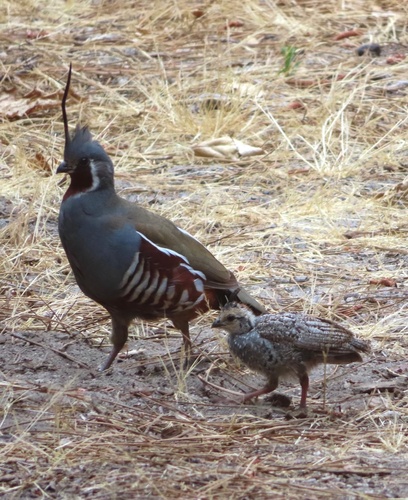
Mountain quails
genusOreortyx

Wood-Quails
genusOdontophorus

Montezuma and Ocellated Quails
genusCyrtonyx

Wood-Partridges
genusDendrortyx
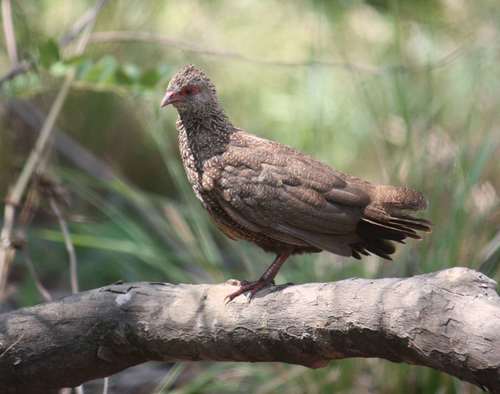
Stone and Nahan's Partridges
genusPtilopachus
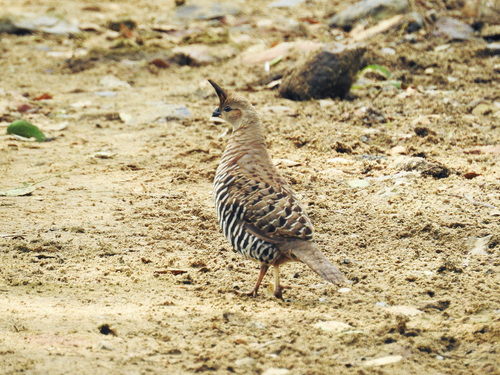
Banded quails
genusPhilortyx
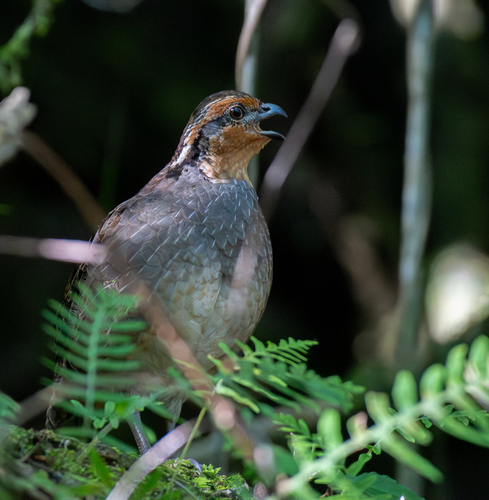
Singing quails
genusDactylortyx
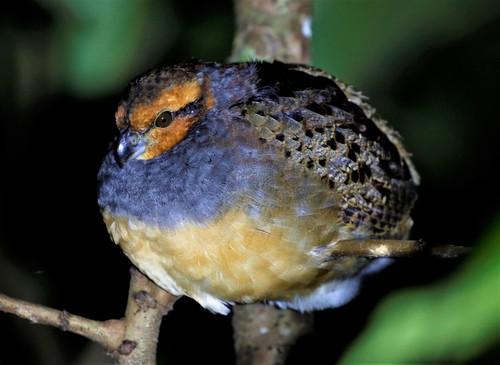
Tawny-faced quails
genusRhynchortyx

Crested Quails × Bobwhites
genushybridCallipepla × Colinus
Where it lives
Recorded sightings
—
geo-referenced records in GBIF, from museums, herbaria and field observers.
Drag the globe to turn it. Dots are where records exist, not a range map; darker means more records.
In the stacks
Searching the stacks…
Every page naming Odontophoridae in the Biodiversity Heritage Library →
This page is assembled live from iNaturalist, GBIF, Wikipedia, the Source Library and the Internet Archive. It is not yet part of the hand-edited codex. iNaturalist taxon 1278.