- Animals
- ›Arthropods
- ›Hexapods
- ›Insects
- ›Winged and Once-winged Insects
- ›Ants, Bees, Wasps, and Sawflies
- ›Narrow-waisted Wasps, Ants, and Bees
- ›Ants, Bees, and Stinging Wasps
- ›Bees and Apoid Wasps
- ›Square-headed Wasps, Sand Wasps, and Allies
- ›Mellininae
- ›Mellinini
- ›Mellinus
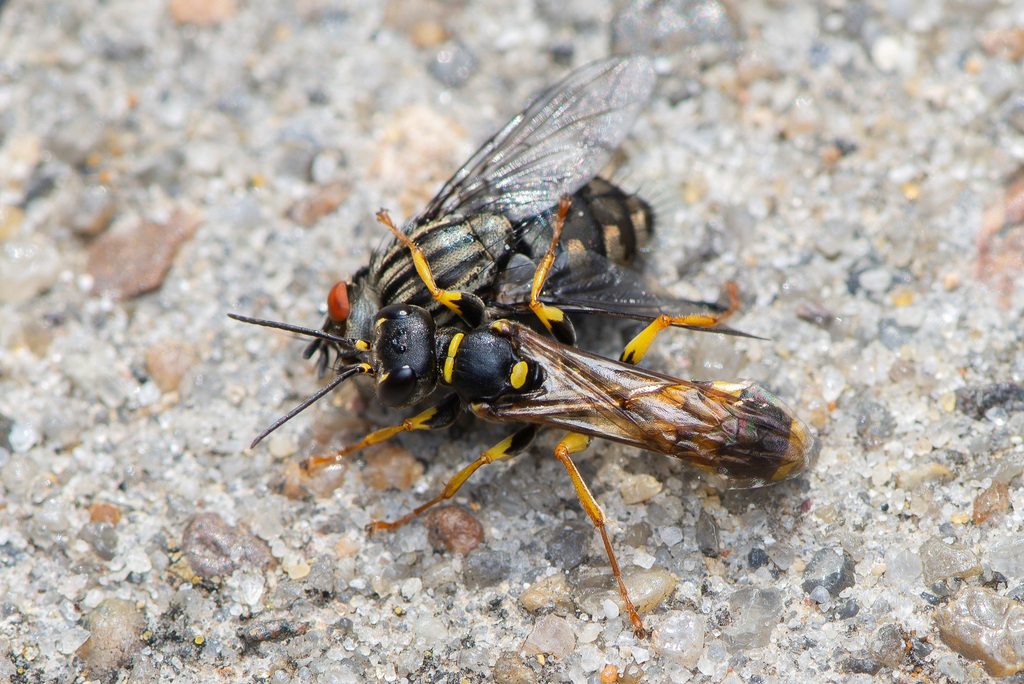
Field digger wasp
Mellinus arvensis
Mellinus arvensis, the field digger wasp, is a species of solitary wasp. The wasp can commonly be found from July to late September or October in sandy places. In hard soil however the female will often try to steal a nest from another member of the same species. The female is larger than the male. The wasps' nests are underground in sandy burrows with flies for their offspring to eat. The species is yellow and black like many wasp species, but they have a more narrow waist. This species is the most dominant immediately following forest fires.
From the article Mellinus arvensis on Wikipedia (CC BY-SA), quoted section by section
What it does
The field digger wasps are solitary hunters, yet live in colonies with one another. Female members of the community will dig out multicellular nests in the sand or soil to lay their eggs, then provision the cells with prey, with the most common one being flies. When the soil is too hard for digging, females will either take over an abandoned nest, or will usurp a nest from another female.
== References ==
Wikipedia: “Nesting Behaviors”
Listen
Looking for field recordings…
Where it lives
Recorded sightings
—
geo-referenced records in GBIF, from museums, herbaria and field observers.
Drag the globe to turn it. Dots are where records exist, not a range map; darker means more records.
In the stacks
Searching the stacks…
Every page naming Mellinus arvensis in the Biodiversity Heritage Library →
This page is assembled live from iNaturalist, GBIF, Wikipedia, the Source Library and the Internet Archive. It is not yet part of the hand-edited codex. iNaturalist taxon 127757.