- Plants
- ›Vascular Plants
- ›flowering plants
- ›Dicots
- ›Mints, Plantains, Olives, and Allies
- ›Mint Family
- ›Ajugoideae
- ›Trichostema
- ›Trichostema
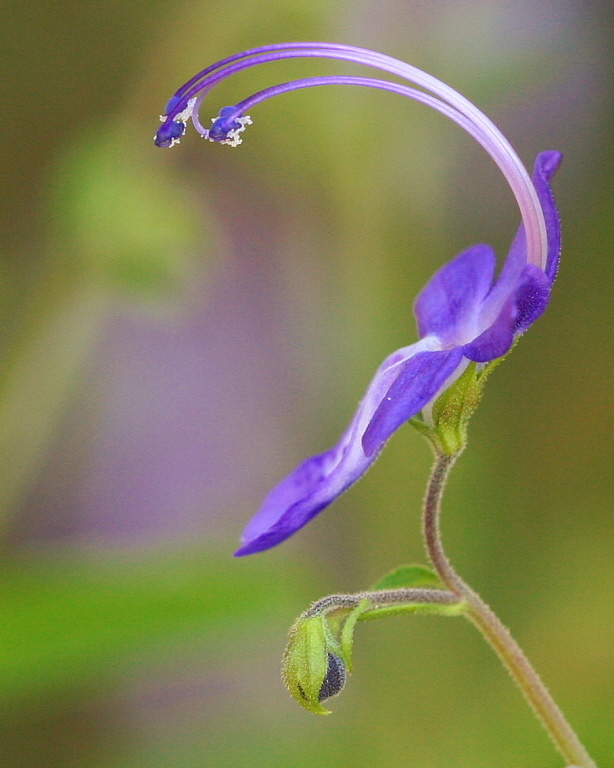
Blue Curls
Trichostema dichotomum
Trichostema dichotomum, commonly known as forked bluecurls, is a flowering plant in the mint family (Lamiaceae). The plant is found in the Midwestern and Eastern United States, and Eastern Canada.
From the article Trichostema dichotomum on Wikipedia (CC BY-SA), quoted section by section
Description
Trichostema dichotomum is an annual herbaceous forb with opposite, simple leaves, and square, erect, hairy stems. The leaves are covered in small hairs. The flowers are blue, borne in late summer through mid autumn, and the stems bear glandular hairs that are fragrant when disturbed. Each flower blooms only for half a day, opening in the morning and dropping its petals and stamens by the afternoon.
What it does
This plant germinates early in the summer and grows in sunny, moderately dry, sandy areas, including sandhills, open woodlands, glades, and disturbed areas. It is an important nectar producer for bees, including Caupolicana electa and Dialictus placidensis. Trichostema dichotomum is insect pollinated and is recorded to have been visited in northern Florida by Augochloropsis metallica, Bombus impatiens, Lasioglossum apopkense, Lasioglossum reticulatum, and Melissodes bimaculatus.
Wikipedia: “Ecology”
Where it lives
Recorded sightings
—
geo-referenced records in GBIF, from museums, herbaria and field observers.
Drag the globe to turn it. Dots are where records exist, not a range map; darker means more records.
In the stacks
Searching the stacks…
Every page naming Trichostema dichotomum in the Biodiversity Heritage Library →
This page is assembled live from iNaturalist, GBIF, Wikipedia, the Source Library and the Internet Archive. It is not yet part of the hand-edited codex. iNaturalist taxon 127634.