- Animals
- ›Chordates
- ›Vertebrates
- ›Ray-finned Fishes
- ›Spiny-rayed fishes
- ›Freshwater Sunfishes, Grunters, and Allies
- ›Grunters, Stripeys, and Allies
- ›Sea Chubs
- ›Kyphosus
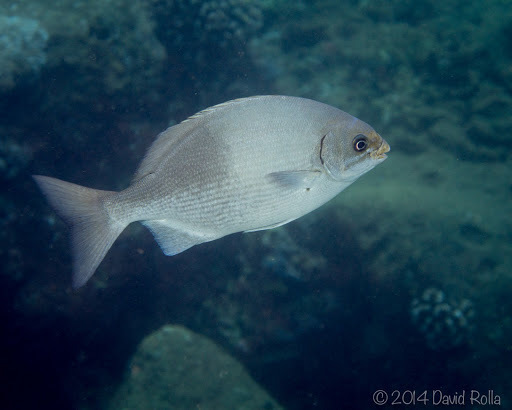
Hawaiian Chub
Kyphosus hawaiiensis
The Hawaiian chub (Kyphosus hawaiiensis), also known as the insular rudderfish or bicolor chub, is a species of marine ray-finned fish, a sea chub belonging to the family Kyphosidae. This species is found in the Central Pacific Ocean.
From the article Hawaiian chub on Wikipedia (CC BY-SA), quoted section by section
Description
The Hawaiian chub is similar to the gray chub but differs in color. It is a similar bluish-gray basic color, but the Hawaiian chub darkens towards the tail, forming a distinct two-tone pattern. There are 11 spines and 12 soft rays in the dorsal fin and 3 spines and 11 soft rays in the anal fin. The body is oval, deep and highly compressed with a terminal mouth containing incisor-like teeth. This species reaches a maximum total length of 41 cm (16 in).
Range & habitat
The Hawaiian chub is restricted to the Central Pacific Ocean, where it is found in the waters around the Hawaiian Islands and probably the Line Islands. It is found at depths of greater than 1 m (3 ft 3 in) in the vicinity of rocky and coral reefs within the intertidal and subtidal zone.
Wikipedia: “Distribution and habitat”
What it does
The Hawaiian chub lives in small schools in the surge zone on the top of reefs and in dropoffs where it may be encountered in the same places over a number of years, suggesting that these schools are territorial.
== References ==
Wikipedia: “Behavior”
Where it lives
Recorded sightings
—
geo-referenced records in GBIF, from museums, herbaria and field observers.
Drag the globe to turn it. Dots are where records exist, not a range map; darker means more records.
In the stacks
Searching the stacks…
Every page naming Kyphosus hawaiiensis in the Biodiversity Heritage Library →
This page is assembled live from iNaturalist, GBIF, Wikipedia, the Source Library and the Internet Archive. It is not yet part of the hand-edited codex. iNaturalist taxon 122032.