- Animals
- ›Arthropods
- ›Hexapods
- ›Insects
- ›Winged and Once-winged Insects
- ›Cockroaches and Termites
- ›Giant and Wood Cockroaches
- ›Blattellidae
- ›Blattellinae
- ›Blattellini
- ›Blattella
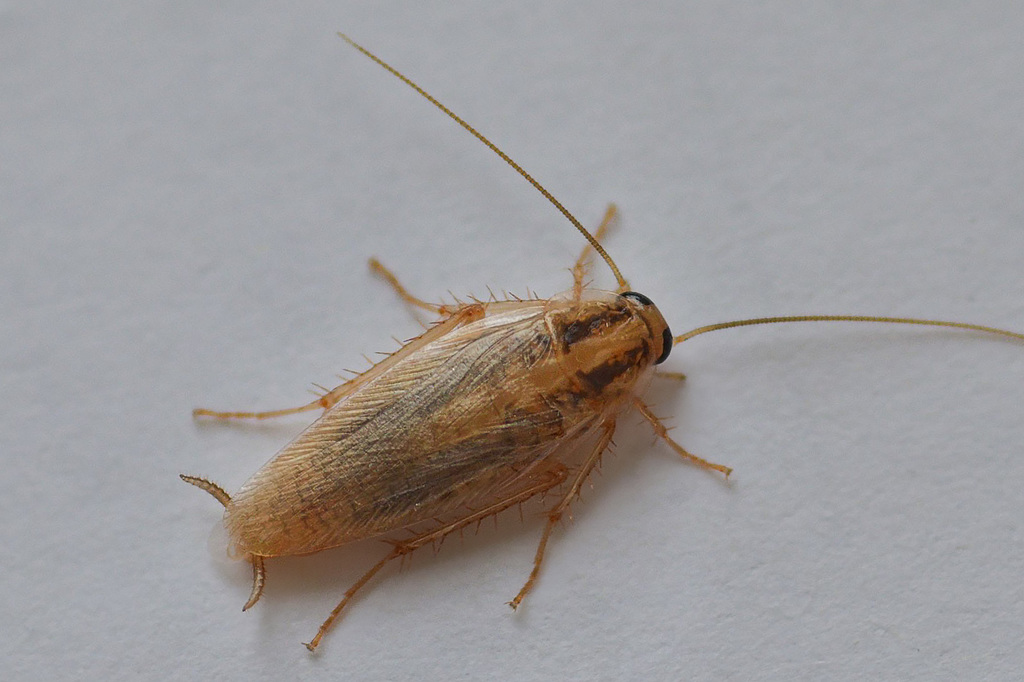
German Cockroach
Blattella germanica
The German cockroach (Blattella germanica), colloquially known as the croton bug, is a species of small cockroach, typically about 1.1 to 1.6 cm (0.43 to 0.63 in) long. In color it varies from tan to almost black, and it has two dark, roughly parallel, streaks on the pronotum running anteroposteriorly from behind the head to the base of the wings. Although B. germanica has wings, it can barely fly, although it may glide when disturbed. Of the few species of cockroach that are domestic pests, it probably is the most widely troublesome example. It is very closely related to the Asian cockroach, and to the casual observer, the two appear nearly identical and may be mistaken for each other.
From the article German cockroach on Wikipedia (CC BY-SA), quoted section by section
What it does
German cockroaches are omnivorous scavengers. They are attracted particularly to meats, starches, sugars, and fatty foods. Where a shortage of foodstuff exists, they may eat household items such as soap, glue, and toothpaste. In famine conditions, they turn cannibalistic, chewing at each other's wings and legs. The German cockroach is an intermediate host of the Acanthocephalan parasite Moniliformis kalahariensis.
Wikipedia: “Diet”
In human culture
Previously thought to be a native of Europe, the German cockroach later was considered to have emerged from the region of Ethiopia in Northeast Africa, but recent evidence indicates that it actually originated in South Asia or Southeast Asia, and diverged from Blattella asahinai slightly over 2,000 years ago. The cockroach's sensitivity to cold might reflect its origin from such warm climates, and its spread as a domiciliary pest since ancient times has resulted from incidental human transport and shelter. The species now is cosmopolitan in distribution, occurring as a household pest on all continents except Antarctica, and on many major islands, as well. It accordingly has been given various names in the cultures of many regions.
Wikipedia: “History”
Listen
Looking for field recordings…
Where it lives
Recorded sightings
—
geo-referenced records in GBIF, from museums, herbaria and field observers.
Drag the globe to turn it. Dots are where records exist, not a range map; darker means more records.
In the stacks
Searching the stacks…
Every page naming Blattella germanica in the Biodiversity Heritage Library →
This page is assembled live from iNaturalist, GBIF, Wikipedia, the Source Library and the Internet Archive. It is not yet part of the hand-edited codex. iNaturalist taxon 121237.