- Animals
- ›Arthropods
- ›Hexapods
- ›Insects
- ›Winged and Once-winged Insects
- ›Ants, Bees, Wasps, and Sawflies
- ›Narrow-waisted Wasps, Ants, and Bees
- ›Ants, Bees, and Stinging Wasps
- ›Formicoidea
- ›Ants
- ›Myrmicine Ants
- ›Higher Myrmicine Ants
- ›Allomerus
Allomerus decemarticulatus
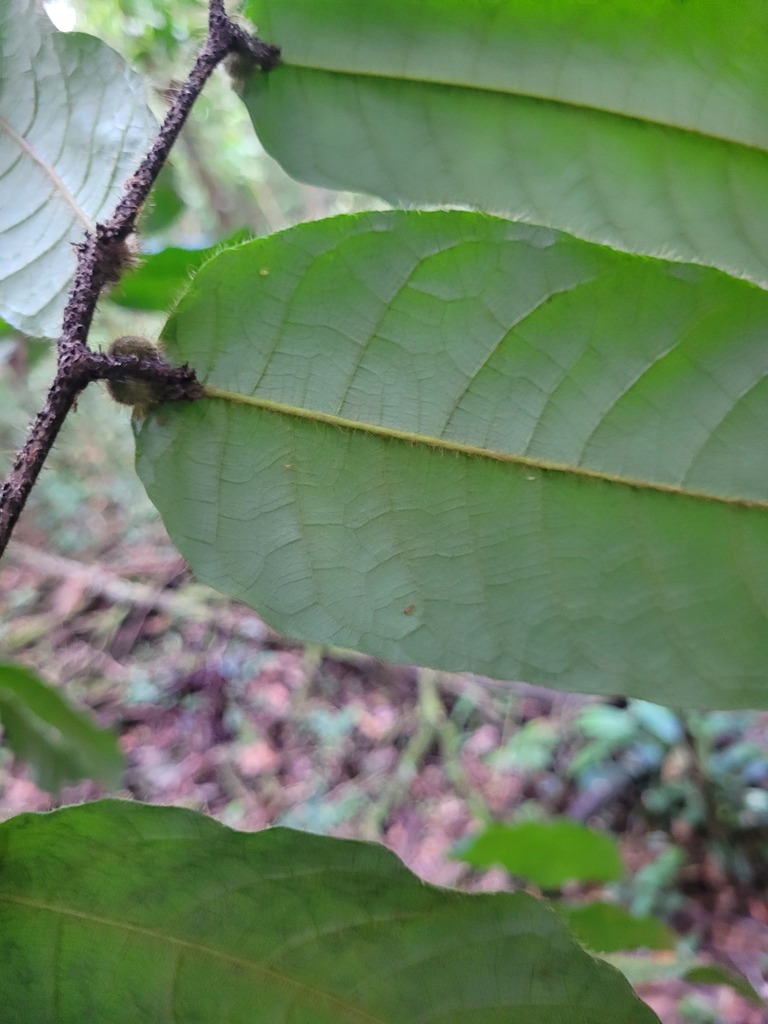
Allomerus decemarticulatus is an Amazonian ant species found in the tropics of South America. This species is most notable for the workers' complex and extreme predatory behavior, which involves a symbiosis with both a plant and fungal species.
They live in leaf pockets of a host plant species, Hirtella physophora. These leaf pockets are areas inside of the plant between the leaves and the stem. Each colony, which consists of about 1,200 workers, inhabits a single tree; however, the ants are spread among the leaf pockets, with typically 40 workers per pocket. Their diet primarily consists of large insects that are captured on the plant, but they also eat some kinds of food bodies produced by the plant as well as its nectar. They are able to capture their prey, which is much larger than themselves, by constructing a platform that acts as a trap for the unsuspecting prey. The ants hide in the trap and attack when any insect lands on it. This technique is an example of ambush predation.
From the article Allomerus decemarticulatus on Wikipedia (CC BY-SA), quoted section by section
Range & habitat
A. decemarticulatus is a Neotropical species that lives in the Amazonian tropics of South America. The species lives in H. physophora, whose range is limited to Brazil and French Guiana. They live and hunt on H. physophora, living in leaf pouches and patrolling the plant's stem for prey.
Wikipedia: “Habitat”
What it does
There are many different species of fungus that grow alongside the domatia where the ants live. In fact, when the founding queen first starts laying eggs in the domatia of a new H. physophora, the hyphae of multiple different species of fungi will entirely cover the entrance to the domatia. When the worker ants mature, they actually have to dig their way through the fungal covering to get to the outside of the plant. However, almost even more remarkably, out of all of these fungal species, A. decemarticulatus will only cultivate one specific species. This fungus is a sooty mold which, according to one study by Mario X. Ruiz-Gonzalez et al. (2010), is characterized by closely related haplotypes (genetic markers) in the order Chaetothyriales. The ants use this mold to construct their traps. Another noteworthy observation is that, unlike typical mutualisms between ants and fungus, these ants do not receive any nutrition from the fungus. They strictly manipulate the physiology of the fungus to construct a mortar for a trap that is able to catch much larger prey.
Wikipedia: “Fungal symbiosis”
Listen
Looking for field recordings…
Where it lives
Recorded sightings
—
geo-referenced records in GBIF, from museums, herbaria and field observers.
Drag the globe to turn it. Dots are where records exist, not a range map; darker means more records.
In the stacks
Searching the stacks…
Every page naming Allomerus decemarticulatus in the Biodiversity Heritage Library →
This page is assembled live from iNaturalist, GBIF, Wikipedia, the Source Library and the Internet Archive. It is not yet part of the hand-edited codex. iNaturalist taxon 1205797.