On eBird ↗
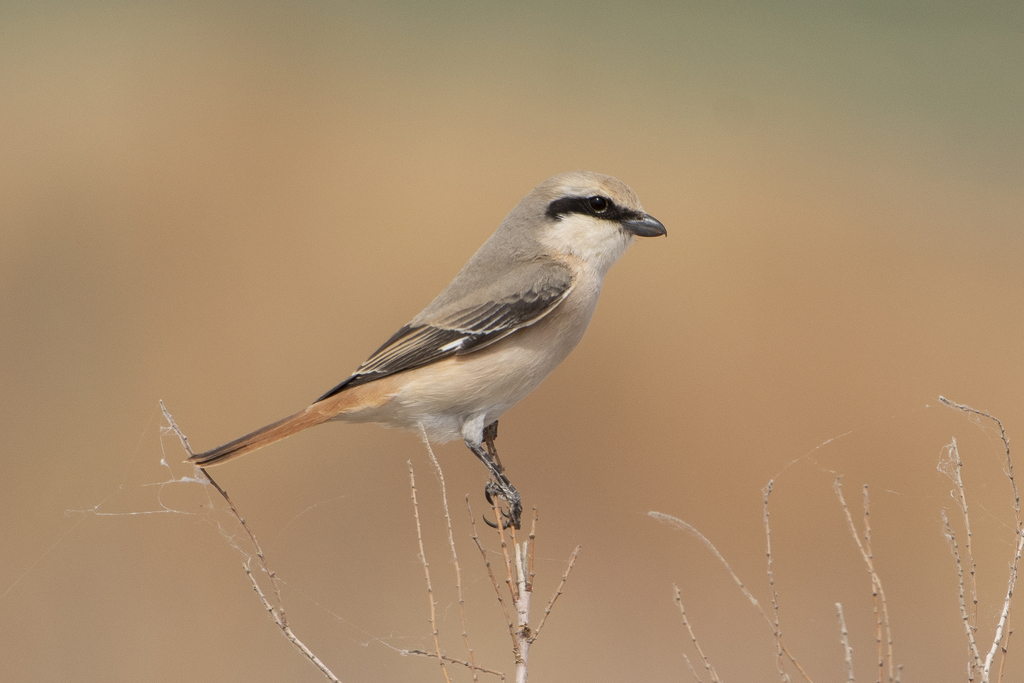
Isabelline Shrike
Live sightings near you, the range map, bar charts of when it is seen, and Macaulay Library photos and recordings.
Isabelline Shrike
Lanius isabellinus
The isabelline shrike or Daurian shrike (Lanius isabellinus) is a member of the shrike family (Laniidae). It was previously considered conspecific with the red-backed shrike and red-tailed shrike. It is found in an extensive area between the Caspian Sea and north and central China southeast to the Qaidam Basin. Overwinters in Africa and Arabia.
From the article Isabelline shrike on Wikipedia (CC BY-SA), quoted section by section
Description
The plumage is isabelline, the sandy colour which gives rise to its name. It has a red tail. Young birds can be distinguished from young red-backed shrikes by the much sparser vermiculations on the underparts.
In human culture
The genus name, Lanius, is derived from the Latin word for "butcher", and some shrikes are also known as "butcher birds" because of their feeding habits. The common name is from the specific isabellinus, Neo-Latin for "greyish-yellow" probably named for Isabella I of Castile, said to have promised not to change her undergarments until Spain was freed from the Moors. The common English name "shrike" is from Old English scríc, "shriek", referring to the shrill call.
Wikipedia: “Etymology”
Listen
Looking for field recordings…
Where it lives
Recorded sightings
—
geo-referenced records in GBIF, from museums, herbaria and field observers.
Drag the globe to turn it. Dots are where records exist, not a range map; darker means more records.
In the stacks
Searching the stacks…
Every page naming Lanius isabellinus in the Biodiversity Heritage Library →
This page is assembled live from iNaturalist, GBIF, Wikipedia, the Source Library and the Internet Archive. It is not yet part of the hand-edited codex. iNaturalist taxon 12042.