- Plants
- ›Vascular Plants
- ›flowering plants
- ›monocots
- ›Agaves, Orchids, Irises, and Allies
- ›iris family
- ›Iridoideae
- ›Irideae
- ›Moraea
- ›Moraea
- ›Moraea
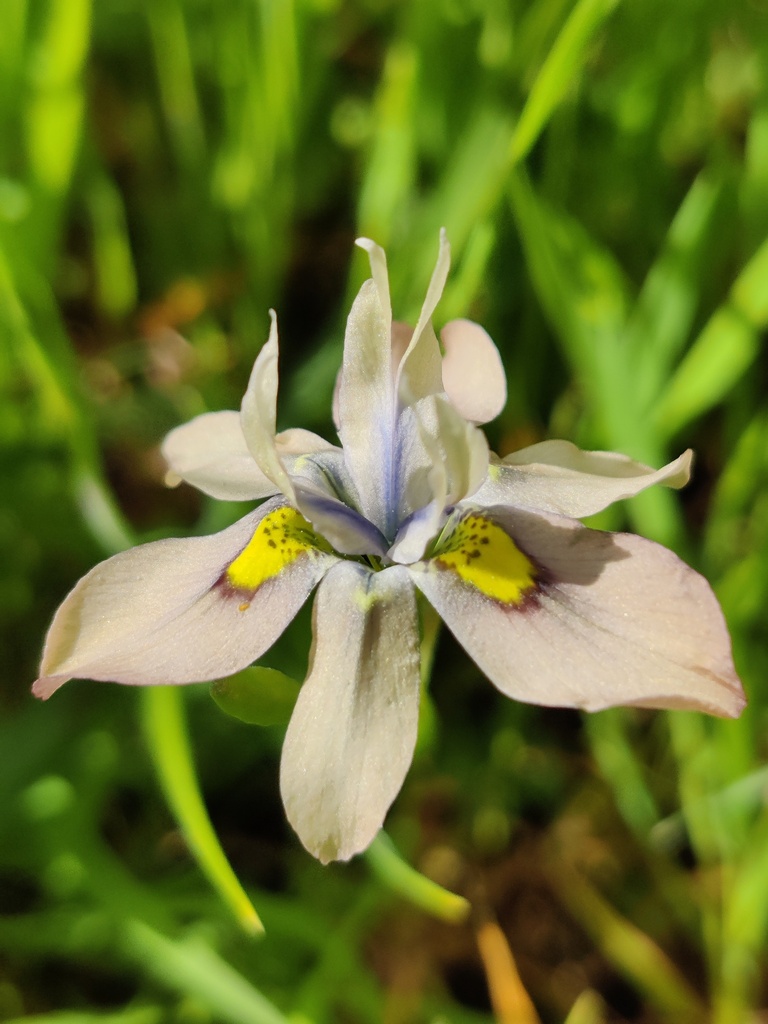
Buff Clockflower
Moraea vegeta
Dietes iridioides, commonly named African iris, fortnight lily, and morea iris, is a species of plant in the family Iridaceae that is native to Southern Africa.
From the article Dietes iridioides on Wikipedia (CC BY-SA), quoted section by section
Description
This species has sarmentous stems with branches bearing lily-like flowers 6–8 centimetres (2.4–3.1 in) wide, white with yellow central markings. Growing up to 60 centimetres (24 in) in height and 30–60 centimetres (12–24 in) in spread, it forms dense basal tufts in the shape of an extended fan. Its preferred habitat is in semi-shade under tall, open trees. It has white flowers marked with yellow and violet, with six free tepals that are not joined into a tube at their bases. These flowers last only for a few days. The seedpods of the plant often bend the stalks down to the ground where they have a better chance of propagating a new generation of plants.
Where it lives
Recorded sightings
—
geo-referenced records in GBIF, from museums, herbaria and field observers.
Drag the globe to turn it. Dots are where records exist, not a range map; darker means more records.
In the stacks
Searching the stacks…
Every page naming Moraea vegeta in the Biodiversity Heritage Library →
This page is assembled live from iNaturalist, GBIF, Wikipedia, the Source Library and the Internet Archive. It is not yet part of the hand-edited codex. iNaturalist taxon 119177.